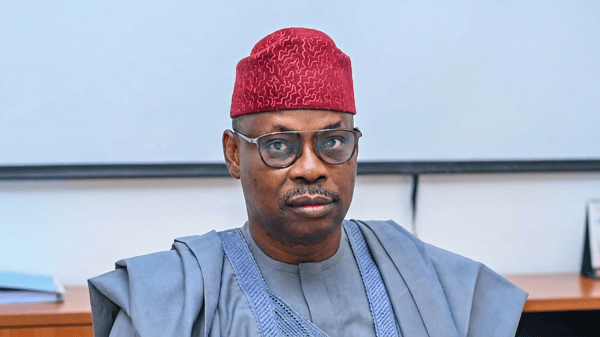
The Minister of State for Health and Social Welfare, Dr Iziaq Salako, has announced that 47.1 million Nigerians no longer require treatment for lymphatic filariasis (elephantiasis) and onchocerciasis (river blindness), following the successful completion of Nigeria’s largest-ever disease assessments.
Speaking in Abuja on Thursday at the close-out ceremony of the BLON project, Dr Salako explained that Nigeria had exceeded its disease-control targets for the two neglected tropical diseases. The project, launched in 2022 and concluded in September 2025, was supported with $4.9 million in funding from the Gates Foundation and implemented across 13 states.
“Nigeria has been able to deliver beyond the targets, as 31.1 million people no longer require treatment for lymphatic filariasis and 16 million people no longer need treatment for onchocerciasis, against the 27 million people initially targeted,” Salako said.
He added, “We conducted 46 Emergency Medical Services (Pre-TAS), 116 TAS 1 and 3 epidemiological surveys, and one breeding site assessment. By implication, Nigeria hit 148 per cent of LF assessments and 150 per cent of onchocerciasis assessments. This project additionally strengthened our health system by supporting four laboratories (UniOsun, TCC Lab, NIMR Lab, and A.B.U. Lab) through capacity building and facility upgrades (ISO 15189 accreditation); training 65 laboratory technicians on standardised blood collection; training over 300 people as card readers, data recorders, and field sample collectors; supporting the development of sample retention and disposal policies; training FMoH&SW staff and partners on sample transportation models implemented through certified third-party logistics; and holding annual work plan harmonisation meetings and Filariasis Transmission Survey quantification.”
The BLON project was designed to address gaps in Nigeria’s elimination roadmap for the diseases. Despite decades of mass drug administration, many implementation units had already met World Health Organisation thresholds for stopping treatment but lacked resources to conduct disease-specific assessments. Previous efforts were fragmented and costly, creating barriers to nationwide scale-up.
Sightsavers partnered with the Federal Ministry of Health and Social Welfare, Christian Blind Mission International, Helen Keller International, and MITOSATH to deliver a coordinated and cost-effective programme.
The Country Director for Sightsavers Nigeria, Professor Joy Shuaibu, highlighted the wider impact of the initiative. “The remarkable achievement of this programme is that 31 million Nigerians will no longer need to take medication to prevent blindness. It not only cuts the cost of funding and investment in healthcare but also allows these people to go on with their lives and engage in more productive activities. This achievement is not just about stopping ivermectin treatment, but also empowering communities and individuals to live fulfilled lives,” she said.
On the future of the programme, Professor Shuaibu said, “We hope partners and donors will see what has been done and leverage these achievements so we can scale up the project and conduct all necessary assessments.”
The National Coordinator for Neglected Tropical Diseases at the Federal Ministry of Health and Social Welfare, Fatai Oyediran, also emphasised the project’s legacy. “Some of the achievements that will remain our legacy are the standard operating procedures we have agreed to retain and sustain in conducting future assessments. Four of our laboratories have been accredited and meet international ISO 15189 standards. The project also helped upgrade the laboratories structurally and in capacity development,” he said.
Oyediran explained that the project improved laboratory practices through better sample management procedures. “We have developed sample retention and disposal policies and aligned these as collaborative procedures to guide future implementation. The project also focused on rural resource development by training health workers,” he added.
He appealed for further support to extend the initiative. “We appeal to the Gates Foundation for an extension of the project. We want another series of these projects,” Oyediran said.
The BLON project has been hailed as a milestone in Nigeria’s fight against neglected tropical diseases, combining disease elimination with systemic health improvements that could serve as a model for future interventions.