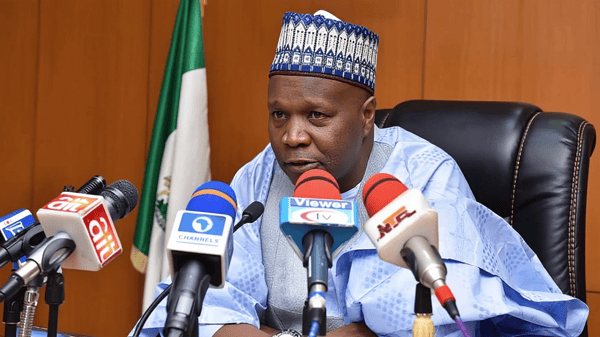
The European Union and the Government of Gombe State have formally launched a landmark initiative aimed at improving healthcare delivery in the state, following similar launches across other states in Nigeria.
The Nigeria Solar for Health Project (NISHP) was unveiled in Gombe alongside the inauguration of a Project Implementation Steering Committee, which will guide the deployment and oversight of solar electrification of healthcare facilities across the state.
Speaking at the launch, the Head of Section, Green and Digital Economy at the EU Delegation to Nigeria and ECOWAS, Inga Stefanowicz, highlighted the urgent need for reliable electricity in healthcare settings.
“Electricity is vital for accessing healthcare services, and the shortage of energy in healthcare facilities poses significant challenges to delivering effective care,” she said.
She stressed that essential medical devices, diagnostic tools and basic utilities such as lighting and water pumps all rely on stable power.
Stefanowicz noted the scale of the problem nationwide. “In Nigeria, only about 30 to 40 per cent of public primary health centres are operational, and nearly 40 per cent of those lack electricity,” she said. She added that even functional facilities often depend on costly diesel generators or improvised lighting such as torchlights and kerosene lamps.
NISHP seeks to address these gaps by deploying solar microgrids to power health facilities and support local small and medium enterprises. “In Gombe, we plan to install solar microgrids with a cumulative capacity exceeding 300 kilowatts to power at least 10 primary health centres and support nearby small and medium enterprises,” Stefanowicz said.
She underscored the significance of the launch, noting that while the initiative may not resolve all challenges, it marks an important step towards sustainable and equitable healthcare delivery in the state.
The project forms part of the EU’s Global Gateway Strategy in Nigeria, which aims to develop sustainable and inclusive infrastructure across energy, transport, digital economy, health and education. In Gombe, the initiative builds on earlier electrification efforts at primary healthcare facilities, with an expanded focus on strengthening secondary centres and supporting surrounding businesses.
Representing Governor Muhammad Inuwa Yahaya, the Deputy Governor of Gombe State, Manassah Jatau, reaffirmed the state’s commitment to improving healthcare access. “Gombe State has consistently shown its commitment to improving healthcare access, and this project further strengthens our capacity to serve our communities,” he said.
He emphasised that close coordination between the state and its partners would be essential to the project’s success. “With strong partnership between the government and our international partners, we are confident that this project will have a lasting impact on the health and well-being of our people,” he added.
The inauguration of the Project Implementation Steering Committee represents a decisive step in operationalising NISHP in Gombe. The committee, made up of state commissioners for health and energy, implementing partners including NTU International and UNIDO, and the State Project Coordinator, Dr Umar Wanda, who serves as secretary, will supervise site selection, installation and ongoing system maintenance.
Team Lead at NTU International for the Nigeria Solar for Health Project, Nasiru Bello, stated, “We are ready to translate planning into action and ensure that each site receives reliable, high quality solar power for years to come.”
The Programme Manager, Energy and Circular Economy at the EU Delegation, Godfrey Ogbemudia, highlighted the model’s potential for scale. “This project demonstrates a new approach, combining public service with commercial viability and sustainability. What begins here in Gombe can expand across Nigeria,” he said.
The Gombe State Commissioner for Health, Dr Habu Dahiru, described the health benefits of stable electricity. “Reliable electricity in healthcare facilities is transformative. It enables proper use of medical equipment, ensures safe deliveries and improves overall patient care,” he said.
Across Nigeria, unreliable power supply has long hindered healthcare delivery. Even where primary centres operate, frequent outages and reliance on generators compromise essential services. In contrast, the solar microgrids under NISHP will provide 24-hour electricity to power lighting, cold storage for vaccines, water pumps and crucial medical devices, while also energising nearby businesses to support wider socio-economic growth.
The EU has funded complementary renewable energy projects in Gombe, including a 320-kilowatt small hydropower project in Balanga implemented by UNIDO. Together with NISHP, these investments signal a broader commitment to energy access and climate-resilient infrastructure in line with Nigeria’s development priorities.
The Gombe launch follows successful NISHP rollouts in Plateau, Enugu, Abia, Akwa Ibom and Ekiti states. Nationally, the programme will deploy more than 2.5 megawatts of solar power and 600 megawatt hours of battery storage, electrifying dozens of health facilities and supporting surrounding communities.