Public health physicians have renewed calls for urgent reforms in financing, digital integration and workforce retention to strengthen Nigeria’s health system amid rising global health threats.
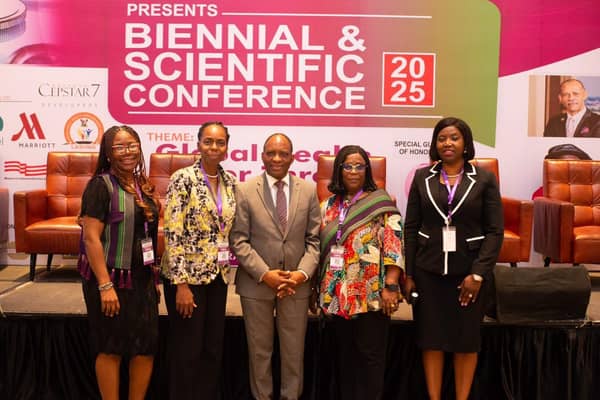
The call was made at the Biennial Conference of the Association of Public Health Physicians of Nigeria (APHN), Lagos Chapter, held under the theme “Global Health Under Threat: Advancing Sustainable Financing & Workforce Capacity for Equitable Healthcare Delivery in the Global South.” Experts at the event examined how chronic underfunding, fragmented systems and workforce migration continue to undermine healthcare delivery nationwide.
Chairman of the Lagos Chapter of APHN, Prof. Yetunde Kuyinu, said emerging diseases, rising non-communicable conditions, widening financing gaps and persistent workforce shortages were placing unprecedented pressure on health systems.
She stressed the need for sustainable financing models such as social health insurance, public-private partnerships and results-based financing to narrow equity gaps in access to care.
Kuyinu added that digital health, telemedicine, artificial intelligence and data-driven tools had become indispensable for bridging service gaps, strengthening diagnostics, informing policy and expanding care to underserved communities.
She also underscored the importance of investing in human capital through the postgraduate fellows programme, which she described as a strategic pipeline for equipping physicians to respond to complex system-wide challenges.
According to her, the rise in outbreaks and emerging diseases highlighted the interconnectedness of global health, recalling how Ebola and the COVID-19 pandemic entered Nigeria from outside the country, reinforcing the need for preparedness and sustained investments.
In his keynote presentation, a Professor of Public Health at the University of Lagos College of Medicine, Akin Osibogun, said Nigeria’s healthcare financing structure remained a major barrier to equitable care. He noted that an effective system should provide access without exposing households to financial hardship.
Osibogun warned that any system forcing families into poverty or forcing them to choose between healthcare, food or rent was unacceptable. Achieving universal health coverage, he said, required a shift from out-of-pocket payments to risk-pooling through health insurance. Countries with the highest out-of-pocket spending, he noted, usually record the poorest health outcomes.
He emphasised that Nigeria’s maternal mortality ratio, infant mortality rate of about 75 per 1,000 live births and under-five mortality rate of about 125 per 1,000 remain among the highest globally, largely because many patients delay seeking care due to cost.
Community-based health insurance and citizen-managed risk pools, he argued, could significantly expand national coverage if properly executed.
Osibogun also addressed Nigeria’s workforce crisis, noting that the country produces highly skilled professionals who are in high demand globally, yet poor remuneration and working conditions continue to drive their migration. He urged simultaneous investment in training capacity through more institutions and clinical facilities and in retention mechanisms. Producing more health workers without improving work environments, he warned, would only accelerate brain drain.
Representing the President of the Healthcare Federation of Nigeria (HFN), Mr Sunday Mgbejume, said Nigeria must shift from traditional, infrastructure-heavy health investments to people-centred, and impact-driven financing. He noted that over 70 per cent of Nigerians still pay out of pocket for healthcare, pushing families into poverty and limiting their ability to purchase basic services.
Mgbejume argued that healthcare investments should be assessed by measurable outcomes, not the volume of funds spent. He added that fragmentation across state health systems has created uncertainty for investors, funders and policymakers, making system-wide performance difficult to track.
He called for a digitally integrated system, similar to the interconnectivity used in the banking sector, to strengthen national health-insurance operations. Just as the Central Bank of Nigeria monitors banks in real time, he said the National Health Insurance Authority (NHIA) should have interoperable systems capable of tracking state-level insurance schemes.
Such integration, he explained, would allow citizens enrolled in one state to access care in another, boost investor confidence and lower risk for lenders assessing health-care businesses. He added that system fragmentation also makes it difficult for small facilities to access credit, while consolidation and collective bargaining would improve their financial stability and attract capital for expansion.