 Follow Us on Google News


 Follow Us on Google Discover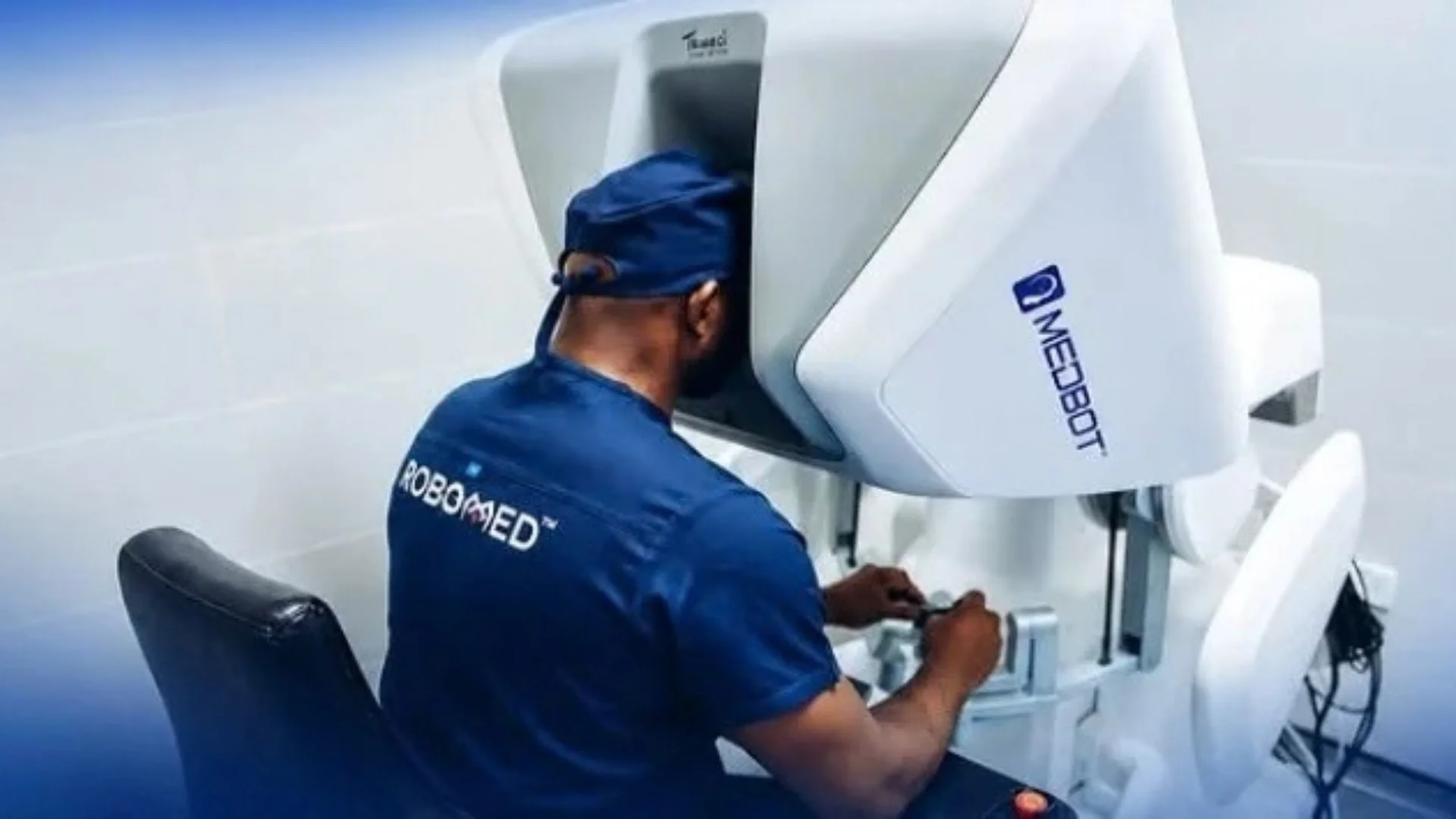
On September 19, a surgeon in Mowe, Ogun State, removed a cancerous kidney from a patient lying on an operating table in Abuja. Professor Obi Ekwenna-Davis, a professor of urology and transplantation at the University of Toledo and co-founder of RoboMed Global, controlled a Toumai robotic console at Redeemer’s Health Village while the surgical robot executed his movements in real time at Nisa Premier Hospital, roughly 500 kilometres away.
The operation, a robot-assisted radical nephrectomy, took about three hours and was described by Dr Adedamola Dada, CEO of Redeemer’s Health Village, as the first telesurgery performed in West Africa.
The medical achievement has been rightly celebrated. The infrastructure architecture that made it possible deserves the same scrutiny, because it reveals something fundamental about where Nigeria’s healthcare system is heading and what it will demand from the country’s telecommunications networks.
Telesurgery inverts the traditional model of surgical risk. In a conventional operating theatre, risk is governed by the precision of the surgeon’s hand and the reliability of the instruments. When 500 kilometres of digital pipeline separate the surgeon from the patient, latency, packet loss, and network stability become the variables that determine whether the operation succeeds or fails.
A three-second interruption during an arterial procedure can be fatal. The data link carrying the surgeon’s hand movements to the robot is, for the duration of that operation, as critical as the oxygen supply to the patient.
The September 19 procedure used Starlink satellite connectivity as its primary data pipeline, with MTN’s mobile network infrastructure serving as the failover layer. That layered architecture is the detail worth pausing on.

Satellite connectivity provided the bandwidth required for the procedure, but satellite links are vulnerable to atmospheric interference and latency spikes. The presence of a high-availability mobile network standing ready to absorb the data load instantly meant that if the primary link degraded at a critical moment, the surgical pipeline would hold.
Ekwenna-Davis himself noted that the team paused several times during the three-hour procedure to verify that equipment and systems were functioning properly. In that operating environment, the backup connection carried the same stakes as a backup power generator in a cardiac ward: active infrastructure, monitored in real time, ready to bear the full weight of a life in progress.
This is where the implications extend beyond a single operation. Nigerian hospitals have long invested in physical redundancies as a matter of clinical governance: dual power grids, diesel generators, secondary oxygen systems. The Mowe-Abuja procedure suggests that digital redundancy now belongs in the same category.
A hospital preparing to offer telesurgery, remote diagnostics, or real-time specialist consultations will need to treat its connectivity architecture with the same rigour it applies to its power supply. Dual-carrier failover, dedicated low-latency channels, and guaranteed uptime have become patient safety decisions.
For the telecommunications sector, the shift is equally significant. Powering e-commerce platforms and mobile banking applications requires reliable infrastructure. Sustaining a real-time surgical data pipeline where a latency spike can endanger a life requires intentional engineering and investment in network resilience calibrated to zero-tolerance thresholds.
The sector is already responding, and MTN Nigeria’s ₦1.62 trillion network modernisation drive, beyond being a corporate milestone, is a clear understanding of how critical network infrastructure is to national health security.
Ekwenna-Davis put it simply after the surgery: “Distance should never decide who receives safe surgery.” That principle depends entirely on the infrastructure beneath it. September 19 proved that Nigerian medicine and Nigerian connectivity are both ready. The question now is whether the country can scale what one operating theatre demonstrated across an entire healthcare system.
Dr Kelechi Okoro is a medical doctor and health policy advocate.

