
 Get Guardian on Google
As Abuja deepens diplomatic engagement with Sahelian governments and ECOWAS advances plans for a regional counterterrorism force, OLUDARE RICHARDS examines the uneasy relationship between trade, security and cooperation in a fractured West Africa.
The attack on a construction site along the Sokoto-Badagry Superhighway in Kebbi State on October 8, which left two security personnel and a Chinese national dead, has brought renewed attention to the risks confronting workers and infrastructure in Nigeria’s north-western borderlands.
Two civilians were also reported injured in the incident at Gubba village, Maiyama Local Government Area, where police said suspected Lakurawa fighters had attacked the site. The assault followed an attack on a military base in the same local government area on October 7, when troops reportedly repelled armed fighters and recovered weapons, ammunition and 17 motorcycles.
For communities whose livelihoods depend on agriculture, livestock and commerce across national boundaries, the incidents have revived a difficult question: how can Nigeria facilitate the movement of goods and people across its northern frontier while protecting the communities and infrastructure on which that commerce depends?
The question goes to the heart of a policy the Federal Government has pursued since February, when it reopened the Kamba and Tsamiya crossings in Kebbi State to restore commercial connections involving Nigeria, Benin Republic and Niger Republic.
The decision was intended to revive legitimate trade after prolonged restrictions disrupted transport and left thousands of trucks stranded.

But even as the government seeks to restore economic activity, its own customs authorities have acknowledged that reopened trade routes could be exploited by criminal networks if adequate safeguards are not maintained.
At a stakeholders’ meeting in Kebbi State, earlier in the year, Comptroller-General of Customs, Bashir Adewale Adeniyi, reassured traders and transport operators that the Federal Government was addressing the difficulties caused by the restrictions.
“We are not unconcerned about what is happening,” he said, adding that officials had been “working round the clock to resolve these challenges.”
The reassurance was accompanied by a warning about the security implications of reopening the corridor. “There are criminals and non-state actors who may want to take advantage of trade routes,” Adeniyi said. “We must facilitate trade without compromising national security.”
That statement captures the dilemma facing the government. Closing a border can disrupt legitimate economic activity without necessarily eliminating illicit movement.
Reopening it can restore commerce, but it also requires customs, immigration and security agencies to identify and intercept illegal movements without subjecting legitimate traders to unnecessary delays.
Adeniyi said the Customs Service would deploy information and communications technology systems to improve interconnectivity with the customs administrations of Benin and Niger, with the objective of strengthening declarations, monitoring and transparency.
He also warned that any truck found outside its approved transit corridor would be seized, underscoring the government’s intention to regulate the movement of transit goods rather than allow cargo to circulate without oversight.
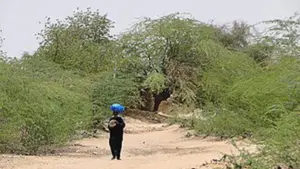
For Nigeria, the stakes extend beyond customs revenue. The crossings are part of a wider network connecting producers, traders, transporters and consumers across West Africa. Their importance is particularly evident in the trade in agricultural commodities, where delays can turn a profitable consignment into a financial loss.
President of the National Onion Producers, Processors and Marketers Association of Nigeria, Isa Aliyu, offered a particularly direct explanation of what prolonged border restrictions mean for businesses dealing in perishable goods.
“Onion is highly perishable. Every hour of delay translates to losses,” he said, warning that “closure pushes trade to illegal routes, weakens regulation and reduces government revenue.”
Aliyu’s warning presents the border question from a commercial perspective often overlooked in security discussions.
Restrictions intended to control movement can make legitimate transactions more expensive and less predictable.
When businesses struggle to move goods through recognised channels, some may seek alternative routes, making the task of monitoring commercial activity more difficult.
His argument also highlights the relationship between border management and economic security. Farmers and traders need reliable access to markets, but the government needs legitimate transactions to pass through systems that allow goods to be documented, monitored and taxed.
The reopening of Tsamiya was therefore welcomed by agricultural stakeholders who saw the corridor as important to exports and regional commerce. Yet the long-term effect will depend on whether the initial movement of stranded goods translates into sustained activity, lower transaction costs and more predictable access to markets.
The immediate scale of the backlog was considerable. According to the News Agency of Nigeria, approximately 2,000 trucks that had been stranded around Nigeria’s borders with Benin and Niger began moving following the reopening of Kamba and Tsamiya in February.
For Niger, a landlocked country that relies on neighbouring states for access to international shipping routes, the reopening offered an important transit opportunity.
For Nigeria, it promised to restore commercial activity in border communities and strengthen its position as a regional trade gateway.
The relief was evident in the response of Nigerien official Maigiro Yahaya-Tubil, who welcomed the resumption of movement.
“We are happy that our trucks, which were trapped for months, can now move freely through Nigeria to their destinations,” he said.
The district head of Kamba, Muhammed Sarkin-Shikon-Kamba, also welcomed the decision, describing it as an opportunity to restore economic activity in communities affected by the restrictions.
“This decision will bring economic benefits to our people and restore livelihoods that were affected by the closure,” he said.
These remarks give the policy a human dimension. For border communities, trade is not simply a matter of international agreements or customs procedures. It sustains transport operators, market traders, farmers, livestock dealers and small businesses whose earnings depend on the regular movement of goods and people.
President Bola Tinubu’s administration similarly presented the reopening as a means of reconciling commerce with security.
In a statement issued in February, the Presidency described the decision as “a balanced and pragmatic approach to governance that recognises the link between economic inclusion, regional diplomacy, and national security.”
The statement argued that “functional and regulated borders offer better oversight, intelligence coordination, and cooperation than prolonged closures that often push activities into informal channels.”
The government’s position is that regulated movement can give authorities greater visibility over commercial activity than prolonged restrictions that push some transactions away from recognised routes.
That argument is consistent with the Customs Service’s stated intention to strengthen monitoring and interconnectivity with neighbouring administrations.
However, the reopening of a crossing does not by itself establish that trade has recovered sustainably or that border communities are safer.
The movement of 2,000 stranded trucks demonstrated the scale of pent-up demand, but it did not provide a measure of subsequent trade volumes, average transit times or the costs incurred by businesses operating along the route.
Those figures matter because the economic case for reopening rests on the promise of lasting benefits, not merely the release of cargo delayed by earlier restrictions.
The renewed insecurity in Sokoto and Kebbi makes the need for such an assessment more pressing. Although the October attacks do not establish that the reopened crossings have facilitated militant movements, they demonstrate the difficult security environment in which the trade policy is being implemented.
The attack on the construction site also raises concerns about the protection of infrastructure projects in vulnerable areas. Roads can connect agricultural communities to markets, improve access to services and reduce transport costs, but their economic benefits are diminished when workers cannot operate safely or construction is interrupted by violence.
The military’s account of the October 7 assault on its Forward Operating Base in Maiyama illustrates the operational challenge.
According to the Theatre Command of Operation FANSAN YAMMA, a large group of suspected Lakurawa fighters arrived on more than 100 motorcycles and attacked the base with assorted weapons, including machine guns and rocket-propelled grenades.
Troops forced the attackers to retreat and recovered 17 motorcycles, a PKT machine gun, an AK-47 rifle, ammunition and a communication device.
The command said operations were continuing to track the fleeing attackers and prevent the group from establishing freedom of movement in the area.
The incidents point to a wider challenge confronting border communities: the economic activity that governments seek to restore depends on security arrangements capable of protecting both people and infrastructure.
For Nigeria, the implication is that securing the border requires more than preventing armed groups from crossing it.
It also requires restoring public confidence, protecting livelihoods and ensuring that residents have credible channels through which to report threats without exposing themselves to retaliation.
The security challenge is further complicated by political divisions across West Africa. Burkina Faso, Mali and Niger withdrew from the Economic Community of West African States in January 2025 and strengthened their cooperation through the Alliance of Sahel States. The separation has complicated the institutional arrangements through which countries in the region previously sought to coordinate security responses and economic integration.
For Nigeria, the political split creates a difficult balance. Abuja has an interest in preserving ECOWAS as a framework for regional integration, but it also needs functional relationships with neighbouring countries whose territories are connected to the same security challenges confronting its northern states.
The government has sought to maintain bilateral engagement with Sahelian countries despite the wider political divisions.
In July, Foreign Affairs Minister Bianca Odumegwu-Ojukwu said Nigeria and Mali shared common interests that required closer cooperation.
“Nigeria and Mali share common objectives and goals. We need to deepen bilateral relations,” she said during discussions on revitalising the two countries’ Joint Commission.
The proposed commission is intended to provide a framework for cooperation in areas including security, trade, energy, irregular migration, human trafficking and air transport. The discussions also identified the need to strengthen cooperation against terrorism and banditry.
The engagement continued in September when Odumegwu-Ojukwu met her Malian counterpart, Abdoulaye Diop, on the sidelines of the 81st United Nations General Assembly in New York.
According to Nigeria’s Ministry of Foreign Affairs, the ministers discussed terrorism, violent extremism, organised crime, trafficking, arms proliferation and illicit financial flows, alongside bilateral trade and regional integration.
The ministry said Odumegwu-Ojukwu stressed the importance of “sustained regional cooperation and African-led solutions” to the continent’s peace and security challenges. It also reaffirmed Nigeria’s readiness to maintain constructive consultations with Mali at bilateral and multilateral levels.
The diplomatic engagement suggests that Nigeria is seeking to preserve practical cooperation even where regional political relationships have become strained. But the value of these consultations will ultimately depend on whether they produce operational arrangements for intelligence-sharing, the investigation of cross-border crimes and the coordination of responses to security threats.
The September announcement did not establish that Nigeria and Mali had concluded a new joint military agreement. The next test is whether the renewed political engagement can lead to specific, measurable outcomes that improve security along the wider border region.
Nigeria is pursuing this bilateral approach while also supporting ECOWAS’s plans to establish a regional counterterrorism force. The initiative is intended to strengthen the bloc’s capacity to respond to armed groups and other security threats affecting its member states.
At its July summit in Sierra Leone, the ECOWAS Authority of Heads of State and Government endorsed a revised roadmap for activating the Counterterrorism Brigade, with the stated objective of achieving full operational capability by July 2027.
The authority also directed the commission to consult Nigeria, Ghana and Côte d’Ivoire on the location of the force’s headquarters and urged member states to settle outstanding Community Levy arrears earmarked for the initiative.
The timetable is ambitious, but the initiative faces significant financial and logistical challenges. An earlier ECOWAS planning exercise considered a 5,000-strong brigade estimated to cost $2.61 billion in its first year, alongside a phased 1,650-strong force with an initial estimated cost of $481.5 million.
The estimates illustrate the scale of resources required to sustain a multinational security operation.
The phased model offers a more gradual route towards operational capacity, but it still requires reliable financing, personnel, equipment, intelligence support and agreed procedures among participating countries.
Nigeria has reaffirmed its support for the regional initiative. On September 3, the Chief of Staff of the ECOWAS Standby Force, Brigadier General Sheikh Sulaiman Massaquoi, met Nigeria’s Chief of Defence Staff, General Olufemi Oluyede, in Abuja to discuss the establishment and operationalisation of the Counterterrorism Brigade.
According to ECOWAS, Oluyede reaffirmed the commitment of the Nigerian Armed Forces to regional peace and security initiatives. He also pledged an 18-seater bus to support the standby force’s administrative, logistical and operational activities.
The contribution was a practical demonstration of support, but the wider challenge remains ensuring that the force receives the resources necessary for sustained deployment. A regional brigade that cannot maintain its personnel, equipment and logistics would struggle to deliver the results expected of it.
There is also the question of how ECOWAS will cooperate with countries outside the organisation. Armed groups and trafficking networks do not necessarily respect the political boundaries separating ECOWAS and the AES. Effective responses may therefore require communication with governments in Niger and Mali, even as wider regional relations remain complicated.
Nigeria’s diplomatic engagement with Mali provides a possible channel for maintaining that communication, but the effectiveness of such arrangements will depend on practical agreements rather than declarations of shared interests.
The same principle applies to border management. Customs administration, immigration controls, cargo documentation and intelligence-sharing all contribute to the distinction between legitimate commerce and illicit movement. The government mu
st strengthen these systems without imposing restrictions that make lawful trade unnecessarily difficult.
Adeniyi’s warning that criminals may seek to exploit trade routes reflects the need for effective oversight. Aliyu’s argument that border closures can push trade towards illegal routes reflects the other side of the problem. Taken together, their statements suggest that the choice is not simply between open borders and secure borders, but between poorly managed movement and a system that makes legitimate commerce easier to monitor.
For the government, the next step should be to demonstrate whether the reopening has produced lasting benefits. Customs data showing cargo volumes and clearance times, evidence of changes in transport costs, and information about security-related disruptions would help establish whether the corridor is delivering on its promise.
The experiences of traders, farmers, transport operators and border residents are equally important. The initial movement of thousands of trucks may provide relief to businesses, but it does not reveal whether small traders have recovered their markets or whether communities affected by violence can resume normal activities.
The October attacks also underline the need to protect strategic infrastructure. Roads intended to connect markets and reduce transport costs cannot fulfil their economic purpose where construction workers are exposed to persistent violence or projects are repeatedly interrupted.
The reopened Kamba and Tsamiya corridors demonstrate how political decisions can restore commercial opportunities. The continuing violence in Sokoto and Kebbi also demonstrates why those decisions must be accompanied by sustained investment in security, local governance and regional cooperation.
The October attacks do not establish that the reopening has increased the threat of terrorism, nor do they prove that Nigeria’s border policy has failed. They do, however, make it more urgent to assess whether the economic benefits promised by the government are being sustained and whether the people who depend on the corridors are adequately protected.
For ECOWAS, the challenge is to translate its counterterrorism plans into an adequately funded operational capability while maintaining channels of communication with Sahelian governments. For Nigeria, it is to ensure that bilateral diplomacy, domestic security operations and trade facilitation reinforce one another rather than proceed as separate policy objectives.
Ultimately, the success of Nigeria’s northern trade strategy will not be measured simply by the number of trucks cleared during a reopening exercise or the number of diplomatic meetings convened. It will be measured by whether traders can move goods reliably, workers can carry out their jobs safely, communities can sustain their livelihoods and governments can cooperate against threats that cross national boundaries.