Experts in the transport sector said Nigerian highways will require more than campaigns and slogans to keep them safe, OLUSEGUN KOIKI and BENJAMIN ALADE report.
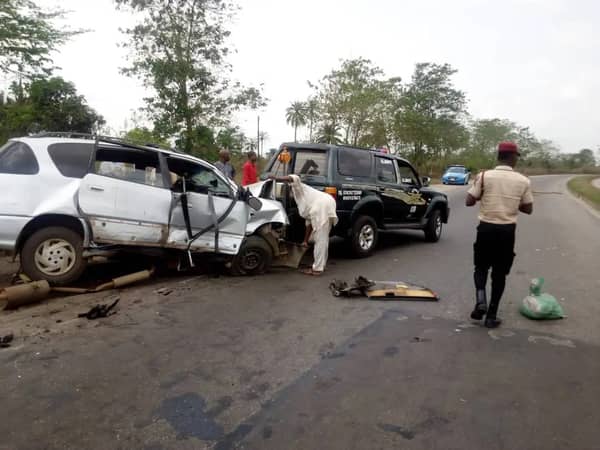
From the Lagos–Ibadan Expressway to the Kano–Zaria highway, Jos–Makurdi corridor to Ore–Benin route, Abuja-Kaduna road to Owerri-Aba-Port Harcourt Expressway and elsewhere in the country, Nigeria’s highways have earned notoriety for fatal crashes.
Despite the years of policy promises, campaigns and the presence of the Federal Road Safety Corps (FRSC) and paramilitary on the highways, road crashes continue to claim thousands of lives yearly, with many of them avoidable.
The World Health Organisation (WHO), in its 2024 statistics, estimated that over 41,000 Nigerians die yearly from road crashes, making the country among the highest road traffic fatalities worldwide.
Also, the quarter one 2025 report obtained from the FRSC, indicated that road crashes in Nigeria reached 2,650, resulting in 1,593 deaths with 9,298 injuries in the period.
Also, in 2024, no fewer than 5,421 people were killed in road crashes across the country, while another 5,081 fatalities were recorded in 2023, showing a seven per cent year-on-year increase.
The rise in 2024 fatalities occurred despite a 10 per cent reduction in the total number of road crashes nationwide, with 9,570 incidents recorded compared to 10,617 in 2023.
The data also showed that the total number of people involved in accidents increased by one per cent, from 70,092 in 2023 to 70,530 in 2024.
FRSC, in its report, attributed the increased deaths and crashes to human factors such as over-speeding, wrongful overtaking, driving against traffic, fatigue, alcohol and substance abuse, overloading, poor vehicle condition and bad roads as well as tragic incidents like the scooping of fuel from fallen tankers, which claimed 411 lives in 2024.
There are also secondary factors like potholes, collapsed bridges, missing road signs, poor lighting, unfinished construction zones and insecurity, which leads to high speed in some corridors among others.
However, the huge disparity in figures on accident rates and deaths in Nigeria between the WHO and the FRSC has fuelled debate, with many saying most crashes, particularly night-time accidents in remote highways, especially in the northern parts of the country, are not formally or intentionally under-reported.
Across the country, certain highways were notorious for killing fields in Q1 2025. The Jos–Lafia–Makurdi axis, for instance, recorded unusually high fatalities, while major crashes on the Ore–Lagos Road, Kano–Zaria Expressway and Abuja–Lokoja highway repeatedly dominated headlines within the period.
Besides, one of the highway’s high-profile accidents occurred on Monday, December 29, 2025, on the Lagos-Ibadan Expressway, involving two-time world boxing champion, Anthony Joshua and three others.
Joshua and his team, in a Lexus Sports Utility Vehicle (SUV) 570, had a collision with a stationary truck, resulting in the death of two occupants, while the former heavyweight champion and the driver sustained minor injuries.
Immediately after the crash, the FRSC attributed the accident to wrong overtaking and over-speeding, the police deduced a tyre burst, while the driver of the vehicle mentioned brake failure as the cause of the accident.
Despite these unpleasant data from the FRSC, there is hardly any measure put in place to prevent recurrence, as remote and immediate causes of the accidents are not released to the public, and attempts by the Nigerian Investigation Safety Bureau (NSIB) to delve into the terrain are met with stiff restrictions.
FRSC and failed campaigns
Speaking on the high rate of accidents on the highways, transport analyst, Olawunmi Bamidele, said over the years, the FRSC had introduced several initiatives like speed limiters, seatbelt enforcement, crash helmets for motorcyclists, alcolysers to detect drunk drivers, radar guns for speed monitoring and public awareness.
Bamidele, however, regretted that many of the measures have faded away without much impact. He purported that enforcement now focuses more on revenue generation and extortion, rather than safety, stressing that technological tools once used to prevent crashes are rarely seen on highways today.
He said: “FRSC alone cannot fix Nigeria’s broken road safety culture, but the corps too must first regain public trust. Many of the punitive measures implemented are geared towards revenue generation rather than preventive measures.
“We need to do more than what we are doing now. There is proper re-orientation across the board. Many of those behind the wheel are not properly educated on road safety. The death rates on Nigeria’s highways are on the high side. Several resourceful persons are wasted due to avoidable accidents on our roads. We can’t just continue like this.”
Also, a transportation and consumer behaviour expert, Dr Emmanuel Mogaji, warned that speeding on Nigerian highways was one of the major issues causing accidents in the country.
Mogaji warned that advances in vehicle technology do not automatically translate to safer roads. He explained that Joshua’s incident had once again exposed the dangers of high-speed driving in a country where road infrastructure and driving culture remained major concerns.
He said: “While modern vehicles are increasingly equipped with advanced technologies that support high performance, this does not justify driving at high speeds on Nigerian roads.
“Road conditions across many parts of the country are uneven, unpredictable and in some cases unsafe. Even the most sophisticated car cannot compensate for a bad road.” He noted that, beyond infrastructure challenges, driver behaviour and training play a significant role in road safety outcomes.
According to him, many motorists in Nigeria have limited exposure to structured driver education, particularly in areas related to speed management, highway discipline, and responsible driving.
Mogaji, who also serves as an Associate Professor in Marketing at Keele University in the United Kingdom, also identified weak enforcement as a major factor encouraging reckless driving.
He explained that motorists are more likely to exceed speed limits when they believe there will be no consequences for their actions. He advocated the deployment of tools such as speed cameras, automated number plate recognition systems and point-based licensing frameworks to improve compliance and deter dangerous driving behaviour.
“These technologies are widely used in other countries and have proven effective in reducing overspeeding and improving overall road safety,” Mogaji added.
However, he cautioned that speed-related accidents are not always the result of reckless driving alone.
According to him, crashes could still occur even when motorists are driving within legal limits, especially in cases of sudden medical emergencies such as strokes or heart attacks.
Mogaji maintained that speed limits remained essential in Nigeria, not just because of vehicle capabilities, but due to a combination of factors that shape road safety.
He urged policymakers, road safety agencies and motorists to treat the renewed conversation on over-speeding as an opportunity to rethink driving behaviour and strengthen safety measures across Nigerian highways.
Also, a mobility expert and Managing Partner at Transtech Industrial Consulting, Luqman Mamudu, said the public discourse around over-speeding must be grounded in evidence rather than assumptions.
Mamudu, like Mogaji, regretted that Nigeria lacked widespread speed-detection infrastructure such as speed cameras or radars. With this, he argued, claims of over-speeding are often speculative unless supported by eyewitness or forensic evidence.
Mamudu, a former Director of Policy and Strategic Planning at the National Automotive Design and Development Council (NADDC), said besides speed, the tragedies expose deeper structural weaknesses in Nigeria’s road safety framework. He also called for stricter control of sirens and convoy movements, warning that Nigeria’s highways “are not designed for convoy-induced speeding”.
“No vehicle should park on Nigerian expressways, especially heavy-duty trucks. Breakdowns must be clearly signposted and removed immediately, with the FRSC deploying rapid-response clearance contractors.
“The misuse of sirens and escorts must be addressed decisively. Genuine emergencies should rely on air transport where necessary, rather than forcing unsafe right-of-way on highways,” he said.
While acknowledging ongoing road rehabilitation efforts by the Federal Ministry of Works, Mamudu stressed the need to prioritise maintenance of existing infrastructure.
He canvassed for the revitalisation of the Federal Roads Maintenance Agency (FERMA), potentially through a public-private partnership (PPP) to ensure sustainability.
Patrick Adenusi of Safety Beyond Borders described Nigeria’s road system as “a perfect storm” where human error meets infrastructure neglect and weak oversight.
Adenusi maintained that even the most disciplined driver could be overwhelmed by fatigue, poor road conditions, inadequate signage, and ineffective traffic management.
Adenusi , in a recent interview, observed that many road accidents, which are recorded at night, especially in northern Nigeria, are hardly reported.