

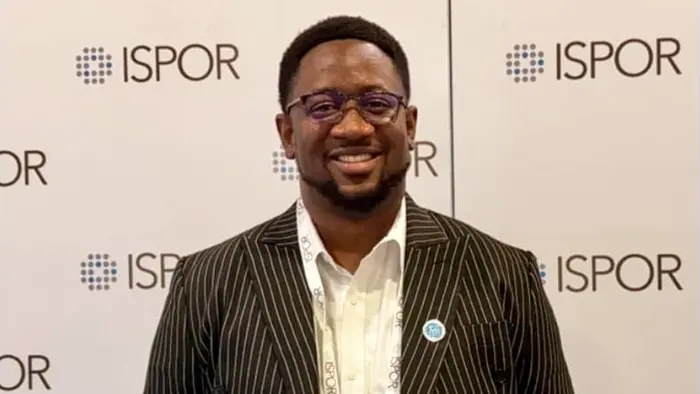
A Nigerian researcher has presented evidence at the world’s foremost HIV conference that artificial intelligence can identify children at risk of dropping out of HIV treatment before it happens, and that reaching them early sharply improves the odds they stay in care.
The study was presented by Gabriel Ezenri, co-Principal Investigator of the Person-Centred HIV Research Team (PeCHIVReT) at the University of Nigeria, Nsukka, at the 26th International AIDS Conference (AIDS 2026) in Rio de Janeiro, Brazil, which ran from 26 to 31 July 2026. It used routine clinical and pharmacy records to predict which children were likely to disengage from care within 90 days, then directed targeted support to those at highest risk.
The importance of the work lies in reframing a problem that has long frustrated HIV programmes. Children depend on caregivers to attend appointments and collect medication, and disruptions such as a change of caregiver, a stock-out or distance to a clinic can quietly push them out of care. In most programmes, tracing begins only after a child has already been lost to follow-up, when recovery is hardest, and the child’s health may already be at risk.
Mr. Ezenri’s study demonstrated that prediction, coupled with early action, can prevent that loss rather than merely respond to it, a shift from reactive to proactive care that could reshape how programmes protect vulnerable children.
The team behind the study applied a machine-learning technique known as extreme gradient boosting to records from 4,812 children across 42 public facilities in Kogi and Benue States between 2018 and 2024, drawing on caregiver stability, medication refill patterns, viral load history, facility stock-outs and distance to clinics.
In 2024, the 623 children identified as highest-risk were offered a targeted package of caregiver navigation, decentralised medication refills and text-message reminders. The results were substantial: re-engagement in care within 60 days rose from 54.2 per cent to 78.9 per cent, six-month retention from 61.4 per cent to 82.1 per cent, and viral suppression from 68.7 per cent to 80.3 per cent. The strongest predictors of prior disengagement were inconsistent caregiver attendance, delayed infant diagnosis and living more than 10 kilometres from a clinic.
Melody Okereke, a pharmacist, policy analyst and global health researcher who attended the conference, said the work showed the promise of carefully governed technology in paediatric HIV care. “Gabriel Ezenri’s study demonstrates the potential of responsibly designed artificial intelligence to move paediatric HIV programmes from reacting to treatment disengagement to preventing it,” he said. “By linking routinely collected data with targeted, practical support, the research provides valuable evidence for improving retention in care while appropriately emphasising privacy, fairness and human oversight.”

What gives the study broad significance is its demonstration that the value of artificial intelligence in health lies not in prediction alone but in linking prediction to practical action, and that this can be done with routinely collected data in a low-resource setting. The model was designed to support, not replace, the judgment of clinicians and community health workers, and the researchers were careful to stress the safeguards such systems require: protecting patient privacy, guarding against bias, and ensuring that children flagged as high-risk receive more support rather than stigma. These are considerations of particular weight where children and sensitive health data are involved. They recommended piloting the approach within electronic medical record systems and testing it across regions.
Gabriel Ezenri is co-Principal Investigator of the Person-Centred HIV Research Team at the University of Nigeria, Nsukka, whose work applies data science and machine learning to HIV care. The study was one of the few abstracts accepted and presented at AIDS 2026, the largest global gathering dedicated to HIV and AIDS, convened by the International AIDS Society since 1985 and drawing delegates from more than 130 countries, with research selected through international scientific review. By bringing evidence from Nigerian public facilities to this stage, Mr. Ezenri helped ensure that African experience informs the global debate over how artificial intelligence should be used to protect vulnerable patients.
