

Across different communities, from Lagos to Houston and now other parts of the world, I have seen boys become disconnected from life, responsibility, and purpose.
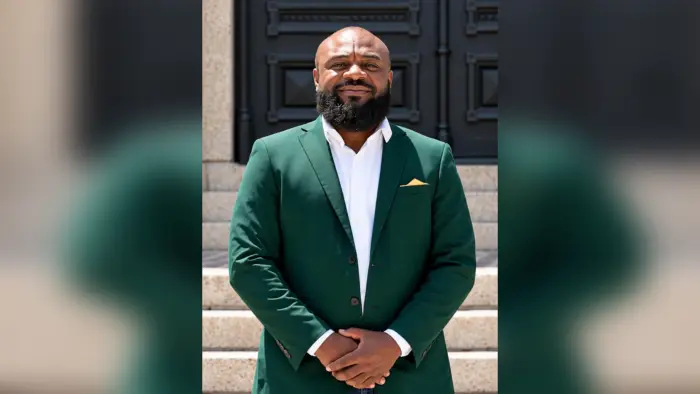
Owolabi Williams is championing a global movement to raise responsible, confident and purpose-driven young men. A social entrepreneur, author, educator and pastor, he is the founder of Boys Lead Foundation, established in 2017 to empower boys through mentorship, education, leadership and character development. Through the foundation, Williams has impacted over 20,000 boys and young men across Nigeria, the United States, Canada, the United Kingdom and beyond. He also convenes the Global Boys Summit and developed the 5E Method of Boys Development, a framework for nurturing boys into responsible adults. A recipient of the U.S. President’s Lifetime Achievement Award and author of several books on fatherhood, mentoring, and masculinity, Williams speaks about his mission to transform boyhood development, strengthen families and raise a generation of men equipped to positively impact society.
By Ijeoma Thomas-Odia
Take us back to Owolabi the boy. What experiences shaped the man you became?
To understand my work, you have to understand the boy I was. I was born and raised largely in Lagos, around Ebute Metta, and many of my earliest lessons came from places that did not look like classrooms at the time. Football was one of those classrooms. Playing on the streets taught me that you had to earn your place, negotiate with people, work with a team and prove yourself. Later, training more seriously under a coach taught me discipline and resilience. Running on the sand at Bar Beach was hard, but it taught me to keep going when something was difficult.
My mother was probably the greatest influence on my formation. She was firm with me, corrected me often and had very high expectations of who I could become. She prayed over me, taught me about people and responsibility, and even wrote ten-year and twenty-year plans for our family. Looking back, I realise she was planting seeds I did not yet understand. School also shaped me, particularly my years at Igbobi College. My teachers taught discipline, consistency and hard work. The church became another classroom where I learned leadership, service and responsibility.
When I look back now, I can see that the boy I became was formed by my family, coaches, teachers and faith communities. None of them necessarily called it formation at the time, but that is what they were doing. They were forming the boy who became the man.

When did you realise that working with boys and young men was more than an interest for you?
It was not one dramatic moment. Looking back, I think I had been prepared for this work for a long time through sports, an all-boys school, church leadership and service. When I moved to the United States, those experiences took on a new urgency. I began working with young people and older men, encountered young offenders and boys on probation, and served as a Big Brother with Big Brothers Big Sisters of Houston. I saw the difference that one committed adult could make in a boy’s life.
By late 2016, I knew I could not remain on the sidelines. I stepped away from my job, and in 2017 Boys Lead Foundation was established in Houston. I am a man of faith, so I see this differently from simply saying I found an area of interest. I believe God did not just give me an interest in boys. He gave me a responsibility and a heart for boys and men.
What did you see in boys and society that convinced you this was work worth building your life around?
I saw boys drifting. While working with young offenders, I encountered teenagers facing serious consequences at remarkably young ages. Across different communities, from Lagos to Houston and now other parts of the world, I have seen boys become disconnected from life, responsibility, and purpose.
One of the things that stayed with me was how quickly a boy could change. A boy who was bright and curious at nine could become quiet by fourteen. Sometimes a boy who was labelled disrespectful was simply struggling to express something underneath the behaviour.
The bigger issue is that intentional formation is often nobody’s clearly assigned responsibility. A boy can be present in his family, school and community and still be unseen by all of them. Families may be exhausted. Teachers may be managing behaviour. Institutions may be responding to crises. We spend a lot of energy dealing with consequences after they appear, but not enough creating the conditions that help boys develop before those consequences emerge. We have to ask who is forming the boy before we start blaming the man. Boys are not the problem. Someone is always forming them. If the father or mentor is not present, it may be the screen, the street corner or an algorithm. That is where we are right now.
You often use the word “formation.” What does intentionally forming a boy actually mean?
Formation is what happens when a boy is given truth, structure, guidance, correction, responsibility, and opportunity over time by people who are genuinely invested in him. It is deeper than motivation or affirmation. When we reduce boys to grades and behaviour, we miss important parts of who they are. We miss identity, emotional language, responsibility and initiation.
A boy needs to know who he is. He needs language for what he feels because sometimes male behaviour is simply untranslated emotion wearing armour. He needs responsibility because boys grow when they have something real to carry. And he needs those moments when a community tells him, “We see you, we expect something from you, and we will help you become it.” Correction without formation can create resentment rather than maturity. A boy does not become a man simply because he gets older. He becomes a man through intentional formation, practical responsibility, and discipline.
You developed the 5E Method. What is the thinking behind it?
The 5E Method came out of years of sitting with boys. I worked with young offenders, school mentoring programmes, and boys in different communities, and I noticed that the mentoring relationships that worked tended to follow the same order. When adults skipped a step, boys often shut down. So I named the steps.
The first is Embrace. Boys want to be seen. Before you can change a boy’s life, you have to win his heart. That means learning his story, understanding what he is dealing with, and showing up consistently enough for him to trust you. Then comes Engage. Once you understand him, you connect him with purpose through meaningful conversations and by entering his world. You are not simply telling him what to do. You are learning who he is.
Equip is about giving him practical tools. That includes emotional language, conflict resolution, decision-making, handling pressure and real-world skills such as enterprise or technology.
Express is helping a boy move beyond receiving instruction to confidently demonstrating what he knows, what he thinks and what he can create. He needs to feel safe enough to ask questions, try, make mistakes and contribute. Finally, Elevate is about helping him become someone who can lead and influence others. Embrace wins his heart. Engage earns his attention. Equip builds his capacity. Express gives him confidence. Elevate gives him a reason bigger than himself.
Society tells boys to “be a man,” but rarely defines what that means. What does healthy masculinity mean to you?
Masculinity is strength under discipline, courage under wisdom and power under service. I call this constructive masculinity. Boys naturally have energy, competitiveness, drive and a desire to protect and build. Those qualities are not the problem. The problem is strength without moral architecture. Those qualities have to be named, trained, disciplined and given purpose. We should not have to diminish boys’ strength in order to teach them responsibility. We need formed men. The answer to broken masculinity is not no masculinity. It is formed masculinity. The goal is not to make boys hard. It is to make them strong enough to be good. When you form a boy well, you are not only helping him. You are creating the possibility of healthier husbands, fathers and leaders.
What are adults and institutions still failing to notice about boys today?
Two things stand out to me. First, who is shaping the boy’s mind? Everything happens in the mind, and the screen is no longer just entertainment. It has become a formation system. A boy’s phone can influence what he believes about manhood, women, success, anger and identity, sometimes while the adults around him know very little about what he is consuming. AI and mental health are also becoming important parts of the conversation about how boys grow and develop.
The second is that we often misread boys’ pain. Some boys will not say, “I am ashamed.” They say, “I don’t care.” They will not say they are lost. They may isolate themselves or get involved with risky people. We punish the behaviour, but we need to understand what is underneath it. If we continue overlooking these things, the consequences will not remain private. They eventually show up in classrooms, families, workplaces, courtrooms and communities. When formation and mentorship disappear, punishment expands. When we ignore distress early, we can end up dealing with much more serious outcomes later.
What are you building now, and what would success look like ten years from today?
We are moving from programmes to infrastructure. Boys cannot be served by events alone. They need permanent people, places and pathways. In North Dallas, we are developing the BEXT Institute for Boys & Men as a platform for practitioner training, applied research, professional learning and new approaches to boys’ development. We want to train the adults who shape boys and develop tools that help parents, schools and mentors better understand a boy’s needs, strengths and growth. Our work has to be informed by evidence, not just conviction.
Boys Lead Foundation remains our community-facing engine, while BEXT is the next layer of professional capacity, research and practice. We are also asking what happens to boyhood in the age of advanced AI. The future will require boys who can think independently, build useful things, lead responsibly and protect their agency in a world of increasingly capable machines. My long-term ambition goes beyond mentoring programmes. I want to create pathways from formation to invention, enterprise, engineering and problem-solving.
Ten years from now, I will not measure success by the number of events we have held. I will measure it by the systems created around boys. I want to see boys moving through adolescence with direction instead of drift, with skills in their hands
