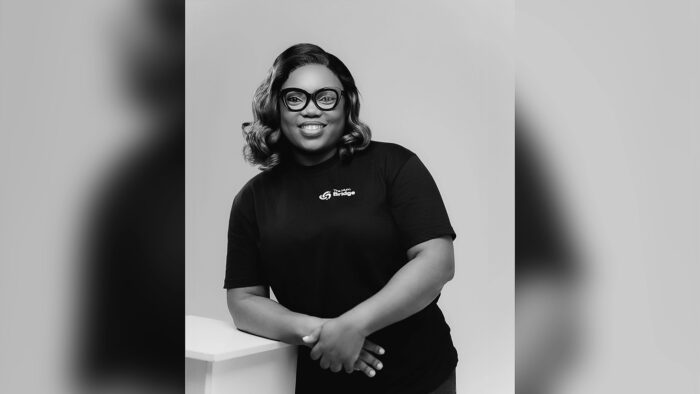
For Solace Olabode, motherhood opened her eyes to the many barriers confronting women with disabilities in Nigeria. A hard-of-hearing mother, she is the Founder and Executive Director of The Mum Bridge & Care Foundation, a disability-led nonprofit committed to building more inclusive motherhood systems. Inspired by her personal experiences of discrimination, inaccessible information and the absence of adequate support, she established the foundation to bridge the gap between mothers with disabilities and the resources, services and opportunities they need to thrive. A People Systems Consultant with experience in organisational development, people management and programme operations, Olabode is championing a rights-based approach to disability inclusion. In this interview, she speaks about turning personal challenges into social impact, dismantling stereotypes around disability and motherhood, and building a society where every mother can thrive with dignity.
How did your personal experiences inspire the establishment of The Mum Bridge & Care Foundation?
My advocacy actually started before I became a mother. I wasn’t born hard of hearing. I acquired hearing loss as an adult, and I experienced firsthand how differently people can treat you once you have a disability. People started making assumptions about what I could or couldn’t do, even when nothing about my ability to do those things had changed. I experienced discrimination at work, and it affected my plans to further my education. It was frustrating because I knew what I was capable of, but people were already making decisions about me based on my hearing. When I became pregnant, I started looking for a community of mothers with disabilities. I wanted to meet women who had gone through motherhood with disabilities, ask questions, and learn from their experiences. I couldn’t find the kind of community I needed.
Even after having my son, there were things I had to figure out myself, including how to recognise when my baby was crying. I kept thinking about how helpful it would have been to have access to parenting information that considered my hearing loss. I also started thinking about other mothers with disabilities. If I was struggling to find information and support, what was happening to women who didn’t have the resources or confidence to ask questions or speak up when something wasn’t right? That was how The Mum Bridge started. I wanted to create the community I had been looking for, but I also knew that bringing mothers together wouldn’t be enough. We needed to address the discrimination, lack of accessible information, and other barriers that make motherhood unnecessarily difficult for women with disabilities.
Having built a community of more than 80 mothers with disabilities, what have you discovered about the realities of motherhood that society often overlooks?
One of the biggest things I have learnt is that mothers with disabilities are not all the same. We have mothers who are deaf, hard of hearing, blind or visually impaired, and mothers with physical disabilities. Even when two mothers have the same disability, their experiences and support needs may be different. I have also learnt how much society underestimates them. We have mothers who are professionals, business owners and women working in different fields, including technology. They are raising children, managing their homes and pursuing opportunities like other mothers, but people sometimes see their disabilities and immediately assume they cannot do certain things.
One of the most painful examples is a mother whose family took her daughter away because they believed her disability meant she couldn’t care for her child. Imagine having to defend your right to raise your own child because someone has already decided you are incapable. Perhaps the most important lesson for me is that we must build with mothers with disabilities, not for them. I cannot assume I know what a blind mother needs simply because I am also a woman with a disability. Our experiences are different. We have to listen to the mothers and involve them in making decisions. They understand their experiences better than anyone else, and they have ideas about what needs to change. I don’t want The Mum Bridge to become another organisation where people sit somewhere and decide what women with disabilities need without involving them.
What barriers do mothers with disabilities encounter in accessing maternal healthcare in Nigeria?
One of the biggest problems is that our healthcare system is not adequately prepared for patients with different disabilities. Take communication, for example. A deaf mother may need a sign language interpreter, while a hard-of-hearing mother may need the healthcare worker to face her when speaking or write certain information down. But how many hospitals are prepared to provide these adjustments? I have experienced situations where my hearing loss was treated as an inconvenience rather than the healthcare worker simply finding another way to communicate with me. When you think about how important medical information is, you realise how serious that can be.
For a blind mother, information provided only in print may not be accessible. For a mother with a physical disability, even getting into the hospital, using an examination bed or accessing a toilet can be difficult. Then there are the assumptions people make during pregnancy and childbirth. Sometimes, healthcare workers have already decided what a woman with a disability can or cannot do without properly discussing her options with her. We have heard concerns about mothers not being given the opportunity to make informed decisions about how they give birth.
Of course, medical decisions should consider the woman’s health and individual circumstances, but having a disability should not automatically mean that someone else gets to make those decisions for her. These problems don’t end after childbirth. A mother still needs information about breastfeeding, immunisation, medication and caring for her baby. If that information isn’t accessible, she is being placed at a disadvantage. For me, disability-inclusive maternal healthcare means that a woman can go to the hospital, communicate with her healthcare provider, understand what is happening and participate in decisions about her own body without being treated as a problem.
Through your Learning Together project, you are engaging mothers with disabilities and healthcare workers across six Lagos communities. How are you driving change through this initiative?
When we were developing Learning Together, we didn’t want to organise a programme where mothers would come and complain about healthcare workers and that would be the end of it. We wanted both groups to sit together and have an honest conversation. Mothers with disabilities experience challenges when accessing healthcare, but healthcare workers also have their own challenges. Some have never received training on disability inclusion, and others work in facilities that don’t have the resources they need. If we want things to improve, we need to understand what is happening on both sides.
Across six communities in Lagos, we are bringing mothers with disabilities and frontline maternal healthcare workers together to share their experiences, ask each other questions and discuss what they can do differently. We want both parties to learn from each other. It is not just about mothers speaking and healthcare workers listening, or healthcare workers teaching mothers what to do. Both groups have something important to contribute.
How are you ensuring that the foundation’s interventions deliver sustainable impact rather than temporary relief?
The first thing to understand about The Mum Bridge is that we want to be exactly what our name says: a bridge between mothers with disabilities and the support, services and opportunities they need. We don’t have to provide everything ourselves. We work with partners who have experience in different areas, and we are still looking to build more partnerships, particularly with organisations that can provide professional mental health support, counselling and other specialised services.
When it comes to deciding what programmes to organise, I am very particular about involving the mothers themselves. We have The Mum Bridge Circle, where mothers discuss their experiences and the issues affecting them. We also have Community Executives drawn from the mothers, so they are involved in how the community operates. The mothers don’t just attend our programmes. They help us plan and run them. We have mothers serving as training leads, coordinating projects and taking responsibility for different activities. Even with our skills training, we asked the mothers what they wanted to learn.
We also have a seven-member Board of Trustees that provides governance and oversight, including a mother with a disability, and a team that supports our programmes and daily operations. I understand that one programme cannot solve everything. Teaching a mother a skill will not automatically make her financially independent, and providing an assistive device will not suddenly make every public space accessible. That is why we are working on both immediate support and the bigger issues through advocacy and partnerships.
Beyond skills acquisition, what will it take to achieve economic empowerment and financial independence for mothers with disabilities?
We need to stop assuming that teaching a woman a skill automatically makes her financially independent. What happens after the training? Can she afford the equipment and materials she needs to start? Does she have customers? Can she access funding? These are questions we need to ask before we start celebrating the number of people trained.
For Bridge to Business, we trained 20 mothers with disabilities in baking and business skills. We made provision for practical materials and equipment because we didn’t want mothers to finish the training without having anything to continue practising with. But one thing I have learnt from our community is that many mothers with disabilities already have skills. What they don’t always have is access to the resources they need to earn from those skills. We have mothers who know how to bake but don’t have the capital to start their businesses. We have a mother who is a graphic designer but doesn’t have a laptop. She already has the skill, but without the equipment, she cannot earn from it.
Another mother has been saving to buy a wheelchair for years, but whenever she gets close to the amount she needs, the price increases. When you think about how important mobility can be to someone’s ability to work or run a business, you begin to understand how these things are connected. We need more business funding opportunities that deliberately include women with disabilities. We also need to consider accessibility when organising training or creating opportunities. There is no point announcing a programme for women if some women cannot access the venue, information or application process.
Through The Mums You Don’t See, you are giving visibility to mothers with disabilities. What societal misconceptions are you seeking to dismantle?
The first misconception I want people to stop believing is that a woman with a disability cannot be a good mother. Motherhood is not one experience, and no two mothers do everything in exactly the same way. A blind mother may have her own way of organising things for her child. A deaf mother may communicate with her child differently. A mother who uses a wheelchair may have different ways of carrying out certain activities. That doesn’t make them incapable of raising their children.
Another misconception is that every person with a disability needs pity. We have mothers who are professionals, business owners and women with ambitions. They have challenges, just like other people, but their challenges are not the only things worth knowing about them. Through The Mums You Don’t See, we want people to hear directly from mothers with disabilities. We want them to share their own experiences and show the parts of their lives that society rarely pays attention to.
There is something else I feel very strongly about. I hear people say, “See ability, not disability,” and I always ask, what is wrong with disability? Why are we so uncomfortable with the word? Disability is not a bad word; it is a descriptive word, and there is nothing shameful about it. We shouldn’t have to pretend someone’s disability doesn’t exist before we can recognise what they are capable of. We can acknowledge disability and still recognise the person’s abilities, achievements and rights. I would rather have a society that understands disability and makes room for people with disabilities than one that keeps telling us not to see it.
What do you hope to achieve through Where She Blooms: The Disability-Inclusive Motherhood Summit?
I am really excited about the Disability-Inclusive Motherhood Summit, especially because of how involved the mothers themselves have been in the planning. They are not just people we are inviting to attend. They are part of the process, and their input is helping us decide what the event should look like. We are planning to bring together 100 mothers with disabilities and about 100 other guests, including professionals, organisations and partners. But our main focus is on the 100 mothers and making sure the activities are useful and accessible to them.
We have secured support for 50 assistive devices and three business grants. One part I am particularly looking forward to is our Health Village. We want mothers to have the opportunity to speak with healthcare professionals, access useful health information and connect with services that can support them beyond the event.
We are also planning a visibility runway. So much of what people say about disability focuses on limitations and struggles. I want mothers with disabilities to have a space where they can dress up, feel beautiful, be confident and enjoy being celebrated. But I don’t want the summit to end with everybody taking pictures and going home.
I want the mothers to leave with information they can use and connections that can lead to opportunities. I also want the organisations attending to understand the barriers mothers with disabilities face and consider what they can change in their own services. For me, the real success of the summit will not just be that we brought 100 mothers together. It will be what changes for them afterwards and whether the people and organisations we bring into the room continue to work with us.
What policy and institutional reforms are necessary to make motherhood more inclusive for women with disabilities in Nigeria?
One of our biggest problems is implementation. We have laws, but what do those laws mean in the everyday life of a woman with a disability? Nigeria has the Discrimination Against Persons with Disabilities (Prohibition) Act, but having a law and actually experiencing its protection are two different things. There is something I talk about a lot through our advocacy work: “By Design, But Who Was It Designed For?” Sometimes, when you look at a programme, a hospital or even a government policy, you have to ask whether anyone thought about persons with disabilities when it was being developed.
For maternal healthcare, we need facilities that mothers with different disabilities can access. We need information available in formats they can use, and healthcare workers who understand how to communicate with and support women with disabilities. We also need to address the attitudes that make people question whether a woman with a disability should become a mother or can care for her child. Beyond healthcare, economic empowerment programmes need to be accessible. We cannot say an opportunity is open to all women when some women cannot access the application process or participate in the training.
Assistive devices should also be treated as important tools for independence, not luxuries that women have to struggle for years to afford. We need better data too. How many mothers with disabilities are accessing maternal healthcare? What challenges are they facing? Are government programmes reaching them? If we don’t have this information, it becomes difficult to know where the gaps are.
But most importantly, women with disabilities need to be part of developing and reviewing these policies. Don’t design a programme and then invite us to come and tell you whether it is accessible. Involve us while you are designing it. That is how you avoid creating something that looks inclusive on paper but excludes the very people it is supposed to serve.
What legacy do you hope to build through The Mum Bridge?
My biggest dream is that no mother with a disability should have to go through motherhood feeling isolated or alone. I know what it means to look for a community and not find one, and I don’t want another mother to have to experience that. I also want a future where a woman with a disability can walk into a hospital without wondering whether she will be treated with dignity. Where she can access parenting information, apply for opportunities and take her child to school without constantly having to explain or defend her abilities.
For The Mum Bridge, I want us to grow into a sustainable organisation that supports mothers across different communities in Nigeria. I want us to contribute to research, influence policies and build partnerships that create more opportunities for mothers with disabilities. I am also very conscious that The Mum Bridge should not depend on me alone. We have Board members, a team and mothers within the community who are already contributing their knowledge, time and experience. I want us to continue strengthening those structures so the organisation can keep growing and doing this work for years to come.
Something that is especially important to me is that the mothers themselves must continue to lead. I don’t want The Mum Bridge to become an organisation where I am the only person speaking for everybody. I want mothers with disabilities to speak for themselves, lead programmes, make decisions and advocate for the things that matter to them. I want motherhood to be an experience where women with disabilities have the same dignity, support, opportunities and freedom to make decisions about their lives and children as every other mother.