

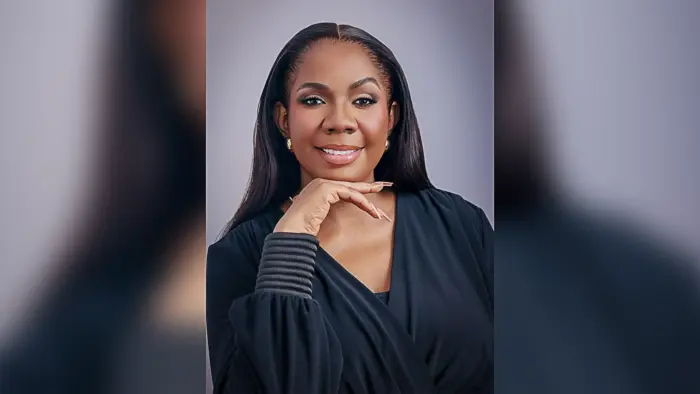
Beatrice Nnadili Eneh is an entrepreneur with global experience across multiple industries, including oil and gas, logistics, supply chain management, manufacturing, beauty and hospitality. She is Co-founder of Aerix Group and Executive Director of Aerix Safety, where she has trained over 500 women in the Niger Delta in PPE manufacturing. Her passion for the beauty industry led to the creation of Beauty in the Motherland (BITML), a platform focused on strengthening Africa’s beauty ecosystem. She holds an MEng from the Massachusetts Institute of Technology, an MBA from Lancaster University Management School and a BSc from the University of Uyo. In this interview, she speaks on BITML’s third edition having trained and empowered more than 600 people in the beauty industry, while connecting entrepreneurs with mentors, investors, buyers and business opportunities.
You have trained over 500 women in the Niger Delta to acquire skills in PPE manufacturing and empowered more than 600 people in the beauty industry. What have these experiences taught you about the role of skills acquisition and economic empowerment in helping women achieve greater independence and influence?
Women everywhere are rewriting the rules, changing the narrative and claiming their seats at different spheres of impact. Yet, there is still a massive population that remains untapped, women who dream of doing more, who want to build nations and economies, but are limited by lack of resources and someone willing to take a chance on them. When I look back at the women we trained in the Niger Delta and the hundreds we have walked alongside in the beauty industry, the biggest lesson I have learned is that empowerment is not just about teaching a skill; it is about handing a woman a mirror to see her own strength. Once she is economically empowered, she stops waiting for permission and takes a chance on her dreams. I chose a long time ago to be a sister and a mentor because I believe the future is incredibly inclusive. But to get there, those of us who have found our voices must hold the door open for the women still trying to find theirs. My goal is to give every woman the advantage, and I will continually pursue it.
Beauty in the Motherland is in its third edition. Aside from being a hub where renowned beauty brands converge to scale their businesses, what other impact has BITML achieved?
The greatest triumph of Beauty in the Motherland has never been about the sheer volume of our numbers, though seeing thousands walk through our doors is breathtaking. For me, my co-founder and our entire team, the true gift is the clarity that attendees leave our conference halls with. Year after year, we bring industry powerhouses together to mentor, teach and equip thousands of dreamers for free. It warms my heart knowing that attendees do not just leave with heavy shopping bags from their favourite vendors; they walk out with sharpened vision, business roadmaps and the inner conviction that their ideas deserve to be heard.
Beyond that, we created a space where human connection is the real currency. Corporate executives, international buyers and seasoned mentors who you would never run into simply walking down an everyday street meet within our halls. We have watched life-changing partnerships form over a shared cup of coffee, employment opportunities handed out on the spot, supply contracts signed across exhibition tables and dreams funded in real time.
Through the BITML Pitch Competition, supported by partners such as the Enterprise Development Centre and Shecluded, we have taken that influence further. We do not just hand founders a microphone; we teach them structure. They are trained, drilled on business strategy and taught how to defend their numbers. Winning the ₦5 million seed capital is beautiful, but the true influence is seeing these founders’ step into rooms full of investors and speak with absolute authority. That transformation is the heart of this movement.
What has been the biggest challenge since the beginning of Beauty in the Motherland?
The most daunting challenge at our inception was getting people to believe in the scale of what we were building. When you set out to build a platform of this magnitude on African soil, you are not just hosting an event; you are asking an entire ecosystem to dismantle decades of operating in silos. You are convincing domestic and international brands to trust you with their capital, reputations and time. In the beginning, the beauty sector was too often treated like a seasonal lifestyle hobby rather than a capital-intensive, multi-billion-dollar economic engine. Behind the elegant halls were sleepless nights, logistics that seemed impossible to untangle and moments of quiet prayer where all we had was our conviction and belief in the vision. Managing supply chains, negotiating venue set-up, aligning hundreds of vendors and building institutional credibility from scratch required sheer grit. But what kept us anchored was knowing we were not building this for ourselves. We were building a table large enough for the entire continent to sit at.
Would you say the objectives that made you set up Beauty in the Motherland are being met?
Definitely. We started this platform because our industry was fragmented. Brilliant formulators were working in isolation, and Africa was largely seen merely as a consumer market rather than a creator of wealth. Today, that synergy is alive and tangible. Seeing veteran founders and emerging indie creators sit side by side, sharing meals, swapping suppliers and holding candid business conversations is living proof that we are doing something right. We have built an international bridge. Foreign brands now deliberately purchase exhibition booths because they recognise that Lagos is where the continental consumer pulse beats loudest, while our homegrown brands are reaching thousands of new, loyal audiences and recording total sell-outs.
The greatest validation of our mission is watching the growth of individual lives. Take Ngozi Ezeka-Atta, founder of Jaga Beauty. In 2024, she walked onto the BITML stage as an ambitious competitor, won first place in our Pitch Competition, secured seed funding and gained vital global exposure. By 2025, she returned to our stage as a seasoned panelist, pouring her hard-won wisdom back into the next generation. When an initiative creates that kind of cyclical elevation, you know the objective is not just being met, it is multiplying.
What are the biggest barriers holding women back, and what practical steps can businesses take to create more opportunities for women?
I have always believed that the barriers on the outside can never hold you back for too long, but the barriers within absolutely can. When I speak to women, I always start with the mind. Society has spent years quietly programming women to multitask on the home front. What many did not see coming is the strength of character that comes with achieving excellence in things that seem “little”.
The very first step is having an achiever’s mindset. You have to look in the mirror and affirm that you belong in the seat of excellence, just as much as you belong anywhere else. But once a woman does that inner work, society has to meet her halfway. Businesses need to intentionally dismantle the old, patriarchal habit of questioning a woman’s capability before she even speaks or presents her portfolio. To create real opportunities, we must move beyond simply giving women jobs. We need to give them the big projects. We need to build environments that support motherhood and actively sponsor women into the rooms that matter. Women are capable of occupying executive leadership seats and being exceptional at their jobs.
Through Beauty in the Motherland, you are working to build an African beauty industry that creates opportunities while leveraging locally sourced ingredients and talent. How can the beauty sector become a stronger vehicle for women’s entrepreneurship, job creation and wealth creation across Africa?
When we birthed Beauty in the Motherland, it was never just about business or trade alone; it was about building a strong bond and network that would translate to a lot more. For this sector to truly create generational wealth, the secret ingredient is self-awareness and unity. We have to consistently choose community over competition and self-sufficiency as a continent over dependence on imported products. We need established creators and founders to take up the duty of mentoring and sponsoring emerging ones, walking them through the harsh realities of business so they do not make the same mistakes. Beyond networks, we need structured data and an evidence-based approach to holistic, sustainable growth. We have the human talent and rich local ingredients right here on our soil, but talent needs capital to scale. We need government policy to support private investors, while independent bodies step up with accessible grants, favourable loans and infrastructure tailored specifically for beauty entrepreneurs. When we combine our natural resources with intentional mentorship and strong financial backing, the African beauty industry will become a global powerhouse.
Having worked with women, young people and SMEs across different sectors, what would you say is the next frontier for women’s empowerment in Africa?
The next frontier is ownership and large-scale industrialisation. Over the last decade, we have mastered the art of the hustle. We know how to launch brands, create products from our kitchens, build fiercely loyal communities and survive tough economies. But beyond survival, there is a need to scale. I want to see African women moving beyond running micro-businesses to owning the supply chain. We need women owning manufacturing hubs, distribution networks and large-scale retail spaces. The next frontier is moving from simply being consumers or small-scale sellers to becoming the industry titans who dictate the market and write the rules.
What must women, businesses, governments and other stakeholders do differently to move from conversations about empowerment to measurable economic impact?
We have to stop over-mentoring and start funding. The conversations, panels and conferences are beautiful, and they inspire us, but inspiration alone cannot buy factory equipment. If we want measurable impact, stakeholders must fund women who are putting in the work. Governments need to move beyond basic empowerment programmes and create tax incentives for companies that invest in female-led businesses. Large corporations need to commit to sourcing their raw materials directly from women-owned enterprises. And for us as women, we must collaborate, pool our resources and demand our worth.
