 Follow Us on Google News


 Follow Us on Google Discover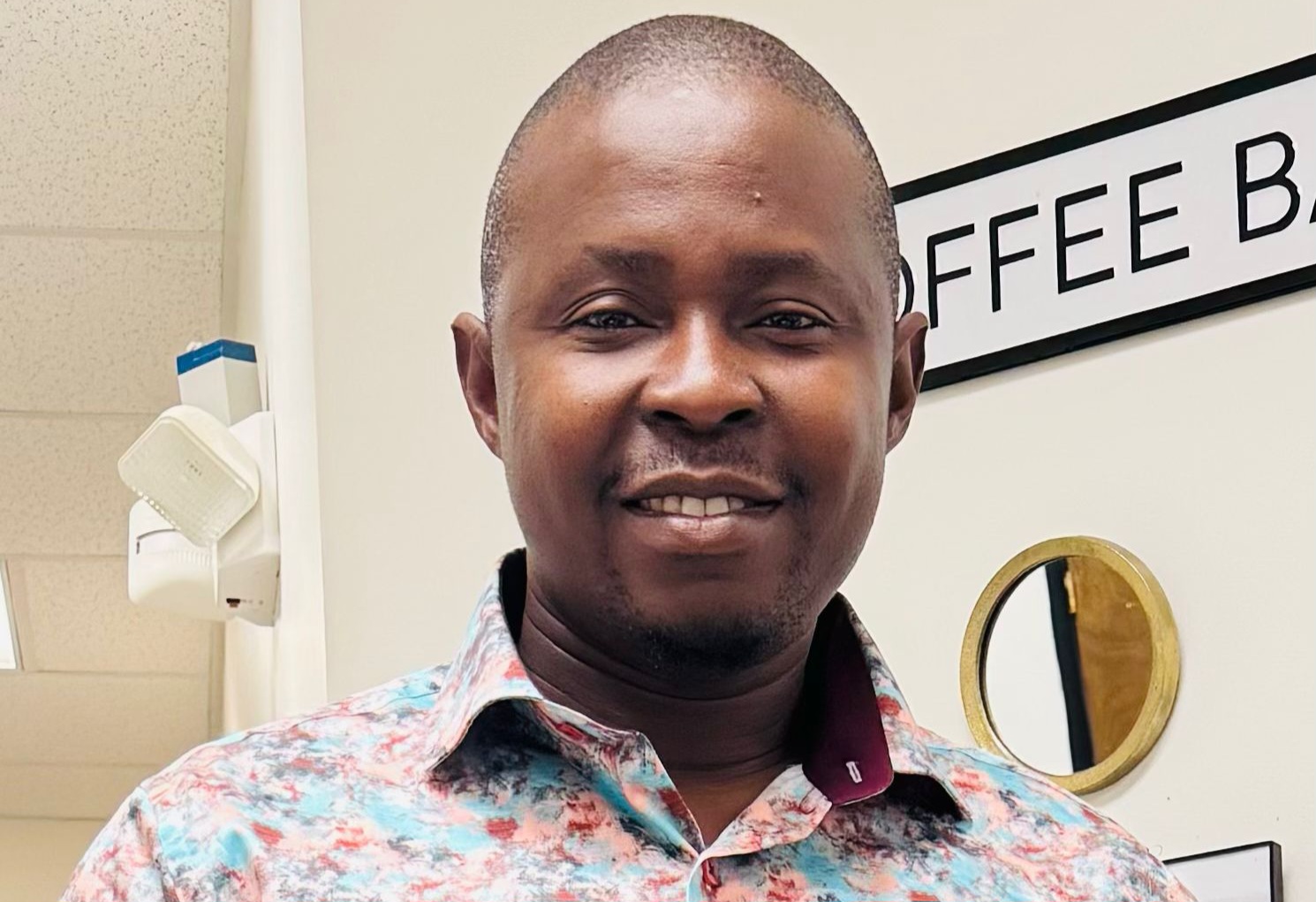
Ajala Olakunle Abayomi is an expert in Information Technology and Cybersecurity. He holds a degree in Physics Electronics from Olabisi Onabanjo University and a Master of Science in Information Technology Management at Indiana Wesleyan University. In this interview, he speaks about his passion in the field of IT, cybersecurity.
Your career in IT, IoT, and cybersecurity is remarkable. Can you start by telling us what inspired you to pursue a career in technology?
My journey in technology began with a genuine fascination for problem-solving. I have always been curious about how technology can address complex challenges and meaningfully improve lives. My academic background in Physics with Electronics laid a strong early foundation, particularly in understanding how systems interact and function. Pursuing a Master of Science in Information Technology Management later gave me the tools to bridge deep technical expertise with strategic decision-making. What continues to drive me is the understanding that technology is one of the most powerful enablers of human progress from cybersecurity to large-scale IoT applications.
That’s fascinating. Many of your projects seem to combine innovation and practicality. How do you balance these two aspects?
Balancing innovation with practicality requires a clear understanding of the problem at hand and a grounded vision of what is truly achievable. During one of my most significant international deployments, a large-scale Telecom IoT Remote Monitoring initiative in West Africa, the goal was to deploy advanced IoT systems while simultaneously addressing local challenges such as cost constraints and limited technical capacity. I trained local technicians, adapted solutions to regional realities, and ensured the project delivered lasting value without overcomplicating the implementation. Innovation must always serve a purpose, and practicality is what ensures it remains accessible and sustainable over time.
Speaking of IoT, it’s one of your areas of expertise. Can you share a specific example where IoT had a transformative impact?
One of the most impactful projects I have been part of involved the deployment of IoT Remote Monitoring Systems for telecommunication infrastructure. These systems enabled real-time monitoring of energy usage, anomaly detection, and theft prevention, a significant concern at remote and unmanned sites. By integrating IoT devices with reliable communication protocols, we achieved meaningful operational cost savings and reduced environmental impact through smarter energy consumption. What stood out most, however, was the level of security these systems provided, safeguarding critical infrastructure and ensuring uninterrupted service in challenging environments.
Cybersecurity is a key subject in your work. How do you approach securing IoT systems, given their inherent vulnerabilities?
IoT systems are particularly vulnerable because they involve large numbers of interconnected devices, each representing a potential entry point for malicious actors. My approach always begins with a thorough risk assessment to identify and prioritize vulnerabilities. In previous roles, I implemented robust security frameworks that included regular testing, firmware update protocols, and end-to-end encryption to protect data transmission. This extended to securing communication channels and applying multi-layered authentication to control access at every level. Beyond initial setup, continuous monitoring and a well-defined incident response process are essential for catching and neutralizing threats before they escalate. IoT security is not a project with a finish line, it is an ongoing operational discipline.
You’ve also worked extensively in data analytics. How do you see data shaping the future of IT and cybersecurity?
Data is the backbone of informed decision-making in both IT and security. In large-scale operational environments I have worked within, insights drawn from IoT device data proved instrumental in driving accurate decisions with tangible outcomes, measurable improvements in efficiency and significant reductions in overhead costs. In cybersecurity specifically, data analytics plays a vital role in threat intelligence. By analyzing system logs and monitoring network behavior, we can identify suspicious patterns and automate responses to neutralize potential threats before damage occurs. As AI and machine learning continue to mature, the strategic importance of data will only deepen, enabling us to predict and prevent attacks with ever greater precision.
You’ve mentioned AI and machine learning. How are these technologies changing the cybersecurity landscape?
AI and machine learning are genuine game changers for the security field. They make it possible to detect and respond to threats in real time something that is simply not achievable at scale with traditional manual methods. Machine learning algorithms, for instance, can analyze enormous volumes of data to identify the subtle anomalies that often indicate a breach in progress. My own research has explored how AI can be applied to anomaly detection, threat prediction, and automated incident response. One of its most valuable qualities is scalability AI can monitor and protect large, complex networks far more effectively than any human team working alone. That said, we must remain thoughtful about the ethical dimensions and ensure these technologies are deployed responsibly and transparently.

Research seems to be a significant part of your career. Can you tell us more about your academic contributions?
Research is central to staying meaningfully ahead in a field that moves as fast as technology does. My work focuses on applying emerging technologies particularly AI and IoT to solve pressing real-world problems. One study examined real-time cyberattack prevention using AI and provided actionable frameworks for securing critical infrastructure. Other published works have addressed emission reduction in the energy sector through advanced IT solutions, and the role of IoT in securing water distribution networks. With over 540 citations across my body of work, I believe my research has contributed meaningfully to bridge the gap between theoretical insight and practical application. Sharing knowledge through peer-reviewed research is one of the most important ways I contribute to the broader technology community.
You’ve worked on global projects. How do you navigate the challenges of implementing technology in diverse cultural and regulatory environments?
Global technology implementation requires cultural sensitivity, genuine adaptability, and a thorough understanding of local regulatory frameworks. During my work in West Africa, I had to adapt technical solutions to align with available local resources and train technicians who were entirely new to IoT systems. Communication was paramount I made it a priority to understand the cultural context and actively involve local stakeholders in the decision-making process rather than imposing external approaches. Compliance with both local and international standards is another critical dimension, particularly in security-sensitive deployments. Navigating these challenges successfully ultimately comes down to a collaborative mindset and a genuine willingness to learn from the communities you are working with.
Your career is filled with accomplishments. What do you consider your greatest achievement so far?
It is genuinely difficult to single out one achievement because each project has been meaningful in its own right. That said, I am particularly proud of my contributions to securing IoT ecosystems at an operational scale. The security frameworks we developed and implemented not only protected critical infrastructure but also established a practical benchmark for how IoT security should be approached across the industry. Seeing the tangible results — reduced downtime, measurable cost savings, and strengthened security posture — is deeply rewarding. Beyond the technical dimensions, the mentorship of local technicians and the transfer of lasting knowledge and capability in West Africa have been among the most personally fulfilling aspects of my career.
The field of cybersecurity is constantly evolving. What do you see as the biggest challenge ahead?
The most pressing challenge is staying ahead of increasingly sophisticated and well-resourced threat actors. As IoT continues to expand globally, the attack surface grows proportionally, making comprehensive security ever more complex. Quantum computing presents a dual-edged challenge — it could render current encryption standards obsolete while simultaneously opening new possibilities for security innovation. Balancing technological advancement with ethical responsibilities, including data privacy and equitable access to security tools, will also be critical. The path forward demands continuous innovation, deep cross-sector collaboration, and a firm commitment to proactive rather than reactive security strategies.
Finally, what advice would you give to young professionals looking to make a mark in IT and cybersecurity?
Stay curious and commit to continuous learning without reservation. Technology evolves rapidly, and the professionals who thrive are those who treat learning as a permanent habit rather than a phase. Build a strong technical foundation but never underestimate the value of soft skills — communication, collaboration, and leadership are just as essential to long-term success. Seek out real-world problems to work on, and do not shy away from taking calculated risks. Most importantly, anchor your work to a clear sense of purpose. Whether that purpose is protecting critical infrastructure, reducing environmental impact, or mentoring the next generation of technologists, having that north star will give your career both direction and meaning.
[ad]

