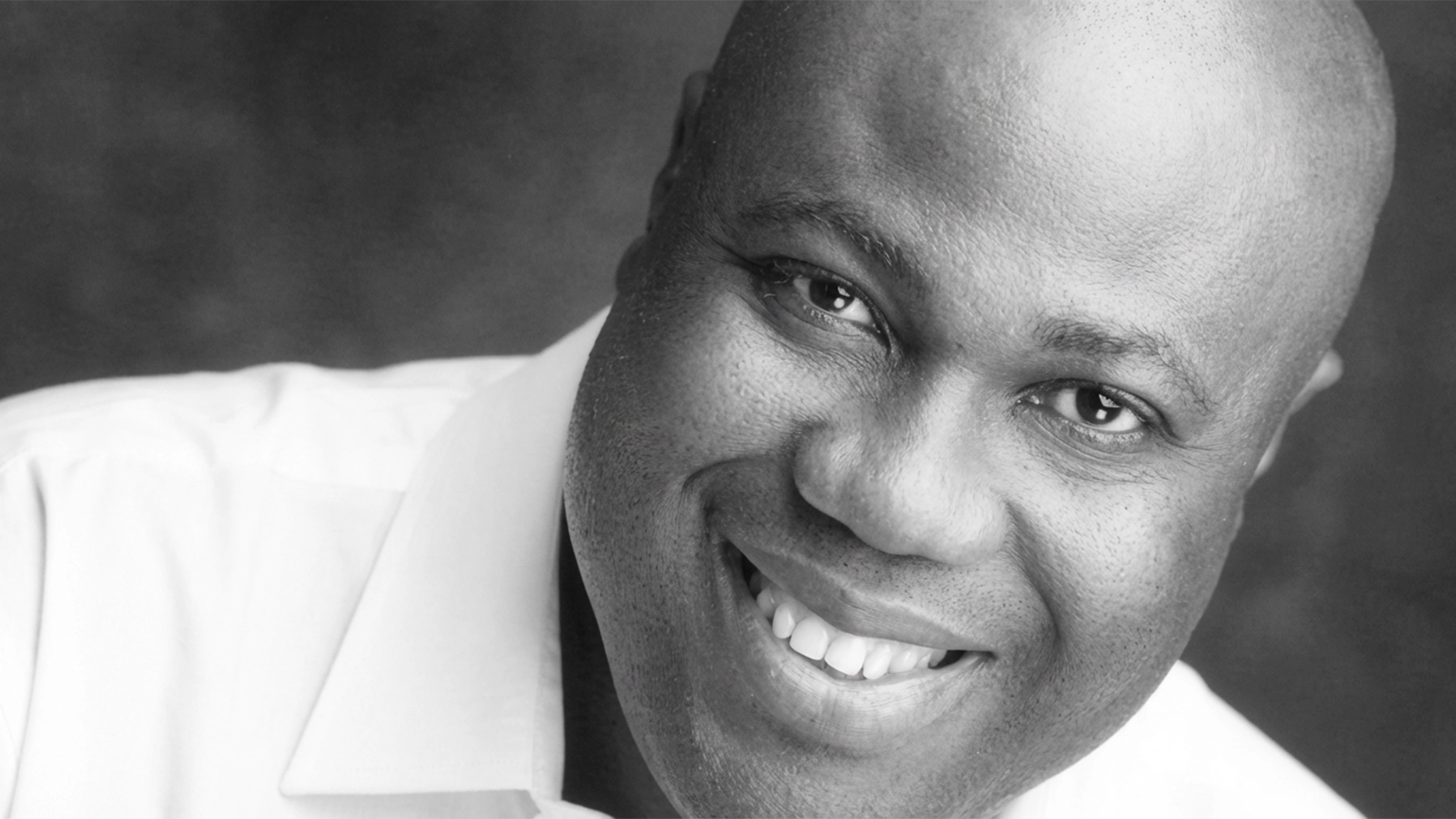
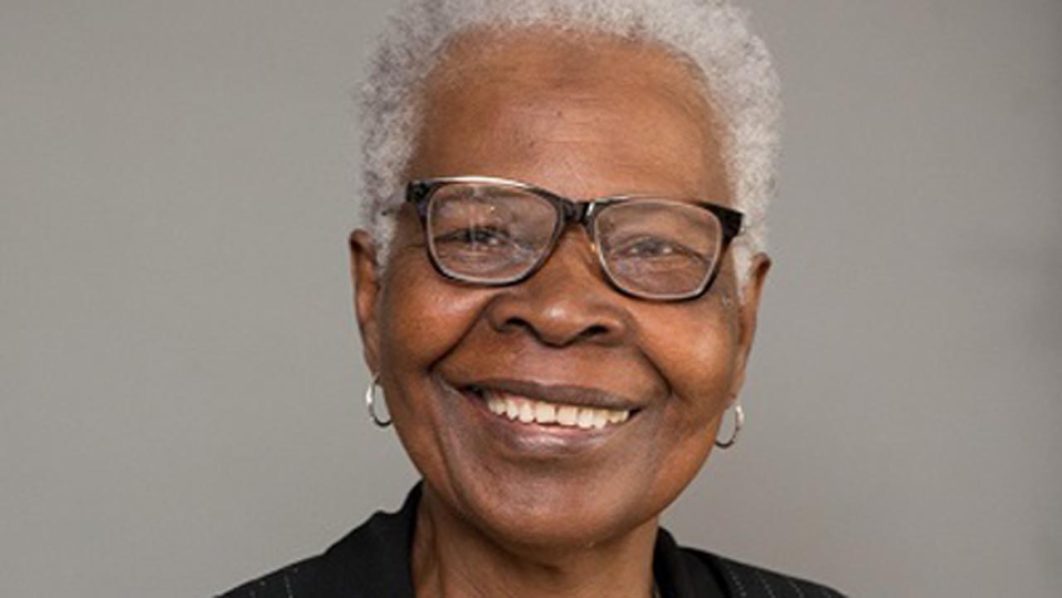
In September 2000, Balogun was nominated by President Olusegun Obasanjo as a Member of the Independent Anti-Corruption Commission, where she served from February 2001 to April 2002, when she resigned and returned to legal practice. In this interview with ENIOLA DANIEL in commemoration of the 60th anniversary of her call to bar at Lincoln’s Inn, Britain, she spoke about the Nigerian Bar, her early years in the profession and more.
Being 60 at the bar is a big milestone, how does that make you feel?
It has come in stages. So when I got to a stage, it dawned on me that I have been doing this for 60 years. I thank God for the energy, good health, for the opportunity to be in the same line for 60 years. I think that’s a good gift from God. And I am still healthy, reasonably healthy. I can do so many things by myself. It’s like a miracle. I am thankful to God.
It feels like being given an assignment, and for 60 years, I have been performing this assignment. I feel like doing more. God has given me the grace.
I don’t feel tired. I am happy that I can still do what I was doing 60 years ago and more.
So, what’s the attraction?
For me, my profession has been my life. Every day I wake up and I’m still a lawyer. I know a lot of people who qualified the same day and they went into business. With law practice, I am serving the profession and my people.
Looking back, is there anything you could have loved to do better?
Not really. If you talk about cases, some cases are won, why some are lost. It’s not possible to win every case.
You must be satisfied that you’ve done your best. For me, being in the legal profession is not just a business for making money. First of all, I have to realise that I am to serve the profession as a lawyer and do the right thing, do things ethically. I try to satisfy myself because after all, it’s a business. I must make some profit out of it, to maintain myself, my office, pay my staff and so on. But the first consideration is to serve the profession ethically. Working as a lawyer is in two-fold; it’s not just to make money but also to develop the system and to improve the profession.
Has the profession provided you the kind of life you wanted?
I will say that I’m quite happy with my situation. I don’t really need much in terms of luxury. I am more concerned about my relationship with people. I am not ashamed to say I don’t have many friends, because there are certain things that I don’t like. I’m not a person who is always looking for money. There’s been many opportunities for me to own land and build a skyscraper like many of my friends. I never thought about that. I always thought that as long as I have somewhere to sleep and afford to pay my rent, I am alright.
When I came back in 1963 and we left the law school, a teacher in the law school commended four of us for doing very well, and that they want to get us a job. One of us said he didn’t accept because his father is well connected with a big company and he’s sure that he will be given a job.
Another one said he wanted the job and he was sent to the Ministry of Justice. Then there was a lady, much older than myself, she asked that she should be connected to a chamber for her to practice. They found one for her, in the chamber of an expatriate. I told the teacher that I didn’t want a job, that I wanted somewhere I could practice law.
I didn’t have any money to set up an office. I was looking around and saw a plaque and I approached it, I told the person that I just left law school and that I was looking for somewhere to practice.
The following day, I was moving around, and that was the period of the civil war, 60s, 70s and so many offices were vacant. So, I saw African Continental Bank on Martins Street, I approached and I was told the space will cost me £400 per year, meanwhile, I didn’t have a dime.
I went back to tell him that I don’t have the money to pay, and he gave me a job to do and that was how I got the money and got the place.
“I never had the thought of getting involved in a big business that will give me a substantial sum of money and even as a grow older, my taste is still average. I rather give my money to Rotary club, and that’s what I’ve been doing.
With the benefit of hindsight, what’s your opinion about the bar today in comparison to your early years?
I am very sad about the bar today. A lot of standards have disappeared in the course of trying to make money at all costs. The first thing lawyers of today want to do is to make money by any means.
I had been at the bar for seven years before I bought my own car; I had to drive myself to Ibadan, Ijebu-Ode and other places, but now, all they want to do is to make money and they think as a lawyer, they must make that money in minutes, at all costs. So they cut corners. They don’t make full disclosure about cases.
Many of them do not follow the ethics of the profession. They do not show empathy for their clients.
As I always advise, follow the rules or it will come back to bite you and then you will lose whatever you got.
Some of them run down people they don’t know. You have to be fair because justice is for truth and hard work, once you do well and you’re honest, you will make it.
People are saying we have too many lawyers; the truth is, we don’t have enough good lawyers.
What is it in the award of the rank of SAN that you didn’t like, and are so unwilling to aspire it?
People don’t understand or know the onus of the legal profession. SAN for me is not something I wanted.
The application process and how people get SAN is different from the system where we were trained.
In Britain, judges see how you appear, how you do your work, and they will approach you to say it’s right time you apply for the Queen’s Counsel (QC) because they’ve seen your performance. All they are telling you to do is to send your particulars.The system here is that you apply, they tell you how many cases you should win, number of cases you must have handled; they come to look at your chamber to see if you have enough books, and others. If they like you, they can consider you.
Many times they jettison people’s application for silly reasons.
Tell us about the drama that played out when you were put forward as Attorney General in Lagos
I was invited to be Attorney General (AG) of Lagos State; the old people were questioning my choice. They said I am not from Lagos, whereas, I was born in Lagos, my father was in Lagos since he was 18. But the governor (Governor Gbolahan Mudasiru) said he knew how much I have done in Lagos and they stopped talking.
Did your national honour come as a surprise to you?
It came to me as a big surprise; they invited me for the honour and what was in my citation was – services to the legal profession. What more do I want than that? Services to the legal profession and not to my pocket.
Is it that you deliberately avoided the bench or the opportunity never came?
I never wanted to be a judge because my nature is such that I am very quick to sense iniquity. I am likely to say I don’t believe a lawyer. Then when that happens, they will complain that I am biased. I do arbitration, but never wanted to be a judge.
There are fewer women in advocacy and litigation. What do you think is the reason and how can it be stemmed?
It’s part of our inheritance. In the old days, people didn’t want to engage women as lawyers because they think, women can’t go everywhere because of their families. So, they only give women cases, which are easily manageable in the jurisdiction they are.
A lot of women don’t really want to be involved in advocacy. They will rather do solicitors work, commercial practice, which is easier for them.
Generally, women cannot exhibit the same level of energy like men, they cannot be running all over the place. Even, it took a long time to have women judges. They were making women Magistrates and not promoting them. So, it is the usual discrimination against women but I think nowadays, a lot of women have proved that they can sit on the bench and do well.
As a senior member of the BAR, what is your opinion on the controversy generated by a letter written by a former partner in the law firm of Wole Olanipekun & co., which made the NBA ask the revered SAN to recuse himself from the chairmanship of the Body of Benchers?
I believe that if you are a member of a body, even if it’s social organisation and the body says they have discovered something against you, you should step down and let them hear it. Clear yourself.
That letter was written in his office and it’s not complimentary. For somebody to be touting for a brief is unethical. At least, for the sake of clearing the air, even if he doesn’t know anything about it, he should even be calling for the panel to sit on the matter, but not doing that, I think he has reduced his own status.
I have represented senior lawyers before at panels and they find them not guilty, so I don’t like it at all and I think he should have cleared the air.
How in your view can the problem of conflicting decisions from courts of coordinate jurisdictions be tackled?
I think the issue of conflicting decision is because they have not being strict with them. They know they are not supposed to do that.
Two judgments cannot satisfy one course. Giving conflicting judgment is ridiculous. In a long time, they should have been sacking them instead of letting it take root.
Are you satisfied with the progress Nigeria has made so far since 1999 in political leadership?
Nigeria has tried but it’s unfortunate that people don’t realise that we are supposed to move forward from where the last people left.
Just look at the way they are campaigning, why is everybody abusing themselves?
If you look at history of politics in Nigeria, after the British handed over, though we had rascal politicians, they were not abusive or told lies because they wanted to play down the achievements of their opponents. We have never had the scale of violence we are currently experiencing, it is too much. Why do you just want to kill?
What needs to be done to get out of the woods?
We should just pray to God to give us a good leader who will listen to the aspirations of the citizens. Politicians know what Nigerians need, but they promise heaven and earth but behave as if we don’t exist when they get there. Again, why do they have to take so much money? The money that they suppose to use to improve the country, pay the teachers, pay the medical personnel they pocket for themselves.
What should we be looking at in the area of judicial reforms?
I think the courts have tried, even the Supreme Court with all the condition of service that is not good enough. By and large, they have done their best. Judges are not supposed to go on strike to get better conditions, it’s the lawyers who are supposed to speak for them but we are so busy doing our own thing.
I don’t think much needs to be done except to improve the situation of the judges. In Lagos, some judges live in Ikeja and have to seat on the Lagos Island. If we could provide enough accommodation for them in each area where they sit for cases, that would improve service delivery. We ought to make them comfortable, pay them good salary, and give them good conditions. Some 65 years old judges are looking older than myself.
Some judges don’t have orderlies to sit with them in court. If anything happens, they just run to their chambers. There is no policeman to help; whereas, in the old days, they had two police officers, one for the court, one personally for them.
I think they should increase the years of service, from 65, by conducting medical test and aptitude tests, to determine who can continue and let them have more years. Abroad, judges can get to 80 years because the older you get, the more mature you are, and the better your judgments, but here, the conditions are not good enough to keep them. Government doesn’t take care of them enough.
You will run back if you go to some judges’ chambers. They are looking small and many are sharing the same office space with their secretaries and registrars.
Many are of the view that legal education requires overhaul, what do you think?
Definitely; I think so. We are becoming like factories. When you have a class of 1,600 for a practical course, how much can they learn? the condition is not good enough.
I want somebody to tell me which of the lecturers have gone for further courses, even if it’s three or four months.
You must train the trainer. They are using the same textbook they used five years ago. A lecturer doesn’t have books unless he buys. So, you cannot improve legal education by hiring them without equipping them. You have to make them comfortable, and it is important that they also have more training. They cannot be churning out what they learnt 10 years ago. Teachers are not well treated at all.