 Follow Us on Google News
 Follow Us on Google Discover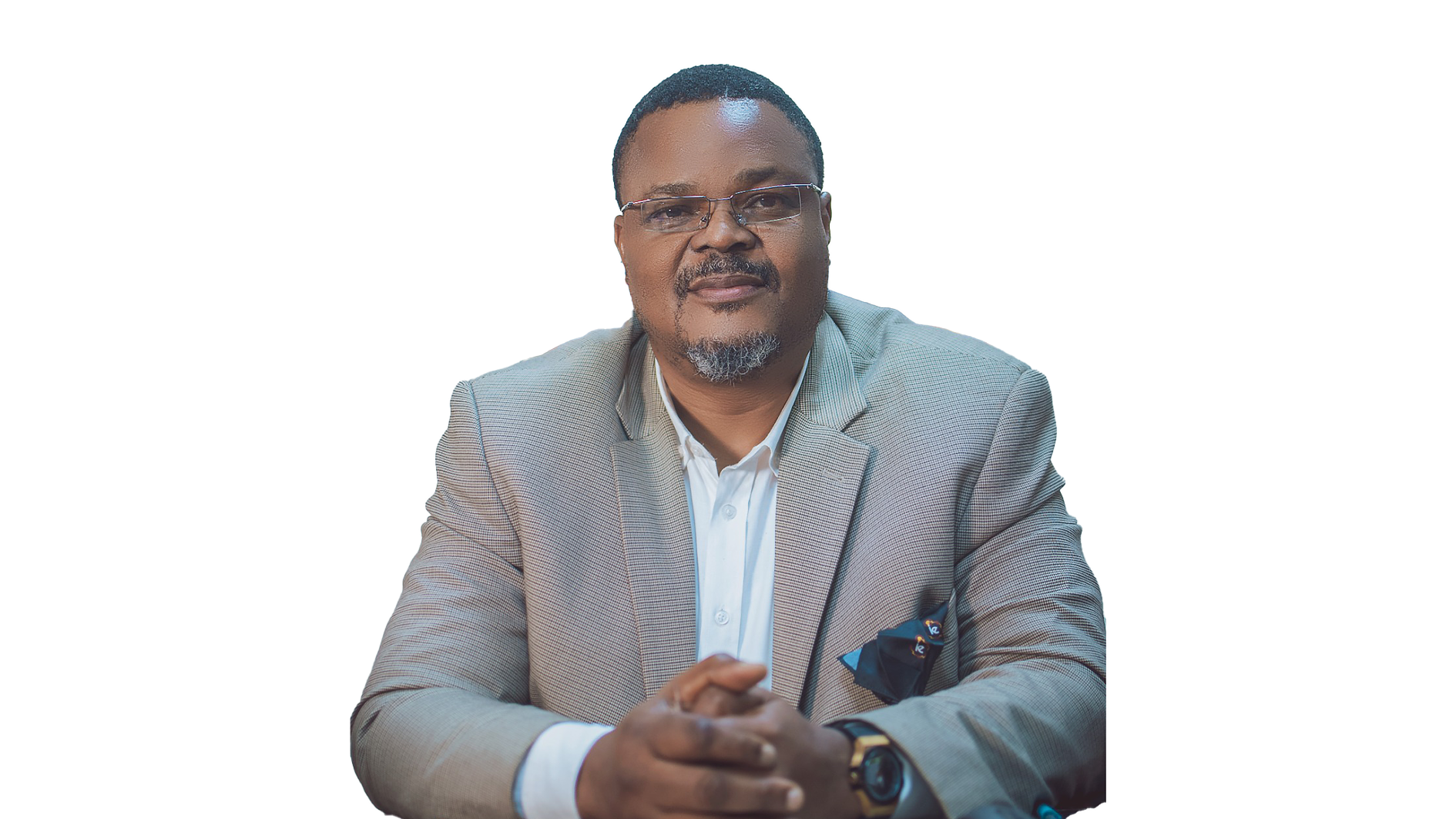
Mike Oluseun Igbodipe is the Chief Executive Officer (CEO) of Security Skills Development Company (SSDC), a leading security training firm in Nigeria. He has over three decades’ post-graduate experience in security practise and management. He served in the Department of State Services (DSS) for 13 years and 20 years in corporate security management, working in several sectors such as telecommunications, aviation, oil and gas, and energy as chief security officer. A TPMA Certified Trainer awarded by International Finance Corporation (IFC), Igbodipe is also an alumnus of Lagos Business School (LBS). He is a member of American Society for Industrial Security (ASIS) and a Fellow of the Nigeria Institute of Security (NIS). In this interview with ONYEDIKA AGBEDO, Igbodipe addressing raging issues in the Nigerian security sector, calling for a deeper and formal relationship between the private sector and the government, as well as a platform to bring senior private security professionals in the country together to advance the sector through skills and career advancement programmes.
What inspired the setting up of Security Skills Development Company (SSDC)?
The decision to set up this company was taken to challenge the system, if I have to put it that way. We are not just coming to the security sector as a guard company, which is common. We are coming to the sector to address critical issues bordering on how the private security sector should contribute to the national security discourse. We believe strongly that the national security framework, which this government is re-jigging, just to make sure that we get to that state of near perfection, still does not have the private sector contribution. We have decided to shift from the norm to a new landscape that is more intellectually based to challenge the status quo, so that at the end of the day we have a common ground to develop security across Nigeria and develop our sector.
What are you bringing into the security space?
Principally, we offer certified security training. Our training is not limited to corporate organisations alone but our primary focus is corporate organisations. We also do public security awareness training. When we talk about security awareness training, we are going to come up with a podcast so that we can talk to everybody almost on a daily basis, including the layman on the street. What does he/she need to know and how can he/she contribute to the security of the society?
So, we are going to take a departure, which I’ve always been saying, from what we currently have now in the industry. What we currently have in the industry is that people who are operating in the private security sector are providing services that are driven towards property and what readily comes to their pocket. We are not only keen about that. If, for instance, we start our podcast, we’re not going to charge anyone. It’s free of charge. We publish the research works we do here. It’s for free; we don’t charge anybody for it.

So, these are some of the things that we do from time to time. We also sell security equipment and the nature of the security equipment we sell is the type that will protect people because our focus is protecting people and assets. One of the equipment we sell is called ceramic films. Ceramic film is a type of film you place on your vehicle that makes it difficult to break into. For instance, if you are in traffic in Lagos and someone tries to break your glass to rob you, there’s no way the person can break into your vehicle if you have that ceramic film on it. If they hit the car with stone and iron, the glass will not break.
So, that’s part of the services we provide. Remember, we are not a guard company. We are not an investigation company. We are an intellectual-based security firm. That’s why most of the services we provide here are based on the outcomes of research we conducted.
What differentiates you from other security companies in the country? Also, how much interface do you have with governmental organisations like Civil Defence that regulates private security companies in Nigeria?
We take pride by saying that we are the first indigenous security training and consulting firm that is driven by intellectualism in Nigeria. We are all professionals here. I may be the arrowhead of the firm, but I have a lot of colleagues who are retired that are also facilitating for us one way or the other. What we do is we speak to specific needs of people.
We are different in the sense that we first of all understand what the issue is. We can do a sort of audit for you. That audit means that we have to investigate how you are, the type of vulnerability that you have and then design your solution for you. Your solution may not necessarily be a guard. So, we are deeper in terms of finding security solutions to people’s needs. We are not a generic security service provider.
On the interface, we don’t have any regulatory government agency. We don’t have it. By law, the Civil Defence Corps is only entitled to monitor activities of guard companies, security guard companies. So, I have a relationship with them. The commandant here is very, very close to me. But the problem for me is that I can’t understand the relevance of what I do to what they do. But the issue here is that we want to make a difference. How do we make that difference? Unfortunately, government does not have a platform to really appreciate people like us.
Are your training meant for organisations alone or individuals can also access your services?
Yes. Let me quickly add that our training is not only physical. We do virtual training. We have training coming up in the next couple of weeks for a government agency. It’s going to be done virtually. We are also perfecting our website in such a way that we can upload our training courses so that individuals can look at it, pick any course he/she wants, pay the money required, and then be given the password as well as the course material.
You spoke about the private security sector not being incorporated into government’s plan. How do you think that can be done? What do you expect from government?
I think the government needs to bring the stakeholders together. Let me give you an example of what happened in other countries because I’ve researched this. In the United Kingdom, they started this way. Everybody was running his/her own thing. Nobody cared. But at some point, some key players in the sector came together and said, ‘look, what we are doing now, we need to formalise it. We need to have a framework approved by government and then create standards and all of that.’ And they came under government supervision. They came out with an idea and the government further expanded that idea for them and then gave them authority.
That is why our men who go to the UK cannot just go into any company and wear a uniform and start working. You have to compulsorily go through training, get a certificate and a badge. You also have a number. Of course, with that number, it’s easy to trace you wherever you go. They must run a vector on you and know everything about you before they can deploy you to work anywhere, which is obviously absent here today.
If you are a private investigator, there are certain conditions you must meet. The government must certify you before you carry out whatever you do.
If we got you right, private sector players initiated what is obtainable in the UK now. They took the first step and the government stepped in to fine-tune their plan. What is stopping players in the private security sector in Nigeria from toeing a similar path?
Over 90 per cent of the security companies in Nigeria today are run by the owners. And the first interest of the owner is money – profit! That’s the first thing. But it got to a stage where some owners pushed this idea forward but it became impossible because of infighting and selfish interests.
The bigger fish in the room, among the practitioners, wanted to push through its own idea so that at the end of the day, if they’re able to get the government to accept whatever they come up with, the bigger ones would be more favoured than the smaller ones. Some of the smaller ones saw it quickly and objected to it. So, there has been a back and forth on this up till now. Now, because we cannot organise ourselves, government should call us and say, ‘hey, guys, we need you; we need to work together. Since you cannot organise yourself, this is how we want you to do it.’ They will give us the template and they will enforce it.
How do you think private security can help in addressing the security challenges facing the country?
The first thing for me is creating awareness among people; because there’s no way crime will thrive without innocent people watching, being 100 per cent aware of what’s going on in the continent. If our people are aware, we will have less of this. Remember the case of Umaru Dikko – how the attempt to take him out of the United Kingdom was aborted by neighbours around his house. To what extent are we able to do that?
So, there must be public awareness. If government is the one doing it, the likelihood that people will listen is very low because trust is necessary. That’s, for me, where Civil Defence comes in. That’s their call. They should be the one relating with the civil populace – the face of government, showing confidence and trust; giving people comfort where there are conflicts; where there are disasters and all that. Government has tried to use them for whatever they are doing today. That’s okay. But private-public sector collaboration will deepen the response to the security challenges in the country. That’s very key. And we are at a stage where the government has to initiate that relationship.

