 Follow Us on Google News


 Follow Us on Google Discover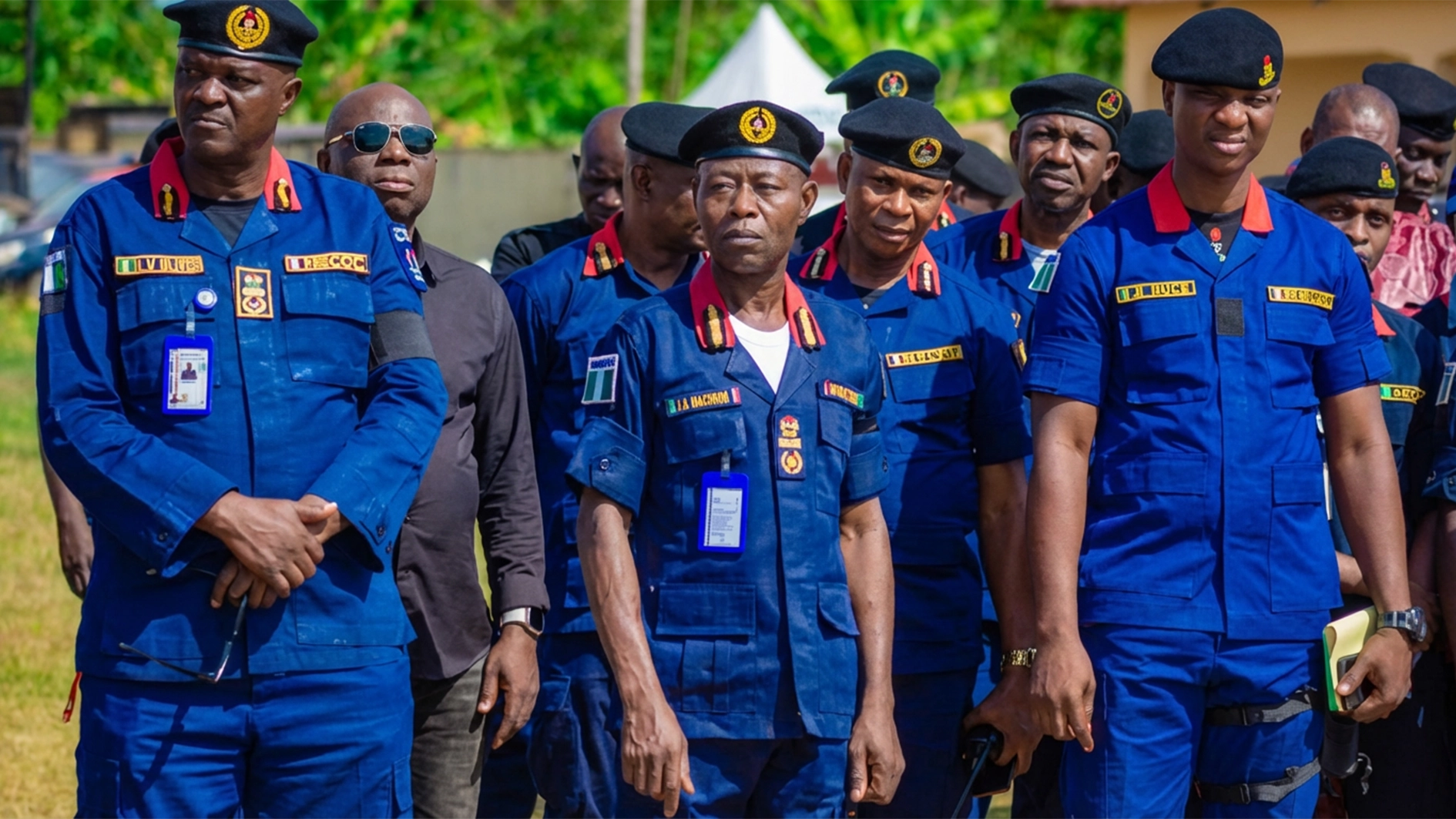
By Oladapo Sofowora
Barely two decades ago, the Nigeria Security and Civil Defence Corps (NSCDC) was an ineffective agency that was merely directing traffic at fuel stations or standing guard at public buildings. Some members of the public gave it the moniker ‘Guguru Defence’ of ‘Oga at the Top’. It was rarely celebrated or mentioned in the same breath as the Police or the Army.
The elevation of Professor Audi Abubakar was the turning point that changed the trajectory of the agency. In just three years at the helm of affairs, the soft-spoken academic-turned security czar has done what many thought was impossible.
He has transformed a modest civil guard into a formidable, tech-driven, intelligence-led force capable of protecting Nigeria’s most sensitive critical assets from economic saboteurs. From the creeks of the Niger Delta to the gold mines of Zamfara, from high-risk schools in the North West to the pipelines feeding the nation’s economy, the new NSCDC is everywhere and it is winning the war.
When late president Muhammadu Buhari appointed Audi as Commandant General of the NSCDC on February 18, 2021, the choice raised eyebrows. Audi was not a career police officer or a retired army general. He is a Professor of Security Studies and Peace Management who had spent years teaching rather than arresting. He had served as Commandant of the NSCDC College of Peace and Disaster Management, but many wondered if a scholar could lead men into the creeks. Those doubts evaporated within months as he shut critics and naysayers up with verifiable tactical evidence.
Audi inherited a corps that was underfunded, under-equipped, and under-motivated. Officers grumbled about unpaid allowances, obsolete equipment and stunted promotions that took years. The public saw the NSCDC as a secondary agency, useful during elections or fuel queues but not a serious player in national security architecture.

Audi saw something else. He saw potential. The legal framework was there. The NSCDC Act gives the agency the power to protect critical infrastructure, but no one before him was audacious to fully operationalise that mandate. He began with three core convictions.
First, no agency can protect what it does not understand, so his officers would become experts in pipelines, mines, power grids, and dams. Second, technology beats brute force so he would equip his men like never before. Third, synergy kills silos, so he would end the petty rivalries that had long crippled Nigeria’s security architecture.
The result has been nothing short of revolutionary. One of his first and most audacious moves was the creation of the Mine Marshals, a specialised unit dedicated solely to combating illegal mining. For years, Nigeria bled billions of dollars yearly to illegal miners who dug gold, lithium, and other solid minerals without permits, paying no royalties and often operating under the protection of bandits and local strongmen. Entire communities were displaced; the environment was ravaged and the federal treasury saw almost nothing.
Audi decided to change that in collaboration with the Ministry of Solid Minerals Development. He handpicked a team of officers trained in geology, surveillance and anti-banditry tactics. They were given armoured vehicles, satellite phones, and intelligence-gathering protocols. Their mission was to infiltrate illegal mining networks, document evidence and dismantle operations from the inside, take them to court and secure conviction.
The results have been staggering. As of April 2026, the Mine Marshals have dismantled over 400 illegal mining sites across Zamfara, Osun, Nasarawa and Kaduna states, arrested more than 600 suspects including foreign nationals, seized hundreds of trucks of illegally mined minerals and recovered millions of dollars in unpaid royalties and taxes. But beyond the numbers, the Mine Marshals have sent a powerful message that Nigeria’s mineral wealth is no longer free for the taking. In Zamfara, where bandits once operated open-air mining pits with impunity, communities now report seeing NSCDC patrols daily. Miners, who once evaded licensing, are now fearful of arrest and queueing at government offices.
If the Mine Marshals were Audi’s opening gambit, the war on oil theft has been his masterstroke. Nigeria loses an estimated 200,000 barrels of crude oil daily to thieves who tap pipelines, cook crude in illegal refineries, and sell the products in black markets. For decades, the government tried everything humanly possible, which includes amnesties, military operations, community engagement and a whole lot; but the theft continued. The creeks of the Niger Delta remained a lawless frontier but Audi approached the problem differently. He understood that oil theft is not a military problem alone; it is an intelligence, technology, and corruption problem. His strategy rested on four pillars: Intelligence-led operations using a network of informants within oil-bearing communities; technology deployment including drones, GPS trackers and body-worn cameras; joint operations with other security agencies and disrupting the entire illegal value chain from the creek to the buyer.
The results: Over 400 illegal refineries have been destroyed; more than 800 suspected oil thieves arrested in 2025 alone; an estimated 120,000 barrels per day recovered from protected zones, and legitimate oil production has increased in areas where the NSCDC operates.
While the oil and mining sectors have received the most attention, Audi has quietly expanded the NSCDC’s protection mandate to cover virtually every piece of critical infrastructure in Nigeria. In response to the wave of school abductions, Audi created the Special Intelligence Squad (SIS), a unit trained in school security assessments, hostage negotiation and rapid response. The SIS has now assessed over 500 high-risk schools across the country, providing security blueprints, training school guards and establishing direct communication lines with NSCDC rapid response teams. Several attempted abductions have been foiled because the SIS identified vulnerabilities and recommended fixes before the attackers struck.
Audi has also signed memoranda of understanding with the Ministry of Power and the Transmission Company of Nigeria to deploy NSCDC personnel to critical power infrastructure. Vandals, who once stripped transmission towers for scrap metal, now find themselves facing arrest. Dams in Kainji, Jebba, and Shiroro now have dedicated NSCDC security details.
With Nigeria’s digital economy growing, telecom infrastructure has become a target for vandals; so NSCDC’s officers now conduct regular patrols around cell towers and fibre optic cables, reducing downtime and economic losses. The NSCDC now provides security at major railway stations and supports the Federal Airports Authority of Nigeria in securing airport perimetres.
For all his external successes, Audi insists that the most important transformation has been internal. When he took over, the NSCDC suffered from low morale, widespread corruption and a lack of public trust. Officers were poorly paid, poorly equipped and poorly trained. Promotions were often delayed for years. Discipline was lax. Audi addressed these issues systematically.
He cleared months of salary arrears, ensuring that officers were paid on time. He regularised promotions ending the logjam that had left competent officers stuck at the same rank for years. He improved housing allowances and medical benefits.
The March 2026 rollout of drones, body cameras, GPS trackers, and bulletproof vests was just the beginning. The agency has also procured new patrol vehicles, communication radios and forensic kits. For the first time, NSCDC officers have equipment that matches or exceeds that of their counterparts in the Police.
Audi has revitalised the NSCDC College of Peace and Disaster Management, introducing courses on digital forensics, drone operation, intelligence analysis and counter-terrorism. Officers now undergo continuous training not just basic recruitment courses.
At the same time, Audi has been ruthless with corruption. Dozens of officers have been dismissed or demoted for extortion, bribery and complicity with criminals. Complaint desks have been established in all state commands. Community liaison officers now attend town hall meetings. The old culture of arrogance and aloofness is slowly being replaced by professionalism and approachability. The impact on morale has been palpable.
Perhaps Audi’s most underappreciated achievement has been his success in fostering inter-agency cooperation. For decades, Nigeria’s security agencies fought each other as often as they fought criminals. The Police resented the NSCDC. The NSCDC competed with the Department of State Services (DSS). The Army saw everyone else as amateurs. Audi refused to play that game. From his first week in office after he was reappointed by President Bola Tinubu, he reached out to every security agency with an open hand. The Inspector General of Police visited his office to open room for more inter agency collaboration. His message was simple – we are all on the same team.
The Joint Intelligence Fusion Centre established with the Police in April 2026 is the most visible fruit of this effort. Located in Abuja, the centre operates 24/7 with representatives from multiple agencies sitting side by side, sharing intelligence, and coordinating operations. The centre has already been credited with foiling several planned attacks and dismantling multiple criminal networks. But the synergy extends beyond intelligence. NSCDC officers now participate in joint patrols with the Police. The Corps provides security for military logistics convoys. The DSS shares threat assessments with NSCDC commanders. The walls that once divided Nigeria’s security forces are crumbling.
For all his achievements, Audi knows the war is not won. New challenges emerge daily. Bandits adapt, vandals innovate, the black market for stolen oil and minerals remains lucrative. Audi faces criticism from some quarters that his approach relies too heavily on arrests and destruction, not enough on community development. Others argue that the NSCDC’s expanded mandate has stretched its resources thin. A few question whether a civil defence corps should be operating like a paramilitary force.
Audi answers these criticisms with characteristic calm following the mandate and the Act of the agency to protect critical infrastructure. He wants to establish a National Critical Infrastructure Registry, a comprehensive database of every major asset in Nigeria from pipelines to power plants with real-time security assessments. He wants to expand the drone programme to cover every state. He wants to double the size of the Mine Marshals and the Special Intelligence Squad. He wants the NSCDC to become a model of professionalism for all of Africa.
When the history of Nigeria’s security sector is written, Professor Audi Abubakar will occupy a special chapter. He inherited an agency that many had written off as irrelevant and transformed it into a force that criminals now dread. He did not do it with grand rhetoric or political connections; he did it with hard work, strategic thinking and an unwavering commitment to his officers and his nation. Every day, thousands of NSCDC officers put on their uniforms with pride knowing that for the first time in years they are winning. Audi is not just a Commandant General. He is a reformer, a builder and a spotter of talents. He is perhaps the best thing to happen to the NSCDC since its creation.

