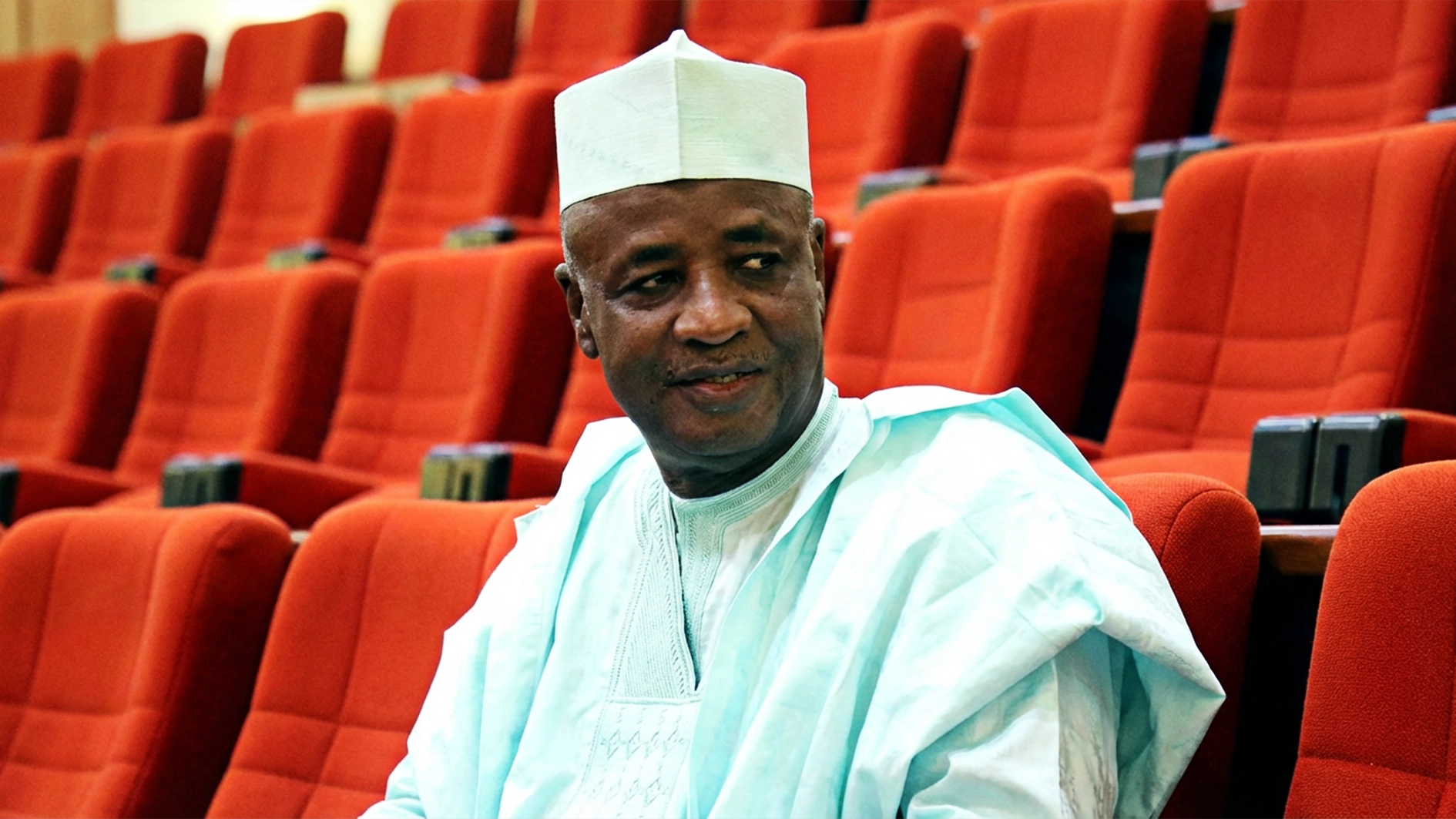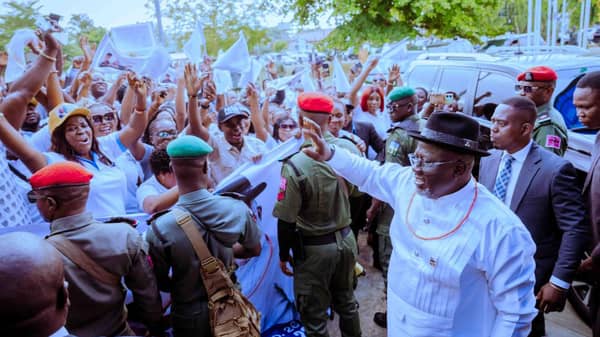
When Governor Sheriff Oborevwori stood before the Delta State House of Assembly to present the fiscal direction of his administration, he did more than outline figures: he offered a portrait of a state undergoing one of its boldest phases of development in years.
With a tone anchored in accountability and an agenda driven by equity, the Governor articulated the far-reaching reforms that have redefined Delta’s public finance management and infrastructure landscape.
At the heart of Oborevwori’s address was a simple but powerful theme: Fiscal Responsibility. The administration, he said, has enforced a culture of discipline that has altered the way Delta State spends, saves, and implements projects. Competitive bidding, stricter contract monitoring, price verification, and enhanced procurement systems now govern the public finance ecosystem. The results, according to the Governor, are evident, projects are better executed, delivered on schedule, and insulated from the cost overruns that once stalled development.
But, perhaps, the most striking victory lies in the state’s domestic revenue profile. In 18 months, Internally -Generated Revenue surged by over 90%, rising from N83 billion in May 2023 to N158 billion by December 2024. By the end of 2025, Delta is on track to cross the N200 billion mark, a 140% leap. This sharp rise was achieved without increasing the tax burden on citizens. Instead, the government blocked leakages, expanded the tax net to include more informal sector players, and simplified compliance through automation. It was revenue mobilization without pain, a heartening message for a population already contending with economic headwinds.
The state’s debt profile further underscores this prudence. Despite executing some of its most ambitious infrastructure projects in recent years, Delta has not borrowed a dime, the Governor emphasized. Instead, the government aggressively repaid existing debts and ensured contractors were duly mobilized and promptly paid.
In DESOPADEC alone, N8.4 billion was recently released to clear liabilities dating back to 2010. The administration also kept faith with its workforce, consistently paying salaries before the 25th of every month and approving N10 billion to offset pension arrears, alongside monthly pension releases amounting to N2.03 billion.
If fiscal reforms underscore discipline, infrastructure tells the story of vision. Oborevwori painted a map of Delta State in transition, a network of roads, flyovers, bridges and urban projects spreading through rural communities and major urban centers.
From federal highways to township roads, the state’s infrastructure agenda is vast and transformative. A flagship example is the completion of the Ughelli-Asaba Road dualisation, the ongoing reconstruction of a section of the Warri–Sapele–Benin Dual Carriageway, a federal road the state took up to ease mobility and enhance public safety.
In the urban corridors, the construction of flyovers at PTI Junction, DSC Roundabout, Enerhen Junction, and the newly awarded structures at Otovwodo Junction (Ughelli) and Uromi Junction (Agbor) are reshaping Delta’s transport architecture. These projects, the Governor noted, were undertaken to eliminate bottlenecks and reduce the daily hardship faced by commuters.
Perhaps, the most ambitious of all is the Trans Warri–Ode-Itsekiri Road, a 15-bridge mega project connecting 10 riverine communities. Conceived in 2006, the project moved sluggishly across successive administrations until Oborevwori’s government cleared outstanding liabilities and injected the capital required to push it to completion. The road is now completed after 19 years and ready for commissioning in the first quarter of 2026.
In Asaba, the evolving Waterfront City Project represents a fusion of urban renewal and economic expansion. According to the Governor, the access road to the site is nearing completion, paving the way for what will become one of Delta’s most modern mixed-use developments.
The Warri Township Stadium, another major project billed to redefine the state’s sports infrastructure, is steadily progressing. Alongside it are the massive stormwater drainage works in Warri, and Asaba which are critical interventions long demanded by residents.
Beyond the headline projects, Oborevwori took time to highlight an impressive list of road and bridge constructions underway across all 25 local government areas. These span more than 50 major projects and reveal a pattern of equitable distribution.
From the Isele-Azagba/Otulu Road in Aniocha North, to the Amai/Aragba Road in Ukwuani, to the Okerenkoko–Pepeama–Kokodiagbene Road in Warri South-West, the administration has opened a new chapter of accessibility for rural dwellers and urban residents alike.
In Ndokwa, the Kwale–Beneku Bridge, the Aboh–Akarai Road are redefining linkages across the region. In Isoko, the Okpolo-Enhwe–Uwheru Road, the Ellu/Ovrode/Ofagbe/Orie-Irri axis, and the Emevor–Ivrogbo–Orogun Road are improving trade, travel, and social mobility.
In Udu, Uvwie, Ughelli, Ethiope, Burutu, Bomadi, Patani and Sapele, the pattern repeats, rehabilitations, expansions, asphalt overlays, bridges, and community access projects that directly impact commerce, agriculture, schooling, and healthcare access.
The message behind the extensive list is unmistakable: Oborevwori is building a Delta where no community feels forgotten. To sustain this development trajectory, the Governor pointed to emerging revenue initiatives. The Koko/Kwale Free Trade Zone, now hosting 11 anchor tenants, stands as a growing industrial corridor. The groundbreaking of the Kwale Free Trade Zone facility further positions Delta for new investment inflows.
Equally strategic is the Delta Azure Carbon Mosaic Project, a nature-based Carbon initiative attracting strong Federal Government interest due to its long-term cash-flow potential. These ventures, he said, reflect the state’s readiness to innovate beyond traditional oil-based revenue.
Despite a monthly wage bill of ₦16 billion, one of the highest among sub-nationals, Delta continues to prioritize the welfare of public workers. Salaries are paid ahead of schedule, promotion arrears cleared, and pensioners are being compensated through one of the most aggressive settlement drives in years.
In a period where many state governments struggle with salary backlogs, Delta’s record provides a rare contrast. The Governor acknowledged the economic challenges facing citizens in the last two- and -a- half years.
While the speech segment on social protection continues beyond the excerpt provided, Oborevwori reaffirmed the administration’s intentional approach to shielding the most vulnerable through targeted programmes, relief schemes, and structural interventions.
Governor Oborevwori’s budget address was not merely a fiscal ritual. It was the portrait of a state determined to rebuild trust, drive development, and govern with transparency. With rising IGR, zero borrowing, rapid project delivery, and an expansive infrastructure footprint, Delta State is charting a new path, one where financial prudence powers physical transformation. It is a story still unfolding, but the direction is unmistakable: Delta is on the move.