GDN SIDEBAR
Before Netflix, YouTube and multiplexes, Nigerians gathered around travelling screens, cinema halls and television sets. From film vans and packed cinemas to VHS tapes, VCDs and streaming, the way Nigerians watch films has changed. The desire to watch them together has not.
On September 26, 2026, more than 51,000 people gathered at Tafawa Balewa Square in Lagos to watch Black Market.
The screen was enormous. The crowd was larger. By the end of the night, the screening had secured the Guinness World Records title for the largest attendance at a film screening. More than 51,000 viewers were officially recognised, surpassing the previous record of 43,624, set in the Philippines in 2015 during a screening of Felix Manalo. More than 51,000 watch Black Market in Lagos
For more than a century, Nigerians have found ways to gather around moving pictures. Sometimes the screen came to them. Sometimes they travelled to find it. At other times, the cinema came home in the form of a television, a VHS cassette or a VCD.
When the screen came to town
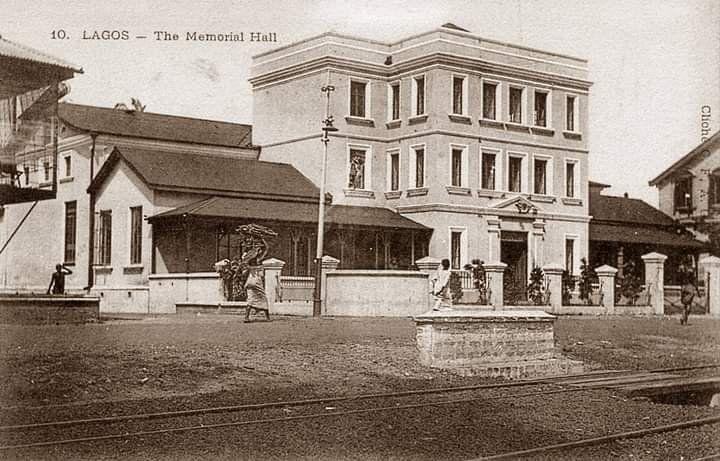
Cinema arrived in Lagos at the beginning of the 20th century. One of the earliest recorded public film screenings in Nigeria took place at Glover Memorial Hall in August 1903. The early history of cinema in Nigeria
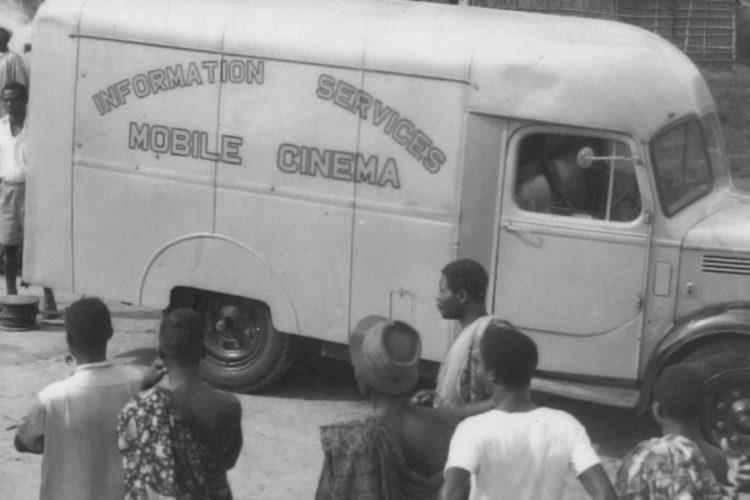
As cinema spread, watching films was not always about finding a cinema hall. Travelling film shows took moving pictures to communities where permanent cinemas were unavailable or difficult to reach.
The colonial government also recognised the usefulness of film. In 1939, the British Colonial Film Unit was established, producing films that were shown to African audiences through mobile cinema. In Nigeria, some of these films dealt with health, hygiene and agriculture, while others carried official colonial messages.
For communities without regular access to a cinema, the arrival of a film van could be an event in itself. By 1954, mobile cinema vans were reported to have reached at least 3.5 million people in Nigeria. When mobile cinema vans brought films to Nigerians
Dr Raphael James, Director-General of the Centre for Research, Information and Media Development, remembers watching a mobile cinema as a child in the early 1980s while visiting his aunt in Onitsha.
News spread through the neighbourhood that a mobile cinema was coming. A white sheet was hung between two poles in the village square as families gathered with chairs and children found places close to the screen. Vendors sold roasted groundnuts and akara while a generator powered the projector.
The film was an Eddy Ugboma production connected to Edifosa, based on the life of the notorious robber Ishola Oyenusi.
For James, the experience was about more than the film. “It was more than entertainment; it was an event, a communal ritual filled with magic and anticipation,” he recalls.
The film ended, but the evening continued. Children re-enacted scenes and imitated the characters on their way home. “The experience wasn’t just about the film. It was about togetherness,” James says. “About seeing your neighbours laugh, gasp, or debate the story afterwards.” That communal experience became part of the memory of cinema itself.
When the cinema came home
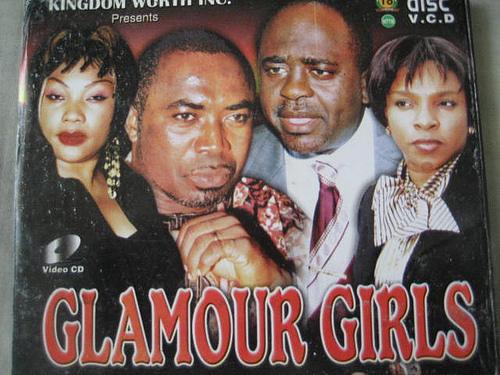
By the 1980s, television had become a fixture in many Nigerian homes, while the video cassette recorder offered another way to watch films. A living room could become a cinema. A VHS cassette went into the machine, the family settled down, and the film began.
For Mary Adebayo, a school teacher, film nights were usually on Fridays. Her family rented films from a neighbourhood shop, sometimes getting them in two parts. A rental cost between ₦20 and ₦40, she recalls, but the film was not always available immediately. If someone else had rented it, they had to wait for it to be returned.
The waiting was part of the experience. Once the film arrived, the family would eat snacks after dinner and sit together to watch. If the DVD was damaged, there was a fine to pay.
Those nights remain memorable for Adebayo because everyone was in the same room, watching the same thing. The shift to home viewing also came as many traditional cinemas faced economic difficulties and changing viewing habits. But while some cinema halls declined, Nigerian audiences were developing a strong appetite for films they could watch at home.
The rise of Nollywood
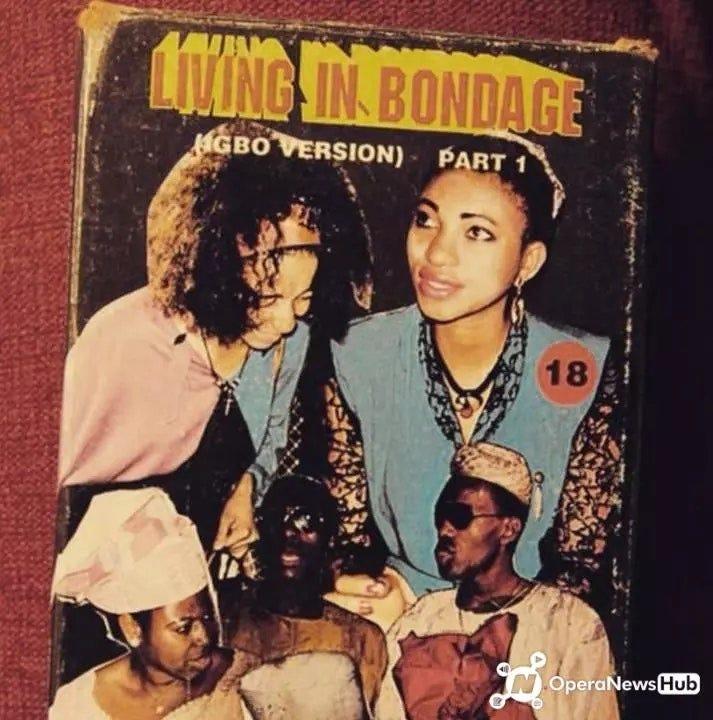
In 1992, Living in Bondage became a defining moment in Nigeria’s home-video era. Directed by Chris Obi Rapu, the film demonstrated the potential of producing Nigerian stories directly for the growing video market. Living in Bondage and the birth of Nollywood
The model suited the way audiences were already watching. Filmmakers did not necessarily have to wait for a cinema release. Films could be produced, duplicated and distributed through video shops, distributors and informal networks.
The 1990s brought a new generation of Nigerian films into homes, covering everything from family and romance to money, ambition, religion and crime.
VHS gradually gave way to VCDs and DVDs. Markets such as Alaba became important distribution centres, while films travelled through shops, homes and informal networks. A film could move quickly from one household to another. Someone bought it, another person borrowed it, and someone else copied it. The system helped Nollywood reach large audiences, but it also made piracy widespread.
Still, the home-video era had changed Nigerian cinema permanently. Nollywood had found an audience that did not have to wait for a cinema to see its own stories. From VHS to VCD and streaming: Nigeria’s home-video era
The films we watched together
The technology changed, but the social experience remained important. Philip Onos, a retired headmaster, remembers the cinema vans that came to his village. Their arrival was announced beforehand, and people gathered around the large van carrying a projector and generator.
Everyone wanted to sit close to the screen. “We fought to sit in front because people at the back were at a disadvantage,” he recalls.
Blessing Ade, a doctor, remembers another kind of shared viewing: Superstory at home. Her family completed their chores before 8 pm and gathered around the television. Afterwards, the children sometimes acted out what they had watched for their parents.
Power cuts could interrupt the programme. When NEPA took the light, they sometimes ran to a neighbour’s house whose generator was still running. “We must have missed a significant part,” she recalls.
The details are different, but the memories have something in common. Watching films and television was often a family or community activity. How communal television viewing shaped Nigerian film culture
When cinema came back
By the 2000s and 2010s, modern cinemas began appearing in shopping malls and entertainment centres across Nigerian cities.
The experience had changed. There were comfortable seats, large screens, surround sound, air conditioning and popcorn. Going to the cinema became an outing again. A film could be a date, a weekend plan or an afternoon with friends.
Nigerian films were increasingly part of that experience too. After years of living rooms, video shops and market stalls, Nollywood was returning to the big screen. The return of the big screen in Nigeria. But another screen was already changing how people watched.
Screen in your pocket
The internet made films easier to access. You no longer needed a cinema ticket, VCD or DVD. A laptop, tablet or smartphone could become the screen.
YouTube gave audiences another way to find Nigerian films and film-related content, while streaming platforms made it possible to watch films and series whenever and wherever there was an internet connection.
The audience became more individual.
A family could sit in the same room while each person watched something different. One person could watch a film in Lagos while another watched something completely different in Abuja.
For James, that convenience is a major difference between today’s viewing culture and the mobile cinema he remembers.
“Back then, seeing a movie was a communal event, planned, anticipated, shared,” he says. “You didn’t just press play. You walked, gathered, waited.”
Today, he says, viewers can watch alone, rewind, skip scenes and watch an entire series.
“The convenience is unmatched,” he says. “But something subtle is lost: the collective breath of a crowd, the shared silence before a twist, the walk home filled with animated retellings.”
For him, what is missing is not the screen but the gathering around it.
“What’s missing isn’t the screen. It’s the circle.”
Black Market
On September 26, Tafawa Balewa Square became a cinema once again. This time, there was no small mobile screen arriving in a neighbourhood. Thousands gathered around one enormous screen for Black Market.
More than 51,000 people were officially recognised for the screening, giving the Nigerian film the Guinness World Records title for the largest attendance at a film screening. The figure surpassed the previous record of 43,624, set during the 2015 screening of Felix Manalo at the Philippine Arena. Black Market’s record-breaking screening at Tafawa Balewa Square
For a generation accustomed to watching films on phones and laptops, the sight of thousands of people gathered around one screen was striking.
But perhaps it was not entirely unfamiliar.
Technology has changed many times. The film van gave way to the cinema hall. The cinema hall gave way to the television. VHS became VCD, VCD became DVD, and DVDs gave way to streaming.
Yet Nigerians still gather when the occasion calls for it.
More than a century after moving pictures first appeared before Nigerian audiences, Black Market brought thousands of people back to a shared screen.
The screen has changed. The way we reach it has changed. But the pleasure of watching a story unfold alongside other people has proved harder to replace.