GDN SIDEBAR
Clothes sewn in Lagos are reaching buyers with foreign labels, as some traders at different markets across Nigeria said customers preferred outfits presented as imports. ESE OGHENETEGA reports on the practice, the concerns it raises about misleading buyers, and the struggle to sell Nigerian-made clothes to customers who place greater value on foreign products.
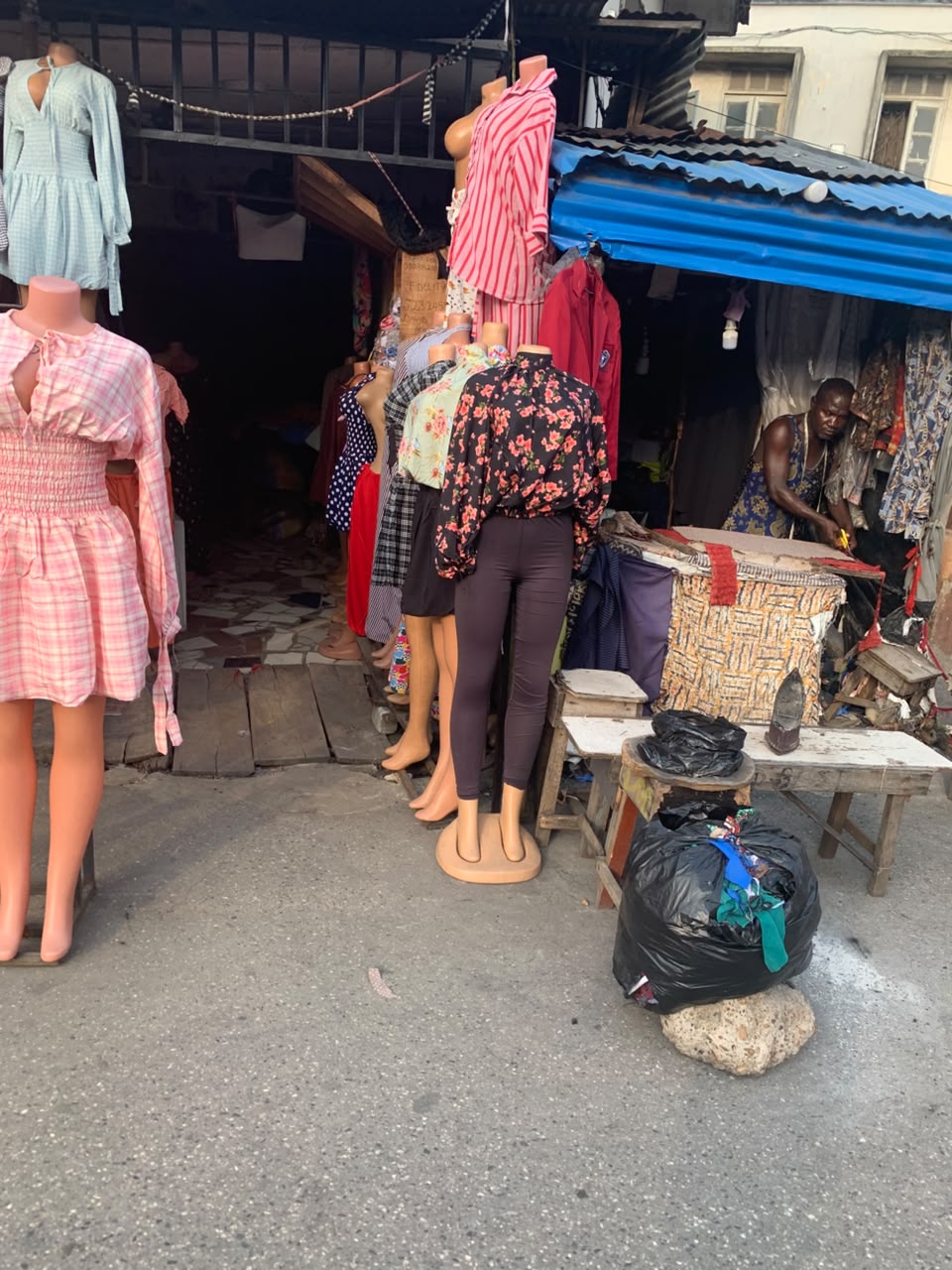
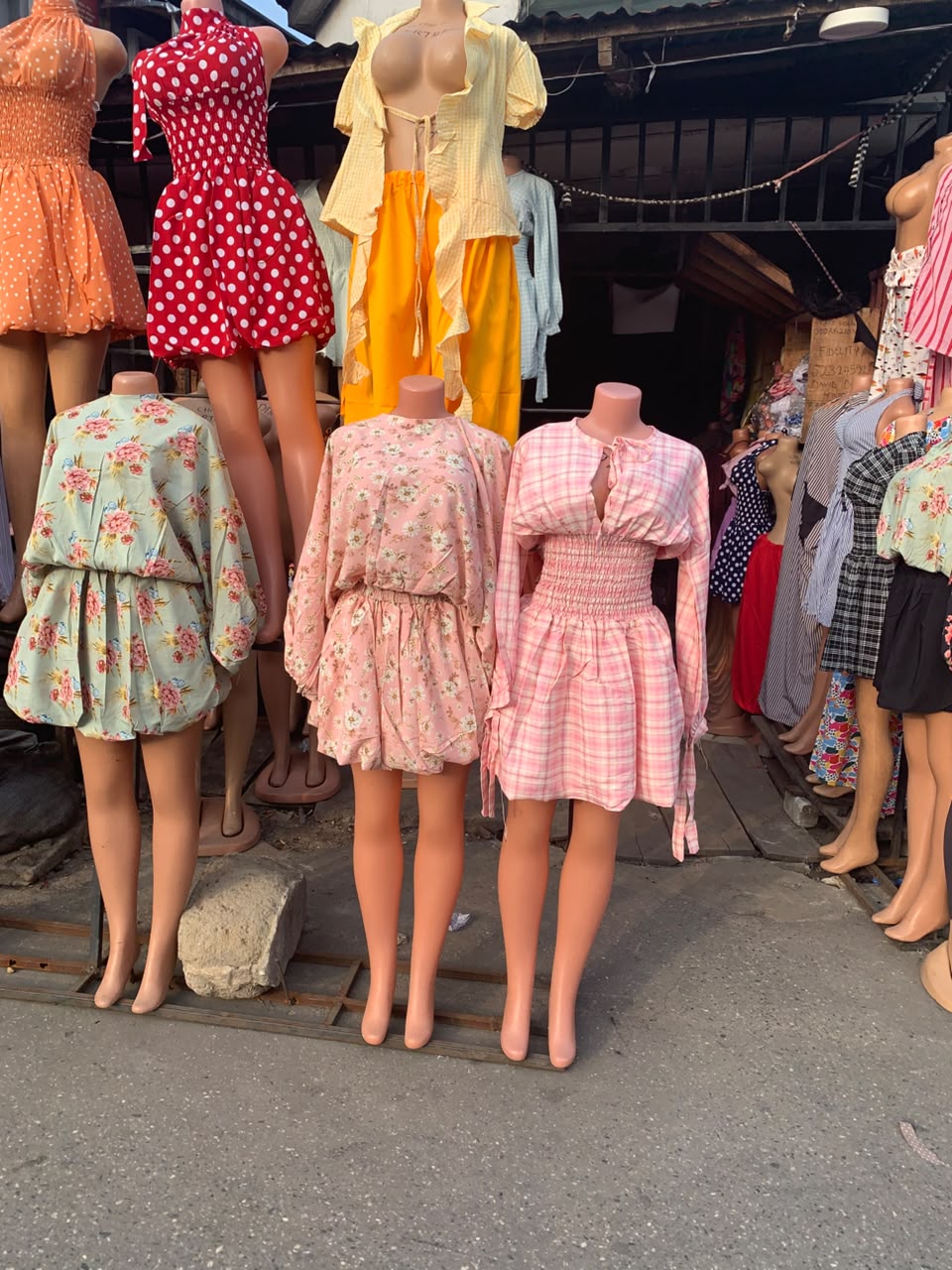
Some clothes sewn at Tejuosho Market in Yaba, Lagos, are sold with foreign labels that disguise where they were made.
Boutique owners, suppliers and online vendors link the practice to a preference among some customers for imported clothing. They say a foreign label helps sell garments that buyers might otherwise dismiss as local.
Yet the clothes pass through the hands of local workers who cut, sew, iron and prepare them for sale. Their accounts raise questions about who attaches the labels and whether buyers know where their clothes were made.
Why traders use foreign labels
A boutique owner at the market, Kelechi Ezikiel, said some customers associated Nigerian-made clothes with poor quality. He linked the use of foreign labels to sellers’ efforts to meet buyers’ expectations and make sales.

“If you sell a product as Nigerian-made, some people will think it is not of good quality. I own a boutique, and they are perceived as foreign because every boutique owner wants to make sales. What we sell are good quality, and it is just like the foreign ones. So, the most important thing is to satisfy customers’ wants.”
For Ezikiel, the quality of the clothes was not the problem. He said the outfits compared favourably with imported alternatives, but customers’ perceptions influenced how sellers presented them.
An online vendor and Chief Executive Officer of Ije Fine Collections, Ijeoma Omejeh, also linked the practice to buyers’ preferences.
“We don’t build Nigerian-made brands because some people don’t value them. They prefer it when you tell them the cloth is from Vietnam, China, or anywhere else. If you tell them it is from Nigeria, they tend to call it locally made. All of this boils down to the fact that we don’t have an enabling community, government, or society that is working. If we have a community that is working, we will not be importing clothes.
“If we have a steady power supply, we can import machines that will give us the same finished work as the ones we are importing, hence, making Nigerian-made more visible. When this is achievable, nobody will be selecting which one they prefer because the Nigerian-made will now be perfect.”
Omejeh argued that reliable electricity and better equipment would help local producers improve their finishing and compete more effectively with imported clothing.
Buyers question foreign tags
Customer Stephanie Jukpo said she recognised the skill of local tailors but objected to selling their work under a false description.
“As a customer, I have mixed feelings. It is a known fact that our local tailors have great skills’ but branding them as foreign-made is misleading.”
Another customer, Julie Godwin, pointed to the clothes’ quality, affordability, and the social appeal of appearing to wear imported outfits.
“The clothes can be gotten easily, and they are of good quality. People are trying to survive in this harsh economy, and if the materials are good and people want to also “feel among”, it is only normal to purchase these clothes and give the impression that they were bought abroad.”
While Jukpo questioned the honesty of the labels, Godwin described why some buyers accepted the practice. Their accounts showed that satisfaction with the garment did not always settle the question of how it should be labelled.
Consumer protection concerns
A staff member of the Lagos State Consumer Protection Agency, LASCOPA, who requested anonymity, criticised the practice.
“That is against the policy of made-in-Nigeria products. That is against the right to promote our own product. The government expects them to tag it as made-in-Nigeria.”
Responding to the suggestion that Nigerians did not value locally made products, the staff member said:
“That is not correct. They are not doing the country any good.”
Separately, an earlier report cited in the supplied material quoted LASCOPA’s General Manager and Chief Executive Officer, Afolabi Solebo, directing manufacturers, importers, distributors and other businesses to disclose material changes to products before putting them on the market.
According to that report, businesses that failed to comply faced regulatory sanctions.
Solebo was quoted as saying, the right of every consumer to accurate, clear, and sufficient product information is non-negotiable. Manufacturers and businesses must understand that any unannounced alterations capable of misleading or confusing consumers will not be tolerated.”
“This is a binding regulatory directive, and LASCOPA will apply the full force of the law against any defaulting organisation. All labels, packaging, advertisements, and consumer-facing descriptions must truthfully represent the products offered for sale,” he added.
Foreign brands influence buying decisions
The Creative Director of Demi Glamcuts, Abidemi Bakare, said customers’ preference for foreign brands influenced how some businesses marketed their clothes.
“From my experience in business, a business owner will want to tend to the needs of her target audience. In Nigeria, people value foreign-made products more than locally-made ones. When people hear that products are made in Europe or China, they are valued more, except for aso-ebi categories. Some people will prefer to send their fabrics to China to have them made at a cheaper rate.
“Pricing also sends customers out of Nigeria. If a customer asks me where a design is from, if they know it is from Zara, it will be easier to buy it. That is just an example.”
Bakare also expressed concern about cheaper copies competing with original designs. Using Shein as an example, she argued that customers’ attraction to foreign brands sometimes displaced recognition for local designers.
“You know how a fashion designer will make a style from scratch; Shein will then post a replicated version of one’s design that took so much time and energy to create. And because people want to be associated with what is outside Nigeria, they will look for the cheaper Shein, as long as it is similar to the original. It devalues the work, time, and energy fashion designers put into their work.
“I feel this can be corrected if consumers can be educated on how important it is to value locally-made pieces. Based on my knowledge and experience, it is restricted to Nigeria. Nigerians need to be educated on placing value on fashion pieces that are locally made.”
 The workers behind the clothes
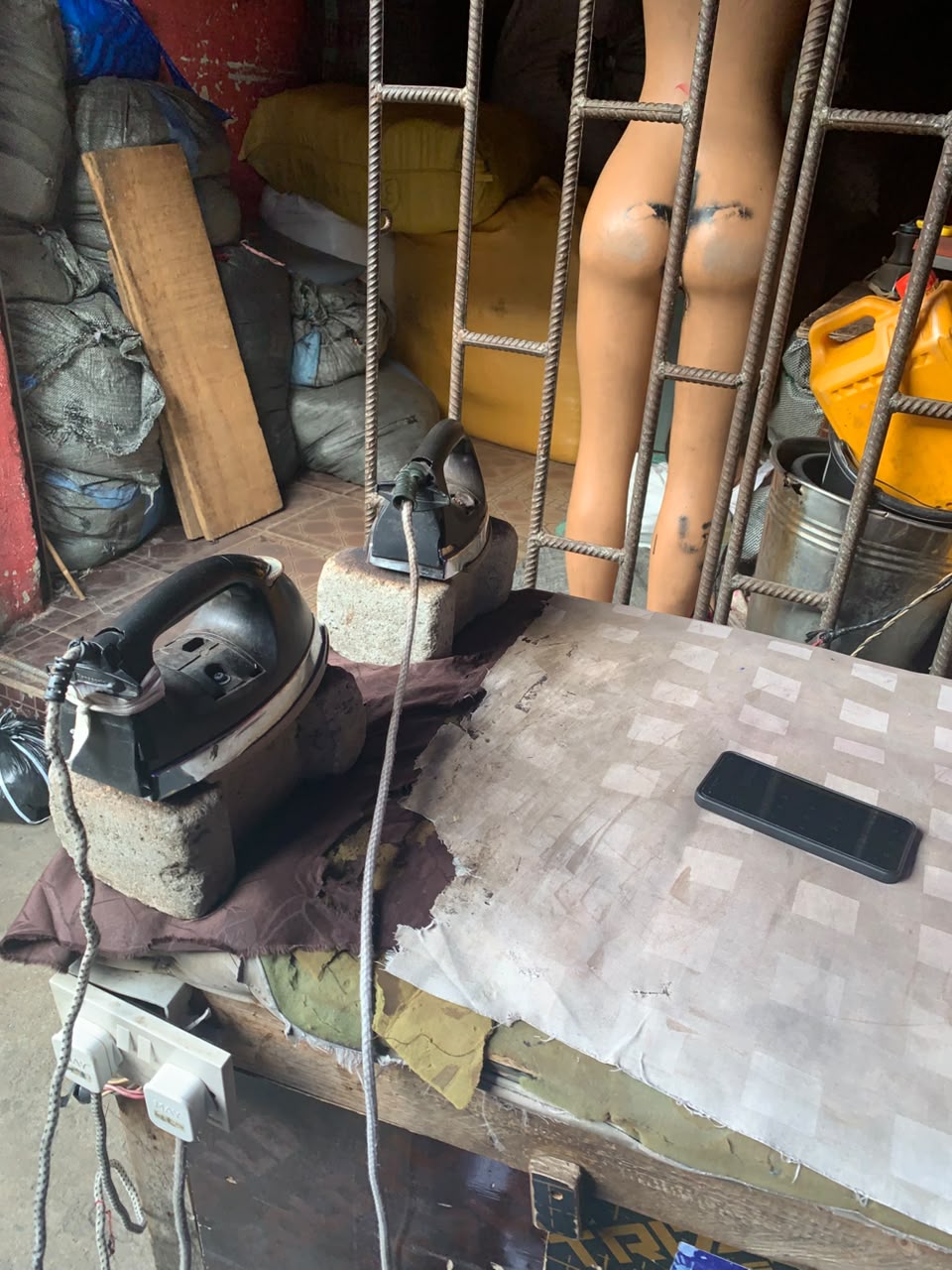
At Tejuosho, producing the clothes involves workers who handle different stages, including cutting, sewing and ironing.
A tailor interviewed at the market said workers’ earnings depended on the style and quantity of clothes they produced.
“Some tailors earn according to the quantity and style they can produce. A tailor can produce 100 to 200 pieces of clothes daily (while adopting the chains of production). It depends on your strength. So, a worker can earn N20k to N40k daily. After the materials are cut and we sew them, the clothes will go to those who will iron them and give it a beautiful look.”
The figures were the tailor’s estimates, based on the production arrangement she described.
The market also has areas associated with different activities. Production takes place in the section known as Kitchen, where tailors work with manual and industrial sewing machines. At Koro, suppliers and vendors negotiate purchases and complete transactions.
How clothes are priced
A supplier at Tejuosho, identified as Anyi, said producers relied on bulk sales, adding a margin to each garment before passing it to vendors.
“You can get a top for N3,000 at Tejuoso here;, however, an online vendor will pay N2,000 or N2,100 to get it. It depends. Because they are producing and selling in bulk, they simply add N1000 or more to one cloth they make. For the N3,000 top that is displayed, it will cost the producer N1800 or N1900 to make it. If a cloth is produced for N3,000, the vendor will pay N4,000 for it and add his/her own profit which can take the price of that outfit to N6,000.”
His examples showed how a garment’s price increased as it moved between the producer and the final seller.
Vendors also placed orders according to demand, while some maintained regular relationships with particular suppliers.
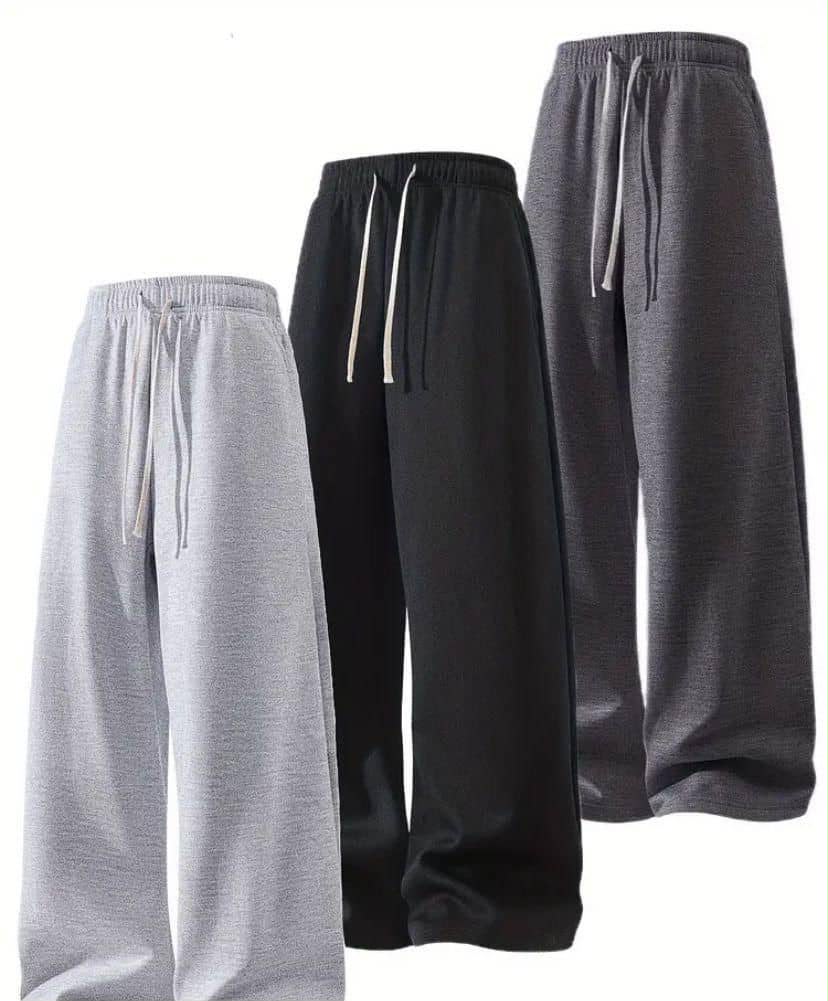
Omejeh, who sold joggers, explained how fabric quality and garment size affected her prices.
“One jogger can be made with two yards of fabric. A yard can be gotten for N3,000 or N3,500, depending on the quality. They are sold for 6,500 or N7,000, depending on how big the size is. You can also use it to produce knickers, which are sold for N3,500 or N4,000,” she said.
Pointing to gowns she sold, she said the amount of fabric required depended on the design.
“The materials used to produce these gowns depend on the complexity of the design. If the gown has a complex style that will consume about two yards, they will be sold for N6,000 or N7,000. In essence, the design of the gown contributes to how much it will be sold.”
Where the fabrics come from
Anyi said the fabrics supplied to the producers he worked with were imported from China. Traders sourced them through importers in Lagos and Aba, Abia State.
“The fabrics are imported from China. Some of the importers are in Aba, Abia State. So, they go to Aba to buy them and bring to us in Lagos. There are also importers in Lagos who have these fabrics stocked in their shops. However, if they don’t have it, we go to Aba to buy them.”
Nigeria’s dependence on imported materials has also featured in discussions about the challenges facing the Nigerian fashion industry.
Who attaches the foreign labels?
A supplier to boutiques at Tejuosho, identified as Don, said some vendors and wholesalers attached foreign labels to the clothes. He stressed that the practice did not involve every seller.
“It is customers/vendors that come to the market that do that. Sometimes the wholesalers do too. Some vendors that buy from the wholesalers attach it too.”
Don said a garment’s resemblance to an imported outfit sometimes influenced the decision to sell it as foreign-made.
“Why some vendors sell it as foreign-made is because it is a duplicate or resemblance of the foreign-made ones. Secondly, some vendors sell it as foreign-made because it is well produced, it appears nice, and the quality of the material is okay. If the quality of the material is like a luxury outfit, they can sell it as foreign-made.”
He also linked the practice to customers who regarded Nigerian-made products as inferior.
Electricity adds to production costs
Anyi identified unreliable electricity as a major challenge for producers. He said machines needed for better finishing required power, while running generators increased costs.
“Our major challenge here is electricity. There are a lot of machines we need to produce clothes to look luxurious or foreign. Consequently, because we don’t have constant electricity, if we consider the price of the listers that will be used to power the machines, it will be very expensive.”
He argued that reliable electricity would help producers increase output and compete with imported clothing.
“If there is constant electricity, we will be producing more clothes and will not need to import from China. Right now, if we add the cost of production and fueling listers, the price of the products made in Nigeria will now be more than the one imported. This has made the Nigerian-made brand to be stunted and we are not growing at our capacity.”
Omejeh’s call for better equipment and Anyi’s concerns about power pointed to production problems alongside the question of consumer preference. Similar concerns have been raised by Nigerian designers discussing the challenges of producing fashion locally.
 The wider role of small businesses
The activities at Tejuosho support fabric merchants, tailors, suppliers, retailers and workers who prepare finished clothes for sale.
The supplied material cited figures attributed to the Small and Medium Enterprises Development Agency of Nigeria, SMEDAN, putting the number of small and medium enterprises at approximately 40 million. It also attributed about 50 per cent of national gross domestic product and approximately 80 per cent of employment to these businesses.
A separate statement attributed to the Minister of Industry, Trade and Investment, Jumoke Oduwole, put the share of businesses classified as micro, small and medium enterprises at approximately 96 per cent, employing more than 84 per cent of the workforce.
For the traders and producers interviewed, stronger local production depended on practical changes: reliable electricity, access to suitable machines and customers willing to recognise Nigerian workmanship. The importance of supporting locally made fashion and Nigerian craftsmanship has also featured in wider discussions about the industry’s potential.
However, Jukpo’s objection remained a question of truthful labelling, regardless of the quality of the garment.
“As a customer, I have mixed feelings. It is a known fact that our local tailors have great skills, but branding them as foreign-made is misleading.”