GDN SIDEBAR
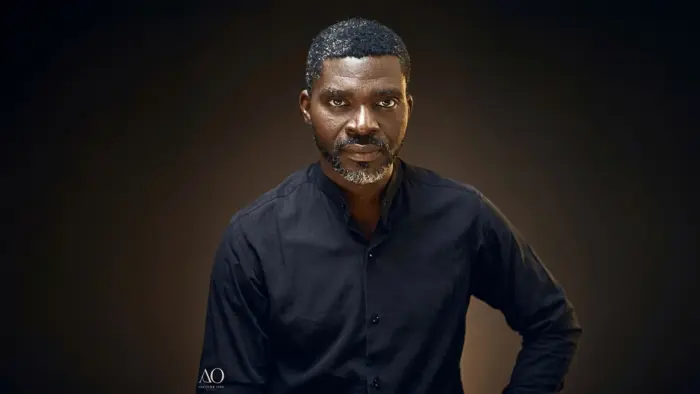
Since breaking out with Tonight in 2016, Nonso Amadi has stayed one of the most distinct voices in Afro RnB. In this conversation, he speaks about his new EP To Cry A Flood, the emotions behind it, and the journey that keeps shaping his sound.
When Tonight landed in 2016, it felt like something fresh had arrived. For many listeners, it was the song that introduced them to Nonso Amadi, now one of Afro RnB’s most distinct voices.
Nearly a decade later, with four extended plays, a debut album, and over 130 million digital streams, the young musician returns with his fifth EP, To Cry A Flood. The project revisits the electrifying, genre-bending approach that first endeared listeners to his artistry as a singer, songwriter, and record producer.
Nonso Amadi’s reign within Afro-RnB spaces has been defined by a soulful catalogue of evergreen gems. Classics like No Crime, Emergency, and his 2017 collaborative tape with Alté pioneer Odunsi, WAR, helped lay the foundation of his career. Over the years, he has worked alongside both regional and international heavyweights, including Mr Eazi, Simi, Majid Jordan, Emotional Oranges, Tay Iwar, and Zinoleesky, among others.
With love and romance often at the core of his storytelling, Amadi’s music is distinguished by its emotive delivery, genre-fluid production, and poetic lyricism.
A graduate of Covenant University with a degree in Chemical Engineering, Amadi later moved to Canada for his master’s degree before eventually settling there. Even as Nigerian RnB continued to evolve, he remained at the forefront of its shift, releasing memorable records such as his acclaimed duet with Paul Play, Kolo.

He credits much of early-2000s Nigerian RnB as his earliest inspiration, refining his sound into a delicate capsule of nostalgia, vulnerability and intimacy. His 2023 debut album, When It Blooms, arrived as a long-awaited affirmation of his virtuosity, soaring as an immersive exploration of his signature RnB soundscape.
In this week’s Guardian Music edition, the Toronto-based troubadour reflects on his earliest moments in Afrobeats’ spotlight, tracing the influences that shaped his sound — from early-2000s Nigerian RnB to Western pop and soul. He also opens up about the inspiration behind his new EP To Cry A Flood, which arrived just days after his wedding to longtime partner and collaborator Aika Jonas in Zanzibar, his early experiences with married life, and his enduring mission to continue crafting relatable, timeless RnB music.
To Cry a Flood is quite a striking title. What inspired it?
I wanted people to feel a deeper side of me, because most of my projects revolve around love and the romantic side of things. But with this project, I wanted listeners to hear more of the story, especially some of the downsides I’ve experienced in the industry. It’s almost like the red pill to When It Blooms. That project felt happy and more celebratory. But with this one, I wanted to take it a step further and reveal the other side of things.
From Tonight until now, it’s basically been a decade. What has changed in how you see yourself as an artist?
Around the time of Tonight, making music was mostly about figuring out what sound worked best for Nonso Amadi as a brand. After that, I made Radio with Juls. I did Early with Maleek Berry. I even made an EDM track called Long Live the Queen. At the time, I was just experimenting and trying to understand where I fit.
But now I’ve realised that I’m very much an RnB guy. I’m in love with melodies, and I’m deeply inspired by Nigerian music from the early 2000s. I’m talking about Styl-Plus, 2Face Idibia, Banky W — music that really made people’s hearts move—songs like Olufunmi. I really love that era. Now I’m just figuring out my own way of creating those moments and making that sound my identity.
What about the earlier music that shaped you before that?
When I was about six or seven years old, I listened more to Western RnB and pop. Brandy’s Aphrodisiac, Craig David’s albums, Alicia Keys, Aaliyah. At the time, I didn’t fully understand what the songs were about, but my sisters loved RnB music. I have two sisters, and they had those pirated discs with maybe 40 songs on them. You’d just play them over and over again. So Usher, B2K — that whole era.
Then, when I was about eight or nine, I started getting into Nigerian music. P-Square, 2Face Idibia and many of the artists I mentioned earlier. I loved that era because the songs had deeper meanings. Even if you look up the meaning of Olufunmi or some of 2Face’s early records, there was depth to them. Back then, they even sold lyric books on the street where you could read the lyrics. There was something deeper about that music, and my identity as an artist is very closely connected to that era.
Walk us through the creative process for To Cry A Flood, especially Mmiri.
Mmiri is actually the first track and the song that started the entire project concept. When I made it, I felt it was an opportunity to remind people of my heritage; I’m Igbo, specifically Ikwerre. I’d never really expressed that in my music before. In the song, I talk about how the industry can be cold and how I’ve lost some friendships along the way. Water became the central symbolism of the entire project. Even the title To Cry A Flood reflects that. Mmiri means water. It represents crying a lot — but also cleansing. Water washes things away, both good and bad.
Then the project flows into songs like Drown and Dive In. You can see how water represents different emotions; sometimes feeling like you’re drowning in the industry, sometimes diving into something uncertain. Even with love, the message is no longer “everything is perfect.” It’s more like, things might go wrong, but you’re still willing to take that risk. The final records, like Sorry in Advance and Like Me, featuring Taves, close the story. With Like Me, I’m basically saying that when all is said and done, nobody really does it like me. The project took about a year and a half to complete because we wanted it to sound exactly how we envisioned it.
How much of the EP draws from personal experiences?
A lot of it — probably 60 to 70 per cent. For me, that’s quite a lot because my default is usually writing about love. Songs like Like Me, Drown and Mmiri required some deep digging emotionally. I wanted listeners to feel like they were getting to know me more deeply. Most times, what works in the industry is keeping things light and radio-friendly. But I wanted this project to become part of my catalogue differently. So when someone discovers Nonso Amadi — maybe through Tonight — and then eventually finds this project, they’ll realise there’s another layer to my artistry.
Where were most of the songs recorded?
Mostly in Toronto, and probably some in London as well. Why do you mostly record abroad rather than in Nigeria? I actually live in Canada. I’ve been there for about ten years. Tonight was the only song I made while I was in Nigeria. Everything else I’ve done — songs with Juls, No Crime, and others — I made while I was in Canada or London. But my family is in Nigeria, so I’m always coming back every year and spending some months there before going back home.
Congratulations on your marriage. Tell us how you both met.
Thank you. I’ve known my wife for about ten or eleven years now. We met at university in the UK, even before Tonight and everything else. So we’ve been together for a long time. The wedding itself wasn’t really a secret because I posted it on social media. But it was definitely a long time coming. I just wanted to make sure I had my house in order before getting into marriage because marriage is obviously long-term.
How does that relationship influence your music?
I’ve known her for so long that most of the songs I release go through her first. If she doesn’t react to it or give it that stamp of approval, then you just know it might not really be the one. It’s been like that since our university days. Songs like Tonight, Radio, and No Crime — she heard those early. I even made a song for her called Aika, which some of the day-one fans know. So it’s been amazing just having that connection and being able to trust her ears and her heart.
What ambitions still excite you creatively?
Sonically, it’s really about collaborating with more incredible producers. Most of my songs I produce, write, mix, and master myself. So there’s only so much I can do alone. Collaborating with other producers can bring new ideas. The next step is really about growing the Nonso Amadi audience. One of the approaches we’re exploring is doing more community-focused activations — maybe a show in Lagos every year, a show in Toronto every year, things like that. I also want to create more content that shows what happens behind the scenes. Maybe even streaming some of the creative process — going on Twitch and making music from scratch with fans watching. I want to play the long game and build an audience that grows steadily rather than just throwing things out there and hoping random people see it.
When you’re not making music, what does a typical day look like for you?
I’m probably reading something online, or gaming — playing FIFA or something on my PS5. Sometimes, I’m also thinking about ideas about eventually coming back home, working on different ideas for Nigeria or even Tanzania, where my wife is from. But mostly I’m just resting, exercising, and living life.
Finally, what’s the long-term vision for Nonso Amadi?
The vision is to slowly transition back into enjoying music again and not letting it feel like a hustle. When I first started making music, it wasn’t about making hits. It was because I really loved the craft and wanted people to enjoy it too. So I want to get back to that place. At the same time, I can see myself leaning a bit more into the business side — maybe having some kind of executive role in the future while still making music. A good example would be someone like Mr Eazi or Jay-Z. Over the next ten years, I want to focus on investments, building my community, releasing good music, and balancing the creative and business sides of things.