GDN SIDEBAR
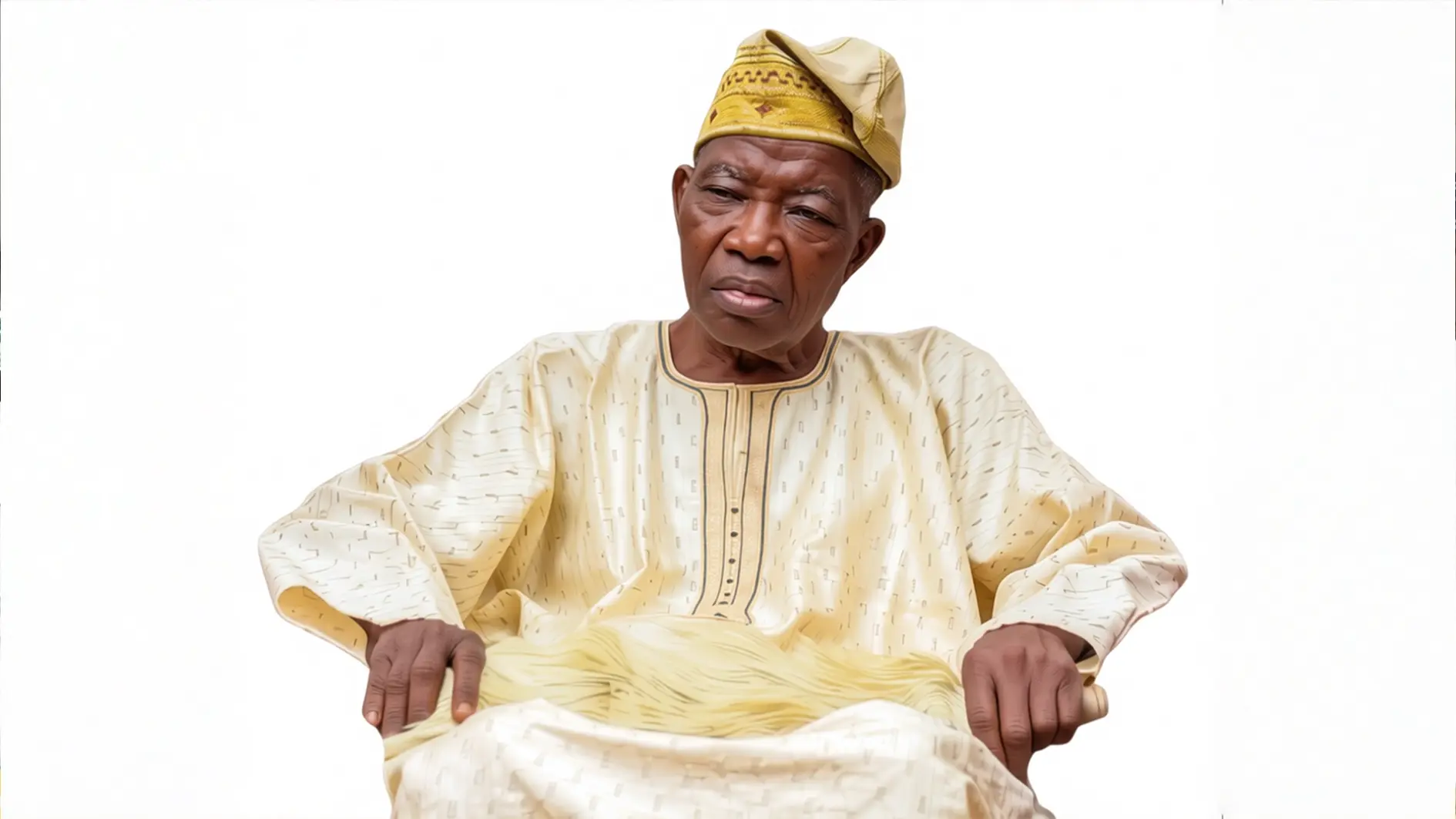
THE memories of impactful leadership of Alhaji Lateef Kayode Jakande, who ruled as the first Executive Governor of Lagos State from October 1, 1979, to December 31, 1983, were reflected upon by eminent personalities who once again, gathered to mark his 5th anniversary since his passing.
Fondly referred to as Baba Kekere, Alhaji Lateef Jakande answered the call of his maker in 2021 at the age of 91. Among those who have ruled the state, he remained a critical figure who made extensive development in education, health, and housing in his four year rule.
On February 11, 2026, family members, political figures, religious leaders and citizens gathered at his residence on Bishop Street, Ilupeju, Lagos, to commemorate the fifth anniversary of his demise. The event celebrated the life and work of the first civilian governor of Lagos State, whose four-year tenure left a lasting impact on education, housing, infrastructure and governance.
Attendees reflected on his commitment to service, fairness, and ethical leadership, which continues to influence Lagos and its people today.
Notable figures at the ceremony included the former speaker of the Lagos State House of Assembly, Adeyemi Ikuforiji; Senior Special Adviser on Civic Engagement, Dr Tajideen Afolabi; Lagos State Commissioner for Information, Mr. Gbenga Omotoso and the Commissioner for Home Affairs, Hon. Olanrewaju Ibrahim Layode, who also represented the Governor of Lagos State.
Also present were former political office holders such as Alhaja Sinatu Aderoju Ojikutu, former Deputy Governor of Lagos State, and Mrs Olufunso Amosun, former First Lady of Ogun State. Religious leaders, including Imam Ilupeju and the Chief Imam of Nawair-ud-deen Society of Nigeria, Sheikh Abdulmajeed Ayinla, who led prayers following the recitations from the Holy Qur’an.

Family members, including his wife, Alhaja Abimbola Jakande, were in attendance alongside community leaders and prominent citizens.
Associate Professor Muhammad Saheed Timeyin of the Lagos State University, while delivering the sermon, noted that life is finite and legacy is what endures. Quoting from Suratul L Mulk, he reminded the audience that everyone will taste death and that intentional service, rather than wealth or title, defines a life well lived. He described Jakande as a phenomenon, noting that his commitment to education, housing, and infrastructure remains unmatched decades later.
Sheikh Abdulhakeem Muhammad Awwal, founder of Ikhwaan Muslim, reinforced these lessons in a lecture he delivered in Yoruba. Drawing from Suratul L Kahf, he encouraged current leaders to focus on leaving a meaningful legacy and reminded attendees that governance is a trust that demands ethical service. The spiritual reflections set the tone for a day devoted to remembrance, reflection, and the reaffirmation of values that Jakande embodied.
He urged current and future leaders to follow Jakande’s example. Leadership, which is more of policies that brought relief to the people.
Jakande’s life illustrates that principled governance can transform a city and inspire generations. His approach proves that even a single term can deliver results that endure when guided by integrity, humility, and focus on public welfare.
Part of the legacies many people at the event attested to was his commitment to putting citizens at the centre of governance. This is echoed by the Governor of Lagos State, Babajide Sanwo-Olu, who was represented by the Commissioner for Home Affairs, Olanrewaju Ibrahim Layode.
“What we understand in the legacy of Alhaji Lateef Jakande is the principle he championed which is that leadership is a sacred trust and governance is about serving with fairness, integrity and a long term vision,“ he stated.
Describing him a visionary leader, Sanwo-Olu said the late Jakande enhanced institutional peace, economic growth and improve the quality of life for the people of Lagos.
While commending him for policies that distinguished his administration, setting Lagos as an example that other states look up to, the governor said these policies expanded access to free education, creating pathways for social mobility. He also added that in the housing sector, the reform brought shelter stability, dignity, and a sense of belonging to thousands of families.
Sanwo-Olu noted that Jakande’s tenure also laid the foundation for institutional systems that outlasted his administration through policies that encouraged accountability, transparency, and citizen participation in governance.
Ordinary Lagosians remember the ease with which they could access public services, a stark contrast to bureaucratic delays and elitism that had previously dominated governance in the state. His work demonstrated that leadership is not measured by appearances, but by tangible benefits to society.
In his remarks, a retired Professor of Sociology, University of Lagos, Lai Olurode, emphasised that Jakande’s philosophy continues to inspire Nigerians, showing that progress is achieved through deliberate, principled action rather than convenience or personal gain. According to him, “His writings and speeches remain a guide for public officers seeking to leave meaningful impact.”
Olurode, who was represented at the event by the Weekend Editor of the Guardian Newspaper, Dr. Kabir Garba, recalled that Jakande’s accessibility was equally remarkable.
He noted that he often visited project sites at unconventional hours without ceremony, and he used his personal vehicle for official duties.
“Jakande visited the contract sites at odd hours and without pomp and pageantry. He spent public money the way he would his own. He drastically cut down on the cost of governance. He served the people with so much passion and at great inconveniences to himself. He used his own old Toyota Crown for official purposes during the governorship years. He didn’t have the time to search for the latest cars in town. He didn’t travel out throughout his years as the governor. Who can truly match these records? He settled for far higher values in governance,” he said.
“No wonder that today, Jakande remains evergreen in our memories though he served only one-term in office. Of course, he was never a perfect man. He has his weaknesses as a human being but, an overall assessment will place him well above his peers and above the average score in a country with many psychologically wrecked minds where materialism is all that defines the essence of human beings.”
Olurode said that for Jakande, flamboyance and the trappings that many leaders used to surround themselves were not his priority but critical governance based on ethical resources, inclusivity, and achieving the core mandate, which was the fulfilment of the social contract with the people.
“Indeed, Jakande personified the wise saying of Prophet Muhammad (SAW) that Saahidu li qaomi Khaadimuhum ‘leader of the people, is, actually, their servant.’
“The correlation of this in the Bible is Mathew, 23:11, where it is said that “the greatest among you shall be their servants.” For the living, there are lessons to draw from the life of the man who built ‘cowsheds’ (apologies to Cardinal Olubunmi Okogie).”
The family members and community leaders marked the anniversary with charitable contributions in his honour, reflecting the values Jakande championed.
The five-year remembrance reinforced his enduring legacy, offering lessons for both leaders and citizens. Ethical governance, intentional action, and placing the public at the heart of policy remain principles that define Jakande’s life and continue to inspire Lagosians today.
The event re-emphasised calls for leaders to follow in his footsteps, a recognition that a commitment to public service, fairness, and ethical governance is not merely an ideal, but a practical path to sustainable development and societal trust. Jakande’s legacy endures not only in the physical infrastructure he left behind but also in the mindset of accountability, inclusivity, and purposeful service that he instilled in the hearts of Lagosians. These gestures symbolised the lasting influence of his policies and ideals. By investing in education, healthcare, housing, and infrastructure, he left a blueprint for public service that prioritises the community above personal gain.
Jakande was born in the Epetedo area of Lagos Island, Lagos State on July 29, 1929. Both parents were from Omu-Aran, Kwara State. He studied at the Lagos public school at Enu-Owa, Lagos Island, then at Bunham Memorial Methodist School, Port Harcourt (1934–43). He studied at King’s College, Lagos in 1943, and then enrolled at Ilesha Grammar School in 1945, where he edited a literary paper called The Quarterly Mirror.
In 1949, Jakande began a career in journalism first with the Daily Service and then in 1953 joining the Nigerian Tribune. In 1956, he was appointed editor-in-chief of the Tribune by the owner Chief Obafemi Awolowo.
Encouraged by Awolowo, he ran for election as executive governor of Lagos State in 1979, on the Unity Party of Nigeria platform. He defeated his opponents, Adeniran Ogunsanya of Nigerian People’s Party (NPP) and Sultan Ladega Adeniji Adele of National Party of Nigeria with a total of 559,070 votes and was subsequently sworn in as governor. His administration was effective and open and implemented the cardinal policies of his party.
He introduced housing and educational programmes targeting the poor, building new neighbourhood primary and secondary schools and providing free primary and secondary education.
He gave poor people’s children education and many of them are now very prominent in the society today. He established the Lagos State University and the Nigerian Institute of Journalism, Lagos’ house is named after the former governor. Jakande’s government constructed over 30,000 housing units. The schools and housing units were built.
Some of the housing units include low cost estates at Amuwo-Odofin, Ijaiye, Dolphin, Oke-Afa, Ije, Abesan, Iponri, Ipaja, Abule Nla, Epe, Anikantamo, Surulere, Iba, Ikorodu, Badagry.
To fund some of the projects, Jakande increased the tenement rates and price of plots of land in affluent areas of Victoria Island and Lekki Peninsula and the processing fees for lottery, pools and gaming licenses. He also completed the construction of the General Hospital in Gbagada and Ikorodu and built about 20 health centres within the state. As a governor, he established 23 local government councils, which were later disbanded by the military.
He also started a metroline project to facilitate mass transit. The project was halted and his tenure as Governor ended when the military seized power on December 31, 1983, and later Minister of Works under the Sani Abacha military regime (1993–98). He died on February 11, 2021, aged 91 year