GDN SIDEBAR
The recent disagreements between the leaders of political parties’ caucuses and promoters of presidential support groups have opened up a new window for the interrogation of Nigeria’s electoral laws as they pertain to the need for Political Action Committees (PACs) as obtains in the U.S. from where Nigeria borrowed the Presidential system of democracy. LEO SOBECHI spotlights the basis of the friction as well as the motivations of the protagonists.
IT was the Progressive Governors’ Forum (PGF) that fired the first salvo before Senator Henry Seriake Dickson echoed the refrain. At issue was the modus operandi and rationale for support groups that seek to operate outside the political parties.
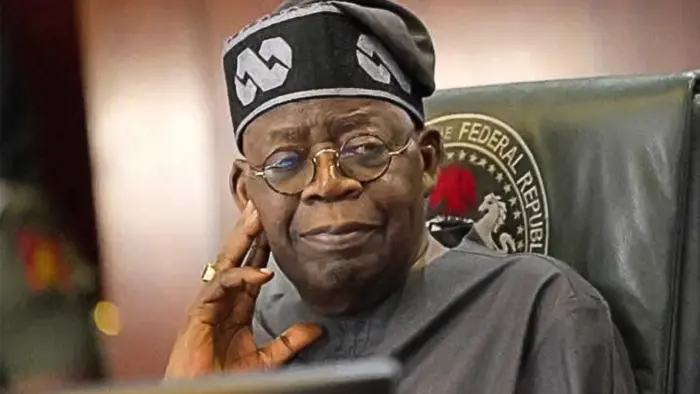
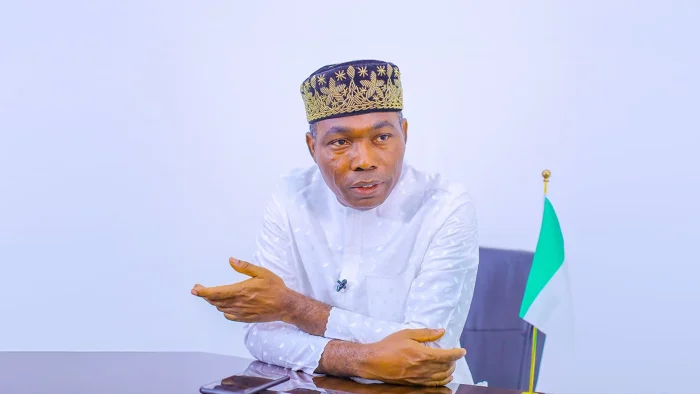
The PGF, which comprises state governors elected on the platform of the ruling All Progressives Congress (APC), was peeved by the activities of the nationwide Rainbow Coalition of opposition political leaders led by Ezenwo Nyesom Wike, the Minister of the Federal Capital Territory (FCT). Although Wike belongs to a splinter of the former ruling Peoples Democratic Party (PDP), he has continued to pledge allegiance and support for President Bola Ahmed Tinubu of the APC. That support for Tinubu, which stemmed in part from the uproarious 2022 presidential primary of the PDP, was despite the fact that his party fielded a presidential runner for the 2023 elections.
Yet, not minding that that perceived anti-party behaviour culminated in the further split of the PDP, Wike, who was appointed a cabinet in the APC-led Federal Government, took his cross-party affiliation to a new level by experimenting with the founding of the Rainbow Coalition to gather support for President Tinubu’s re-election for a second term.
Then, for Senator Dickson, the founding of the Nigeria Democratic Congress (NDC) was his way of providing an alternative to the embattled PDP, as well as preventing the country from gravitating towards a one-party rule. Dickson’s gamble of floating a national party paid off; shortly after, the Labour Party (LP) presidential candidate for the 2023 elections, Mr. Peter Obi, teamed up with his former counterpart in the New Nigeria Peoples Party (NNPP), Senator Rabiu Musa Kwankwaso, to join the party.
As things turned out, it was the alliance between Obi and his supporters – Obidient Movement – and Kwankwaso’s followers – Kwankwasiyya Movement – otherwise known as OK Movement that made NDC thick. The affiliation of the two former presidential contenders with the fledgling NDC scaled up the party’s stature as a stalwart challenger to the incumbent APC and President Tinubu, thereby raising stakes for the 2027 presidential contest.

Consequently, as two broad groups – OK Movement and Rainbow Coalition – line up behind the contenders, (NDC) and the incumbent (APC), the stage was set for internal protestations between the party structure and the support structures.
Needless Friction
THE OK Movement sees the NDC presidential ballot housing Obi and Kwankwaso as their rallying point. Similarly, the Rainbow Coalition singles out President Tinubu for its collective support rather than his political party, the APC. The fact that the two support groups single out the presidential candidates of the NDC and APC for their support threw up the questions about their relationship with the political structures.
The first issue for determination revolves around whether support groups that are created to support a particular candidate in Nigeria should be allowed to function like the Political Action Committees (PACs) in the U.S. That poser reflects the fact that while formal PACs and super PACs are recognised political committees and therefore can make unlimited independent expenditures in the U.S., there are no such categorisations or equivalent in Nigeria.
Having recognised that Nigeria does not have statutory guides or equivalent bodies as the U.S. PACs, the next question relates to whether PACs, that is support groups in Nigeria, should be subordinate or take directives from the leadership of political parties.
The disputes between leaders of political establishments and promoters of the support structures touch on the envisaged functions of the groups. In the U.S., for instance, PACs are legally empowered to generate and spend funds depending on their level of influence, because while traditional PACs can raise and contribute money to candidates or political offices, super PACs have no spending limit, but are restrained from contributing directly to candidates or political parties.
It could be deduced that PACs are generally not subordinate to the leadership of a political party, despite their decision to align with, or associated with, a party or political leader. Based on the foregoing, PACs usually have their own leadership, finances, objectives and legal responsibilities.
In the U.S., a PAC may support the same candidates and policies as a political party, but that does not automatically make it subordinate to the party, because a leadership PAC may be established or controlled by an individual politician, even when it is still legally separated from the politician’s party organisation.
Nigeria’s electoral system does not officially accord a place for support groups nor does it recognise their functions. Further, neither the Electoral Act 2026 nor the Independent National Electoral Commission (INEC) spared a thought for support groups vis-à-vis their relationship with party leadership.
It could be perhaps based on his reflection on the inherent legislative vacuum that Dickson declared: “Never in the history of the world have support groups set up a presidential campaign council. It’s unheard of and nonsensical. Those who have a duty to educate and call people to order should do so.
“Support groups don’t play the role of the political party. They don’t sponsor candidates. They mobilise and provide grassroots support. They don’t convert themselves to become critics of the political party sponsoring them. They don’t attack the political party sponsoring them. They don’t do that.
“That does not mean that they don’t have a role. We work with them. There’s a role for them. Link with the campaign teams when set up, link with the party at the grassroots and in the states and galvanise support.”
Although Dickson made his remarks while receiving the former Secretary to the Government of the Federation (SGF) Babachir David Lawal, into the NDC, the presidential candidate of the party, Obi, defended the support groups with a stress on their functions and structure.
While insisting that the support groups should not constitute themselves into quasi or shadow political structures, Obi maintained that support groups should not usurp the functions of the party.
The OK Movement, which is an amalgamation of the Obidient Movement and Kwankwasiyya Movement, ruffled political feathers on Tuesday, September 17, 2026, when it set up a 59-member Presidential Campaign Committee. Feeling affronted by that cheeky move, Dickson expressed umbrage and took exception to the initiative.
But bringing clarity to the development and in a bid to toe a middle course, Obi, while appearing on Arise Television programme, demanded that the OK Movement and such other groups backing the presidential ticket should function as support organisations without establishing structures that compete with the party.
“NDC is a political party (that) we all belong to and I agree entirely with the position of the leader. OK Movement, including Obidient group, Kwankwasiyya and other support groups are supportive groups. They must play their roles as groups supporting the party.
“They should not play the role of a party. We have a situation where one of the supporting groups is using the nomenclature or forming a presidential campaign council. It should not be so,” Obi stated.
PGF Versus Rainbow
IN their own push back, the PGF disowned the Rainbow Coalition, stressing that by creating a parallel political structure, Wike and his co-travellers want to rob APC to provide a lifeline to embattled PDP.
Addressing the press after an emergency meeting in Abuja, Chairman of the PGF, Senator Hope Uzodimma, alongside Senator Uba Sani and others, rejected Wike’s Rainbow Coalition, stressing that the forum will only support candidates running on the platform of the All Progressives Congress (APC).
Also, the South East zonal leadership of APC echoed the PGF’s position, saying that only total loyalty to APC is acceptable in the party’s resolve to re-elect President Tinubu. The zonal leadership agreed with the PGF that allowing Rainbow Coalition a space around Tinubu could confuse voters and weaken the party across the country.
But deriding the claims from the PGF, the national leader of Rainbow Coalition, Nyesom Wike, said the APC governors are not serious in their support for President Tinubu. He described the leaders of PGF as lazy politicians that lack the capacity to win votes for the President in their various states.
The FCT Minister recalled the poor performance of the APC presidential candidate in 2023, arguing that the Imo and Kwara State governors, Uzodimma and AbdulRahman AbdulRazaq, are only interested in their future political relevance in the national scheme of things.
While insisting that President Tinubu approved the support of the Rainbow Coalition, Wike accused the chairmen of PGF and Nigeria Governors’ Forum (NGF) of plotting to produce the leadership of the 11th National Assembly more than ensuring Tinubu’s second term.
Checks by The Guardian showed that the FCT Minister decided to expand the Rainbow Coalition into a nationwide movement to augment support for President Tinubu’s second term re-election and prepare the grounds for PDP’s eventual restoration as a strong national party.
It is as a result of this nationwide expansion that political leaders like former Senate President, Dr. Bukola Saraki; former PDP national caretaker chairman, Senator Ahmed Makarfi; Senator Emmanuel Bwacha, Senator Danjuma Goje and many others are said to have bought into the underlying principles of Rainbow Coalition.
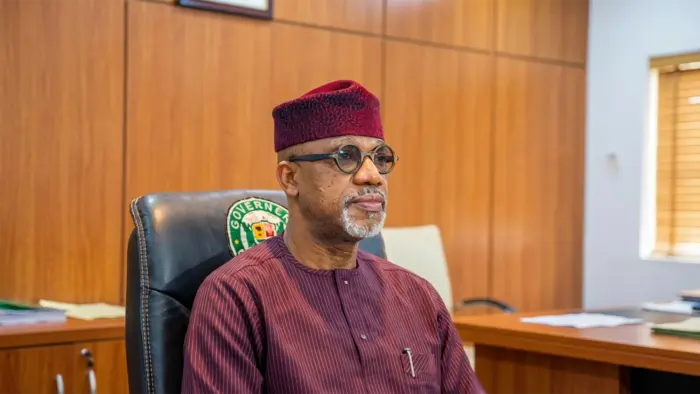
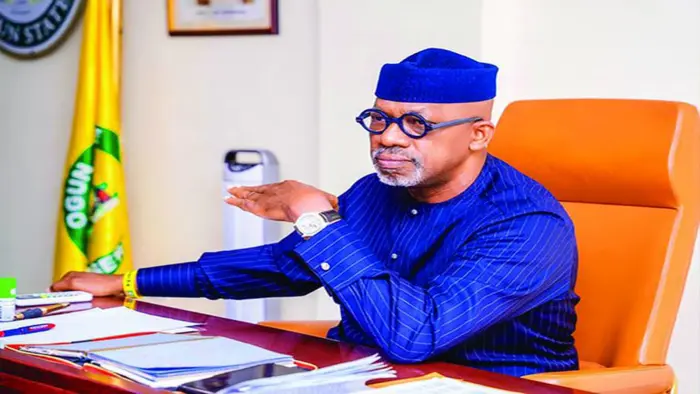
During his appearance on Television Continental (TVC)’s News’ Journalist’s Hangout, recently, Wike decried the selfish attack on the coalition by the troika of Governors Uzodimma, AbdulRazaq and Governor Dapo Abiodun of Ogun State.
The FCT Minister had stated: “Let me tell you what’s going on; Governor Hope Uzodimma, Governor of Kwara, Governor Dapo Abiodun and some of them, who have their own problems and cannot solve their own internal problems think that they can muscle me, because they said (since) I am supporting Mr. President’s re-election and therefore, PDP will not have their candidates.”
Hidden Motivations
LIKE Wike, Dickson grapples with two politically ambivalent positions, including seeking a return to the Senate while serving as National Leader of NDC. The FCT Minister knows that his future political relevance depends to a large extent on the return of President Tinubu for a second term.
Speaking during an interactive session with the leadership and members of the Apo Mechanics and Traders Association (AMTA) in Abuja, recently, Wike declared that his continued stay in office as a cabinet minister is actually dependent on his ability to deliver winning votes for the president in his two political jurisdictions of influence, notably, Rivers State and the FCT. In an apparent challenge to the PGF leaders opposing the Rainbow Coalition, the minister said they should also prove their capacity by tying their individual ambitions for the Senate to President Tinubu’s performance in the January 16, 2027 presidential poll.
Wike, who vowed to step aside from his position in the federal cabinet in the event that President Bola Ahmed Tinubu fails to secure victory in both the FCT and Rivers State during the elections, said leaders should walk their talk and be prepared to take responsibility.
Conversely, for Dickson, it is left to be seen how he intends to combine his senatorial representation with the self-appointed office of national leader, even as some party faithful suggest that the Bayelsa West Senator has his eyes set on preserving NDC for the 2031 presidency rather than defeating Tinubu and APC in 2027.