GDN SIDEBAR
Nigeria’s beauty economy is growing fast. From supermarkets and pharmacies to Instagram vendors and open markets, skincare products are now more accessible than ever. But as the market expands, so does a quieter problem. Counterfeit products are infiltrating everyday routines, putting millions of consumers at risk.
The scale of the problem is not uniquely Nigerian. It is global. According to the Organisation for Economic Co-operation and Development, counterfeit goods account for an estimated USD 467 billion in global trade.
These products are made with unknown, potentially harmful ingredients, packaged to mimic trusted brands, and sold at prices that appear attractive.
Among the products frequently targeted is Vaseline Body Oil, a staple in many Nigerian households. Known for its ability to maintain moisturized, healthy skin, it has become a prime target for imitation. For consumers, the difference between a genuine product and a counterfeit one is not always obvious. The consequences, however, can be significant, ranging from ineffective results to adverse skin reactions.
To address this growing concern, Vaseline has introduced a new approach that meets consumers where they already are. Leveraging WhatsApp’s widespread use in Nigeria, the brand has launched a simple authentication tool to help people screen their products instantly.
Consumers can now click this link to try the WhatsApp-based Vaseline Authenticator and check if their Vaseline Body Oil is authentic.

The process is intentionally straightforward. After accessing the tool, users are prompted to send a photo of the front and back of their Vaseline Body Oil. Within moments, the system analyses the packaging using a combination of visual markers and backend authentication technology, then confirms authenticity.
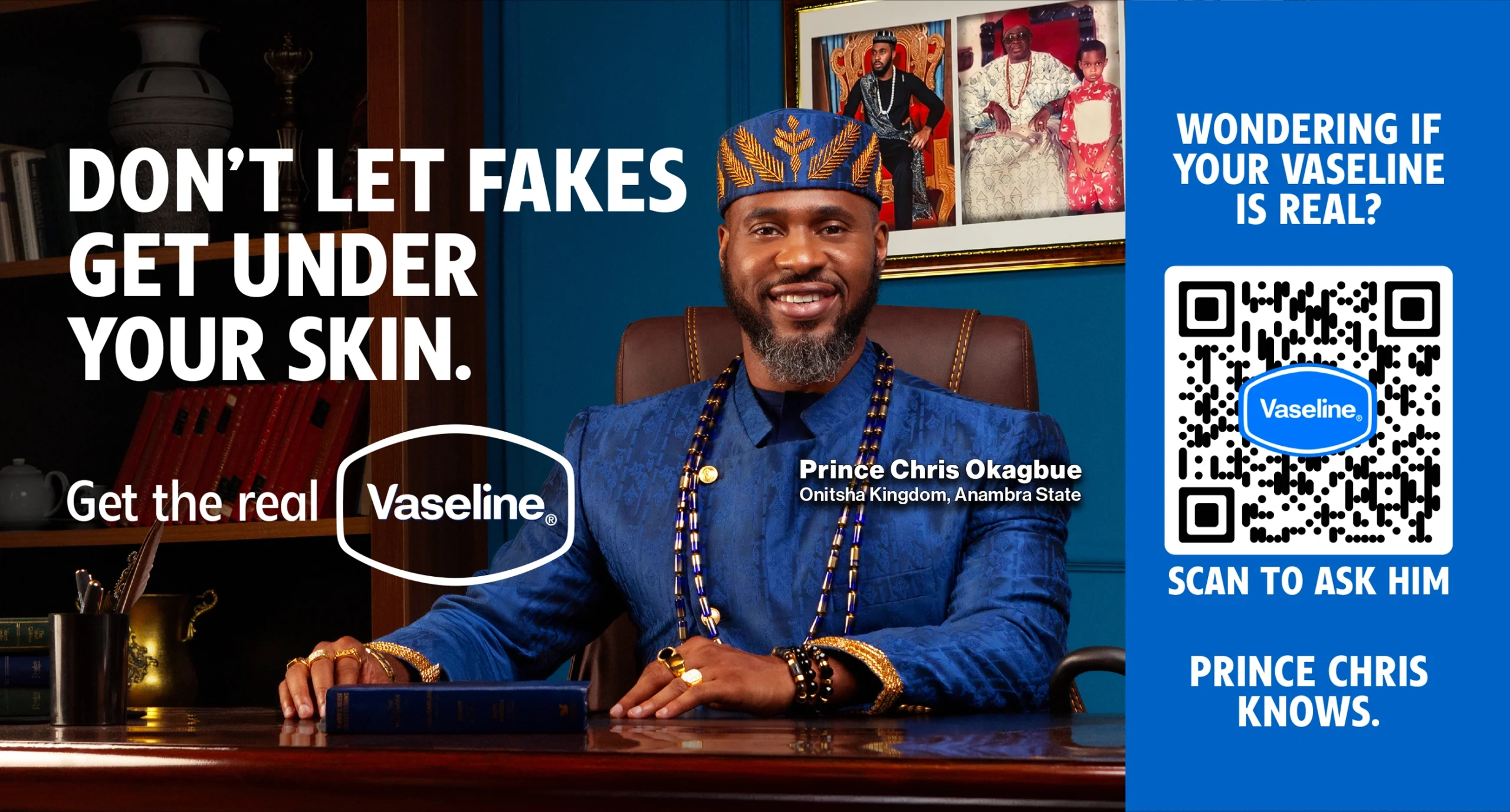
This tool is now also accessible via QR codes placed across campaign touchpoints, including outdoor advertising in Lekki and Surulere, social media platforms, and retail environments. By integrating authentication into everyday consumer journeys, the initiative aims to reduce the friction that often prevents people from questioning the products they buy.
The campaign also takes an unexpected cultural turn. In a move that blends humour with purpose, Vaseline has partnered with Chris Okagbue, a Nigerian prince, actor and public figure. The collaboration playfully reclaims the widely recognised “Nigerian Prince” stereotype, transforming it from a symbol of online scams into a voice advocating for authenticity.
The idea is both symbolic and practical. It challenges perceptions of “fake culture” while equipping consumers with a tangible tool to navigate it. At a time when trust is increasingly fragile, such interventions reflect a broader shift in how brands are responding to consumer protection.
Nigeria’s counterfeit skincare problem is not just a regulatory issue. It is a public health concern, an economic challenge and a trust deficit rolled into one. As counterfeiters become more sophisticated, the burden of authentication has often fallen on the consumer.
What initiatives like the Vaseline Authenticator suggest is a rebalancing of that responsibility. By combining technology and accessibility, brands can play a more active role in safeguarding the people who trust their products.
In a market where appearance matters and authenticity is everything, the true cost of beauty is no longer just what consumers pay at the counter. It is also about what they risk when what they buy is not what it claims to be.
About Vaseline
Vaseline has been a trusted name in skin health for over 150 years. What started with a single jar of petroleum jelly has grown into a range of skincare products used by millions of people worldwide. Part of the Unilever family, Vaseline is committed to delivering quality, safe products that protect, heal and nourish skin.