GDN SIDEBAR
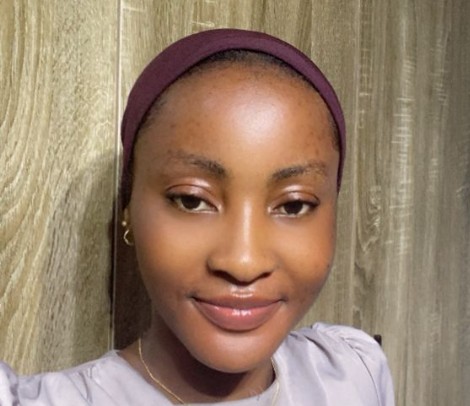
Nollywood actress Jemima Osunde has spoken about her time working in the medical field, describing how the emotional weight of caring for patients began to affect her mental health.
In an interview with House 21 TV, the actress said medical work was quietly pushing her into depression and anger before she fully understood what was happening.
“Medical work was lowkey making me depressed and more importantly, angry,” she said. “It was in therapy I realised that a lot of my anger or moments where I found myself sad were because I was bearing the weight of other people’s suffering.”
According to her, healthcare workers often carry emotional burdens without even knowing it. The daily exposure to illness, trauma, and death can take a silent toll.
“You are dealing with people who are sometimes between life and death. You are seeing people die every other day. You are seeing people suffer. You are taking it in,” she explained. “You are like a sponge. You are absorbing it subconsciously, and you are not even aware because it is just another day at work.”
Osunde also recounted one of the cases that has stayed with her over the years. She narrated treating a teenage mother and her baby at a clinic.

“One time I was treating a patient — in fact, it was two patients — the mother and her child were admitted in the clinic,” she said.
According to her, the case shocked her deeply because the mother was just 14 years old and already had a one-year-old child.
“It is still wild to me that I am describing a 14-year-old as a mother,” she said.
The teenage girl had developed Vesicovaginal Fistula (VVF) following complications from vaginal delivery at such a young age. Her body, not fully developed for childbirth, could not withstand the trauma. Meanwhile, her baby was also living with cerebral palsy.
According to her, therapy helped her understand that the anger and sadness she felt were connected to the suffering she witnessed daily.
What is Vesicovaginal Fistula (VVF)?
Vesicovaginal Fistula (VVF) is a severe childbirth injury. According to the World Health Organisation (WHO) obstetric fistula occurs when a hole develops between the birth canal and the bladder or rectum, usually as a result of prolonged or obstructed labour without timely medical intervention.
VVF specifically refers to a hole between the bladder and the vagina. This condition leads to continuous and uncontrollable leakage of urine through the vagina. Women and girls living with VVF often face physical discomfort, infections and social stigma.
WHO explains that obstetric fistula is largely preventable. It is most common in settings where access to quality maternal healthcare is limited. Early marriage and teenage pregnancy are major risk factors because young girls’ bodies are often not fully developed for childbirth.
Globally, WHO estimates that between 50,000 and 100,000 new cases of obstetric fistula occur each year. Millions of women, mainly in sub-Saharan Africa and parts of Asia, are believed to be living with untreated fistula. Many of them are young, poor and lack access to surgical repair.
The condition is not only a medical issue but also a social one. Women with fistula are often isolated, divorced or excluded from their communities due to the smell and stigma associated with constant leakage. Yet with proper surgery, VVF can be treated and, in many cases, cured.