GDN SIDEBAR
When a collection is called ‘global appearance’ and built around the image of a woman who takes up space deliberately, that is not a styling choice. That is a position. Guardian Life editor Chidirim Ndeche assesses what Olaide Oladunmoye is arguing.
There is a difference between a collection that uses African cultural references and one that designs from within them. One borrows from culture while the other speaks through it. Irise Aye, the 2025 collection from Horllard Fashion designer Olaide Oladunmoye, belongs closer to the second category.
Presented at Afro Fashion Show UK at the Hilton Hotel, Deansgate, Manchester in July 2025, the collection is built around a clear governing idea: the African woman is a global presence, not regional, marginal, or waiting to be translated for anyone else’s comfort.
The title, Irise Aye, translates from Yoruba as “global appearance,” and that meaning shapes the collections mood. The clothes are not shy. Rather, they are structured, expanded, and deliberate.
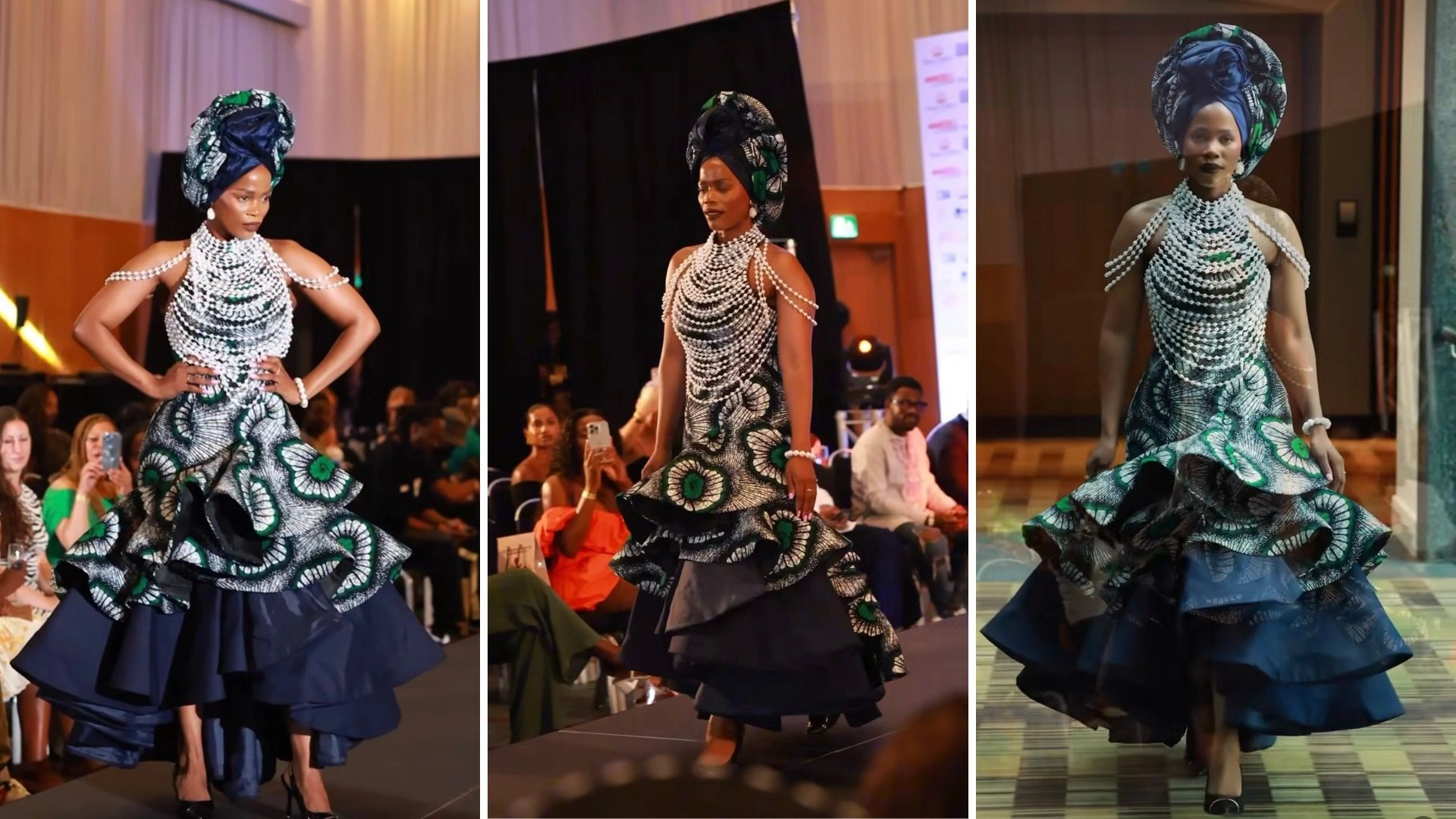
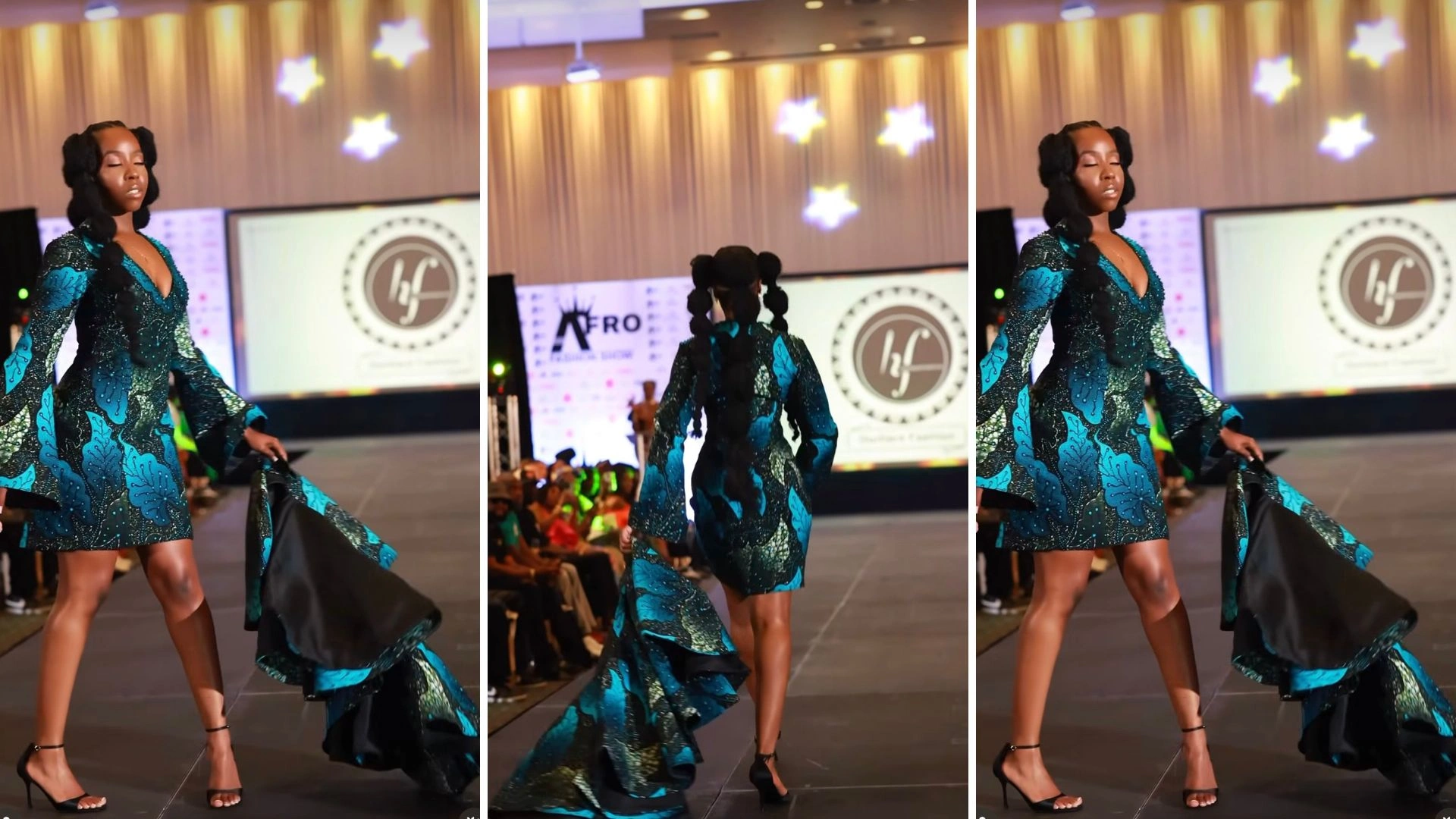
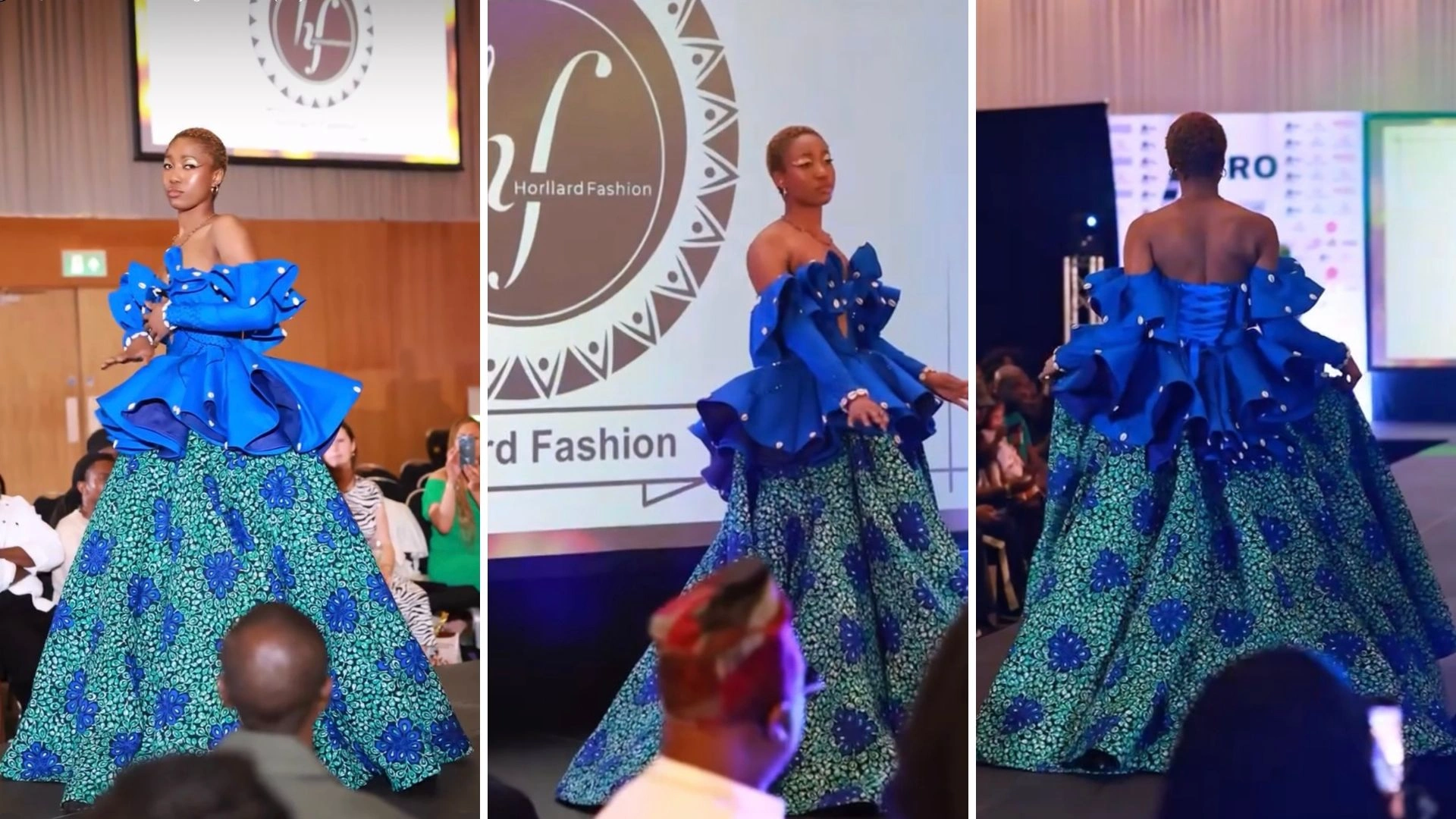
Shoulders are exaggerated. Skirts carry volume. Forms move beyond the natural outline of the body. But this is not volume for drama alone. It is a visual argument about space: who gets to occupy it, who is asked to shrink, and what happens when a woman refuses.
The exaggerated shoulders, the voluminous skirts, the sculptural forms that push beyond the body’s natural outline: these are not avant-garde gestures borrowed from European high fashion. They are the visual language of a specific argument about what it looks like when an African woman occupies herself fully, without accommodation or reduction.

Craft, training, and control by Olaide Oladunmoye
Olaide’s training at Nitaz Group, the luxury bridal and womenswear house founded by Francisca Amen-Ekhator in 2013, is visible in the work.
With a client base across Lagos, London, New York, and Dubai, Nitaz is known for beadwork, sculptural draping, and culturally rooted luxury design, and that discipline shows here. The construction is not casual. The pieces understand occasion, body, and impact. But Irise Aye is not just an exercise in technique. It demonstrates a designer beginning to form a clearer argument of her own.
Beadwork as language in the Irise Aye collection
The beadwork is one of the collection’s strongest elements. In West African dress culture, beads are not neutral decoration. They carry meaning through colour, placement, pattern, and context. Used carelessly, they become surface embellishment. Used properly, they become a language with grammar and meaning. A designer who uses beadwork in a collection informed by tradition is either engaging with that language or borrowing its surface appearance. The critical question is always which.
In Irise Aye, the beadwork feels considered. It is not simply placed on finished garments to make them look “African” or expensive. Instead, it is worked into the structure of the pieces, affecting how the garments sit and how the eye moves across them. That matters. This level of integration reflects an understanding of beadwork as material rather than as motif, which is the only way to engage honestly with a cultural craft tradition in contemporary fashion.
Beyond the obvious print story
What is also interesting is that the collection does not over-rely on print. For many designers, African identity is still reduced to obvious printed fabric, especially Ankara. Olaide uses print, but she does not let it carry the entire collection. That restraint is important.
Here, African identity sits more in form, posture, structure, and cultural memory than in surface pattern. The clothes do not need to scream “African” through print alone. They carry that identity through their shape and attitude. That is a harder argument to make, and a more mature one.
Where the collection can refine itself
Irise Aye achieved, with its Afro Fashion Show UK presentation in July 2025, three things that constitute genuine industry recognition.
First, it earned Horllard Fashion a UK platform whose audience includes press, buyers, and members of the African diaspora fashion community. The show’s 2025 edition was covered by Harbour Magazine in a piece by journalist Valeria Denegri, published 21 July 2025, placing Horllard Fashion within a critical frame that goes beyond event documentation.
Second, it established a clear and distinctive creative position for the brand, one that is not easily confused with other designers working in the diaspora fashion space.
Third, it earned a second invitation to Afro Fashion Show UK the following year, confirming that the organisers assessed the work as meeting and maintaining their curatorial standard.
What Horllard Fashion gets right
Still, the collection is not without questions. Some of the strongest ideas could benefit from sharper editing. With sculptural silhouettes and beadwork already doing so much, restraint becomes even more important. A few looks would land better with cleaner balance between volume and detail. When everything is dramatic at once, the eye has nowhere to rest.
There is also the question of audience. Irise Aye speaks clearly to those who understand the cultural codes it is working with. The next challenge is whether Horllard Fashion can make that language legible to audiences outside that immediate context without flattening it. That is the difficult part of global African fashion: expanding reach without reducing meaning.
Ultimately, Irise Aye is strongest when it trusts its own conviction. The collection understands that presence can be elegant without being quiet, and cultural identity can be global without being diluted. It is not a perfect collection, but it is a serious one.
And that matters.
Horllard Fashion is making a clear statement: the African woman does not have to enter the global fashion conversation softly. She can arrive fully formed, fully dressed, and fully aware of the space she occupies.