 Follow Us on Google News


 Follow Us on Google Discover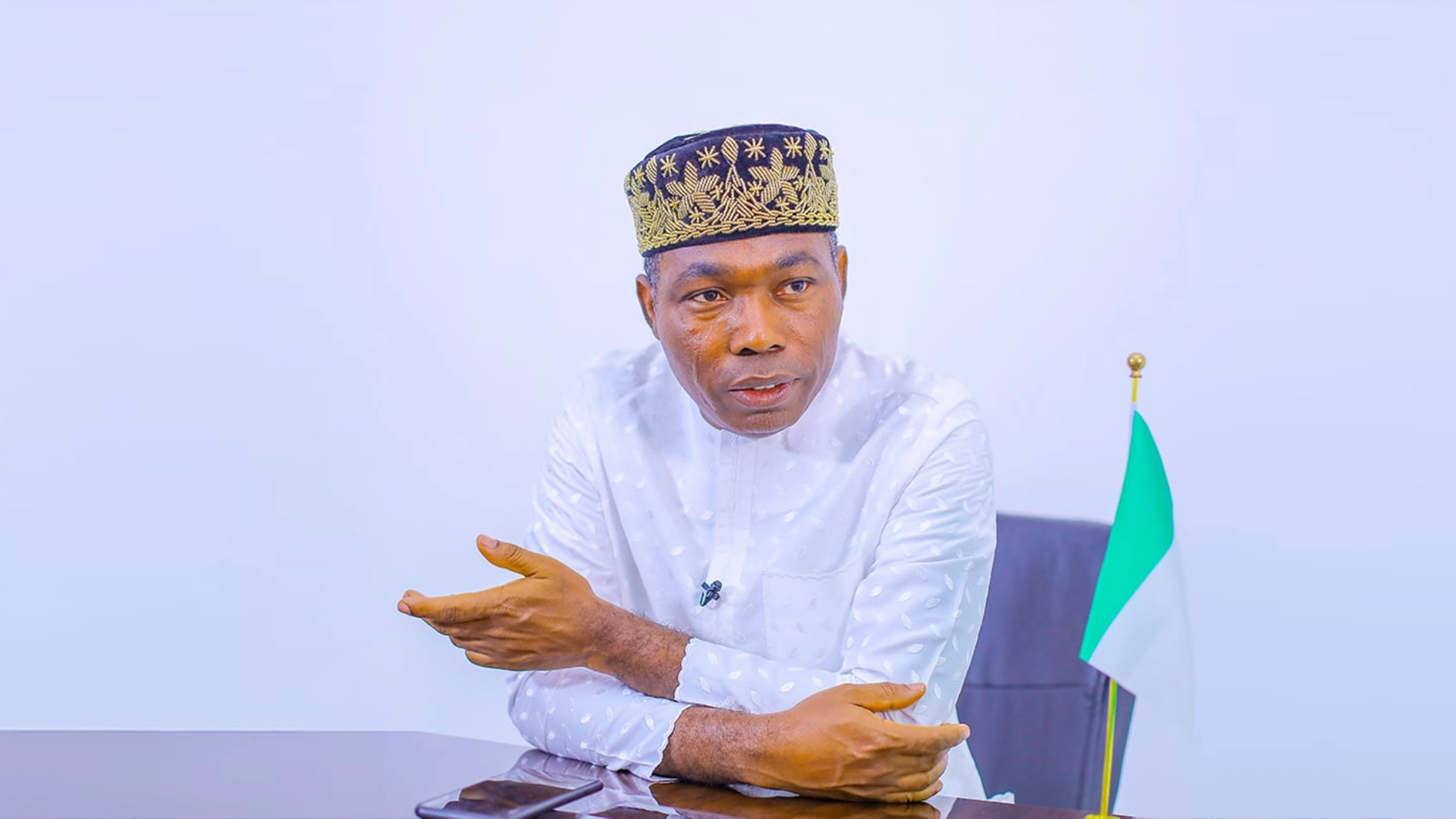
The presidential candidate of the Social Democratic Party (SDP) in the 2023 election, Adewole Adebayo, has blamed Nigeria’s declining voter participation since the annulment of the June 12, 1993 presidential election on what he described as the capture of the political system by a small political elite.
Speaking with The Guardian yesterday on the 33rd anniversary of the June 12 election, Adebayo said elections in Nigeria had gradually become detached from the people, with the political class organising itself into a clique that rotates political offices and privileges among its members while excluding ordinary citizens from meaningful participation.
According to him, what is often described as voter apathy is actually a deeper withdrawal by Nigerians from the political process due to a lack of confidence in the system.
He argued that the country must return to the principles contained in Chapter II of the Nigerian constitution , which outlines the Fundamental Objectives and Directive Principles of State Policy, to rebuild trust between citizens and government.
“The social contract between government and the people must be restored so that voters have a sense of belonging, participation and control over the affairs of the country,” he said.
Adebayo also identified government interference as the biggest obstacle to democratic development in Nigeria, alleging that successive administrations since 1999 had prioritised political survival over electoral reforms capable of strengthening democracy.

He said governments often support electoral processes only when they reduce the likelihood of incumbents losing power and make it difficult for opposition parties to secure victories.
The SDP chieftain maintained that the problem transcends political parties, noting that both the Peoples Democratic Party and the All Progressives Congress had presided over similar patterns of political behaviour while in power.
He alleged that government influence frequently extends to institutions expected to safeguard democracy, including the Independent National Electoral Commission (INEC), the judiciary, political parties and law enforcement agencies.
Adebayo urged Nigerians to reclaim ownership of the democratic process by demanding accountability and insisting on the independence of constitutional institutions responsible for conducting and adjudicating elections.
He further argued that many Nigerian politicians could not yet be regarded as genuine democrats because the country’s political institutions had failed to cultivate a democratic culture rooted in the sovereignty of the people.
According to him, the political class has largely failed to embrace the constitutional principle that power belongs to citizens and that elected officials are merely representatives entrusted with exercising that authority on behalf of the people.
He said many politicians had inherited and retained the mindset of colonial administrators rather than viewing themselves as servants of the electorate.
“The British handed independence to the Nigerian people, not to the political class. Yet many politicians have come to see themselves as successors to the colonial administration,” he said.
On electoral reforms, Adebayo called for the implementation of recommendations contained in previous electoral reform reports and advocated constitutional and legislative amendments to guarantee the complete independence of INEC.
He argued that a sitting president who leads a political party should not have the authority to appoint officials responsible for conducting elections in which that party participates.
“It is unrealistic to expect completely impartial elections when those contesting elections are involved in appointing those who conduct them,” he stated.
The former presidential candidate said INEC should cease functioning as a government agency and instead operate as a fully independent constitutional institution accountable directly to the Nigerian people.
Commenting on ongoing debates over Nigeria’s system of government, Adebayo said the country’s democratic challenges could not be solved merely by switching from a presidential to a parliamentary system.
While acknowledging arguments in favour of parliamentary democracy, he noted that parliamentary systems could also experience instability and suggested that a hybrid model combining elements of both presidential and parliamentary governance, similar to those practised in countries such as South Africa, might be worth considering.
He stressed, however, that the central issue was not the structure of government but the integrity of the electoral process.
According to him, any political system adopted by Nigeria must guarantee that votes count and that election outcomes reflect the genuine choices of voters.
Adebayo also called for safeguards to prevent institutions such as INEC, the judiciary and the police from becoming determinants of electoral outcomes, insisting that electoral victories should be decided solely by the electorate.
He said a political culture built on credible elections would improve governance, strengthen accountability and enhance the legitimacy of elected leaders.
The SDP stalwart warned that democracy could not thrive where elections were fundamentally flawed, adding that a political system sustained by what he termed “stolen mandates” would ultimately become disconnected from the people.
He cautioned that when democratic institutions are weakened, changes in political power often occur through struggles within the ruling elite rather than through the will of voters.
Adebayo said his involvement in politics was driven by a desire to ensure that Nigerians determine their democratic future through the ballot box and have the power to shape the quality of governance they receive.
“The people should be the ones who determine the quality of governance they receive, whether good or bad, through the choices they make at the ballot box. That is the path Nigeria should follow,” he said.

