 Follow Us on Google News
 Follow Us on Google Discover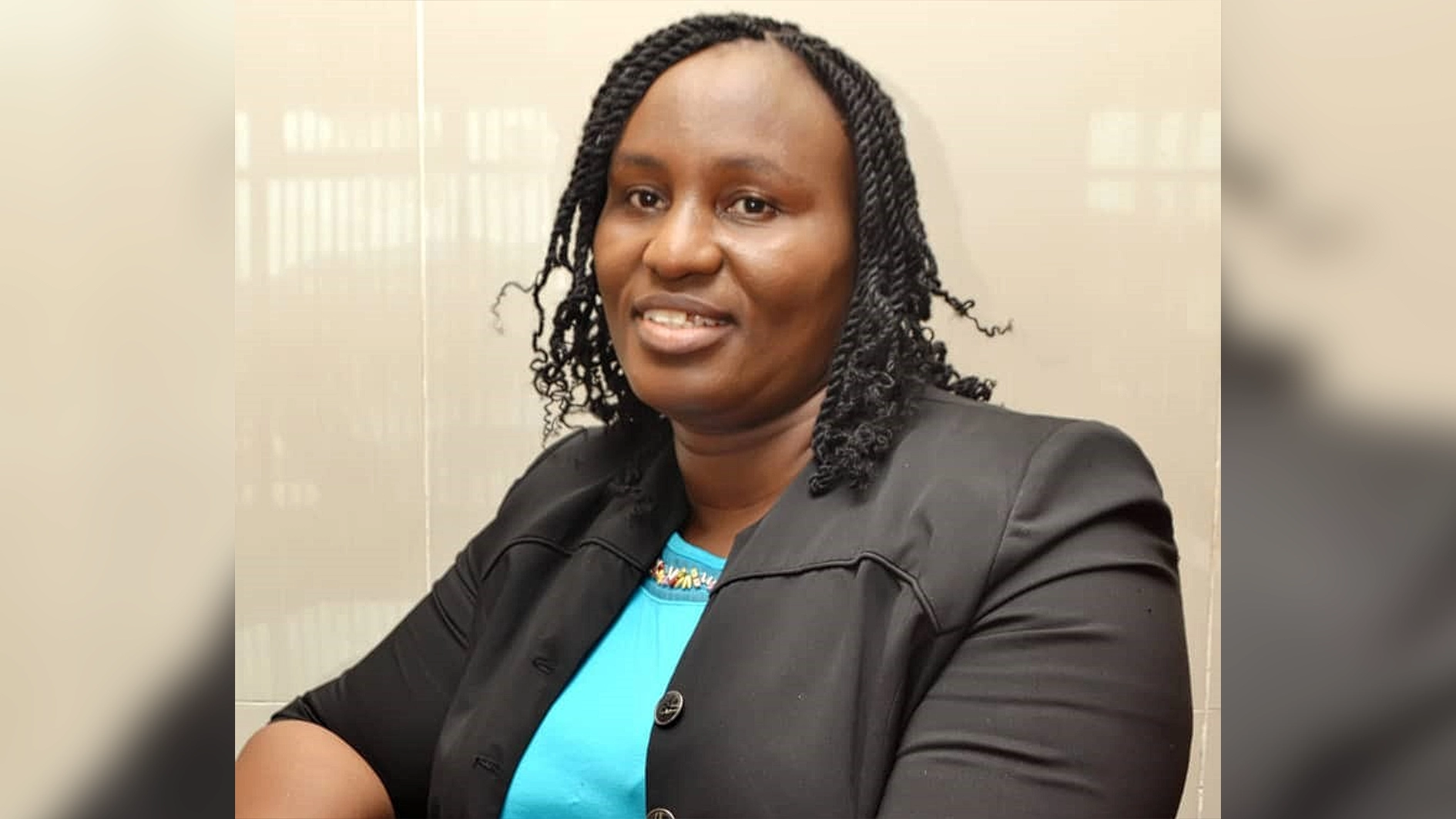
By Lydia Enyidiya Eke
With more than two decades of experience spanning human resources, executive search, organisational transformation and business leadership, Patience Ayanyemi has built a career around one central conviction: organisations can only perform as well as the people and leadership systems driving them.
She is Founder and Chief Operating Officer of i4WE Human Capital Limited, and is now operating as MRINetwork AfroAnglo Partnership.
Ayanyemi works with boards and senior executives across sectors to identify leadership talent, transform organisations and build sustainable human-capital strategies.
Her career has taken her through the energy, insurance, telecommunications, courier, logistics, maritime, construction and fintech sectors.
She is also a Certified Transformational Coach, an alumna of the Goldman Sachs 10,000 Women Growth Fellowship and the Academy for Women Entrepreneurs.
In this exclusive interview with LYDIAENYIDIYAEKE, she speaks on leadership, executive recruitment, the changing workplace, women in business, career transitions and why Africa must take the development of its human capital more seriously.
You have spent over 23 years in human resources and executive search. What originally drew you to the human-capital space?
I have always been fascinated by people and what they are capable of achieving when they are given the right environment, opportunity and leadership.
Human resources is sometimes misunderstood as simply hiring people, paying salaries or managing employee issues. I see it very differently. Human capital is fundamentally about aligning people with organisational purpose and ensuring that the right people are in the right roles, equipped to deliver the organisation’s objectives.
Lets look at what has happened over the years
Over the years, my experience has shown me that businesses may have great products, technology and capital, but without the right leadership and people, sustainable growth becomes difficult.
That realisation has shaped my career. I wanted to move beyond traditional HR into a space where I could influence business strategy through people, leadership and organisational transformation.
You founded i4WE Human Capital, which now operates as MRINetwork AfroAnglo Partnership. What gap were you trying to address?
There was a clear need for a more strategic approach to executive recruitment and human capital consulting. Organisations don’t simply need people to occupy positions. They need leaders who understand their vision, culture, strategy and growth ambitions and can translate those into measurable results.
What is the role of executive search in all this?
Executive search becomes different from conventional recruitment.
Our role is to understand the organisation first. What is the business trying to achieve? What kind of culture does it have? What leadership gap exists? What kind of person will thrive within that environment and deliver the desired results?
Once we understand those things, we go into the market to identify the right talent.
Your organisation is described as the only African-owned office within the MRINetwork. What does that distinction mean to you?
It is both an honour and a responsibility.
Being part of a global executive-search network gives us access to international expertise, knowledge and networks, while our African ownership gives us a deep understanding of the realities of our local markets.
Africa has exceptional talent. Sometimes what is missing is not talent itself but the systems that identify, develop and position that talent appropriately.
Our position allows us to connect African organisations with global executive-search expertise while ensuring that local realities are understood.
It also demonstrates that African-owned businesses can compete at the highest international standards.
What makes executive search different from ordinary recruitment?
Executive search is fundamentally about finding the right leadership solution, not merely filling a vacancy.
At the executive level, the consequences of getting the appointment wrong can be significant. A senior executive influences strategy, culture, people, finances and the future direction of an organisation.
We therefore look beyond a person’s CV.
We examine leadership capability, track record, values, cultural fit, strategic thinking, emotional intelligence and the ability to operate within the organisation’s particular environment.
We also engage people who may not necessarily be looking for another job. Some of the strongest candidates are already performing well where they are.
Executive search requires relationships, credibility, confidentiality and a deep understanding of the talent market.
You have worked across energy, insurance, logistics, telecommunications and other sectors. How has that diversity shaped your leadership perspective?
It has taught me that while industries differ, people challenges often have common foundations.
Every organisation needs effective leadership, accountability, performance management, succession planning and a healthy culture.
However, the way these things are implemented must reflect the particular industry and organisation.
Working across different sectors has also helped me appreciate how quickly business models are changing. Technology, globalisation, changing employee expectations and new generations entering the workplace are forcing organisations to rethink how they attract, manage and retain talent.
You have been involved in organisational restructuring, mergers, acquisitions, rebranding and culture transformation. Why do people often resist organisational change?
People generally don’t resist change simply because they dislike change. Often, they resist what they don’t understand or what they perceive as a threat.
When organisations embark on restructuring or transformation, employees want to know: What does this mean for me? Will my role change? Will I still have a place here? What is expected of me?
Leaders therefore have to communicate.
Transformation cannot be imposed successfully without taking people along. You need to explain the reason for the change, communicate the expected outcome and give people the opportunity to understand how they fit into the new structure.
Change management is ultimately people management.
How important is organisational culture in determining whether a company succeeds or fails?
Culture is extremely important because culture influences behaviour.
You can have beautiful values written on the wall, but the real culture of an organisation is what happens when nobody is watching.
How does the organisation treat people? How are decisions made? Are people rewarded for ethical behaviour? Can employees speak up? Does leadership take responsibility? Are high performers developed?
Those things define culture.
A strong culture can become a competitive advantage because it attracts people who identify with the organisation’s values and encourages them to contribute meaningfully.
Technology and artificial intelligence are transforming workplaces. Should employees be worried?
Employees should be concerned enough to prepare, but not paralysed by fear.
Technology is changing jobs, but it is also creating new opportunities. The important question is whether individuals and organisations are prepared to evolve.
Employees need to continuously develop their skills. Organisations, on the other hand, have a responsibility to invest in reskilling and upskilling their workforce.
The future of work will increasingly require people who can combine technical competence with human capabilities such as creativity, communication, critical thinking, adaptability and leadership.
The workplace is changing, and our approach to learning must change with it.
We now have several generations working together. How should organisations manage a multigenerational workforce?
Organisations should stop treating generational differences as a problem and start seeing them as an opportunity.
Different generations bring different experiences and perspectives.
Someone with decades of professional experience may bring institutional knowledge and wisdom, while a younger employee may bring technological fluency and a different perspective on innovation.
The goal should not be to make everyone think alike. It should be to create an environment where different strengths complement one another.
Good leadership creates that bridge.
You are particularly passionate about coaching and career transitions. Why?
Because I have seen what happens when people experience career disruption and begin to question their own value.
Losing a job, changing careers or reaching a point where you have to reinvent yourself can be very challenging.
My programme, Reinventing Yourself and Preparing to Manage a New Beginning, was developed from that understanding.
Sometimes people don’t need someone to give them a job. They need someone to help them see possibilities again, understand their strengths and reposition themselves.
I believe people should not define themselves solely by a particular job title. Your career is bigger than one position.
What is your advice to professionals who suddenly find themselves unemployed or at a career crossroads?
Don’t allow a career disruption to become an identity crisis.
Take a step back and assess yourself honestly. What skills do you have? What have you learned from your previous experiences? What can you do differently? What opportunities are emerging?
Then invest in yourself.
Update your skills, expand your network, seek mentors and be open to possibilities you may not previously have considered.
Sometimes a difficult transition becomes the doorway to a completely different chapter.
As a Female Voice who has built a successful business and leadership career, what has your journey taught you about women and entrepreneurship?
Women are capable of building extraordinary businesses, but we must also be intentional about building sustainable businesses.
Entrepreneurship is not simply about having an idea. It requires financial discipline, systems, leadership, resilience, strategy and the ability to build relationships.
My participation in the Goldman Sachs 10,000 Women Growth Fellowship and the Academy for Women Entrepreneurs reinforced for me the importance of structured business education and networksIPAC hails Adeleke, Accord, Osun people over governorship victory.
Women should not be afraid to seek knowledge, ask for support and surround themselves with people who challenge them to grow.
What do you think is one of the biggest challenges facing female voices who want to be heard and rise into executive leadership?
One major challenge is access to networks, opportunities, mentorship and sometimes the confidence to position oneself for leadership.
But I also believe women must own their ambition.
You cannot expect other people to see your potential if you are unwilling to communicate your value.
Any other point to note?
Women need to develop competence, confidence and visibility. We must also create opportunities for other women coming behind us.
Leadership should not only be about how far you have gone. It should also be about how many people you help move forward.
What qualities do you look for when assessing an executive candidate?
Competence is important, but competence alone is not enough.
I look at the person’s track record, leadership maturity, values, adaptability, emotional intelligence, strategic thinking and ability to deliver results.
I also ask whether the person understands the responsibility that comes with leadership.
At senior levels, you are not simply managing tasks. You are influencing people, shaping culture and making decisions that can affect an entire organisation.
That requires character as well as competence.
Can leadership be taught, or will you say that great leaders are born?
I believe leadership can be developed.
Some people may naturally possess certain leadership qualities, but leadership is also a discipline that requires learning, practice, feedback and self-awareness.
People become better leaders when they are willing to learn from experience, listen to others and continuously improve themselves.
That is one reason I am passionate about coaching.
Looking at Africa’s business environment, what kind of leadership do we need now?
We need leaders who understand that leadership is about creating value beyond themselves.
Africa has enormous human and economic potential. But potential alone is not enough.
We need leaders who are ethical, innovative, accountable, commercially minded and committed to developing people.
We also need organisations that deliberately build succession pipelines instead of waiting until a senior executive leaves before asking who can replace them.
If we want sustainable African businesses, we must invest deliberately in African leadership.
What is your vision for the future of your organisation?
My vision is to continue building a human capital organisation that becomes a trusted bridge between exceptional talent and organisations seeking sustainable growth.
I want us to continue expanding our impact across Africa and beyond while maintaining the quality, integrity and professional standards that have defined our journey.
Do people really matter in all these?
Ultimately, our work is about people.
When you help an organisation find the right leader, you are not simply filling a position. You may be influencing the direction of an entire company, the careers of hundreds of employees and the value that organisation creates in society.
That is a responsibility I take very seriously.
Finally, after more than two decades in this field, what does success mean to you?
Success is not only about what you achieve personally. It is also about the value you create for others.
If I can help an organisation find the leadership it needs, help a professional navigate a difficult career transition, help a young person understand their potential, or help a business become stronger because of the people we have helped it find and develop, then I consider that meaningful success.
For me, the ultimate measure is impact.
People are the greatest asset of any organisation, and when you invest in people, you are investing in the future.

