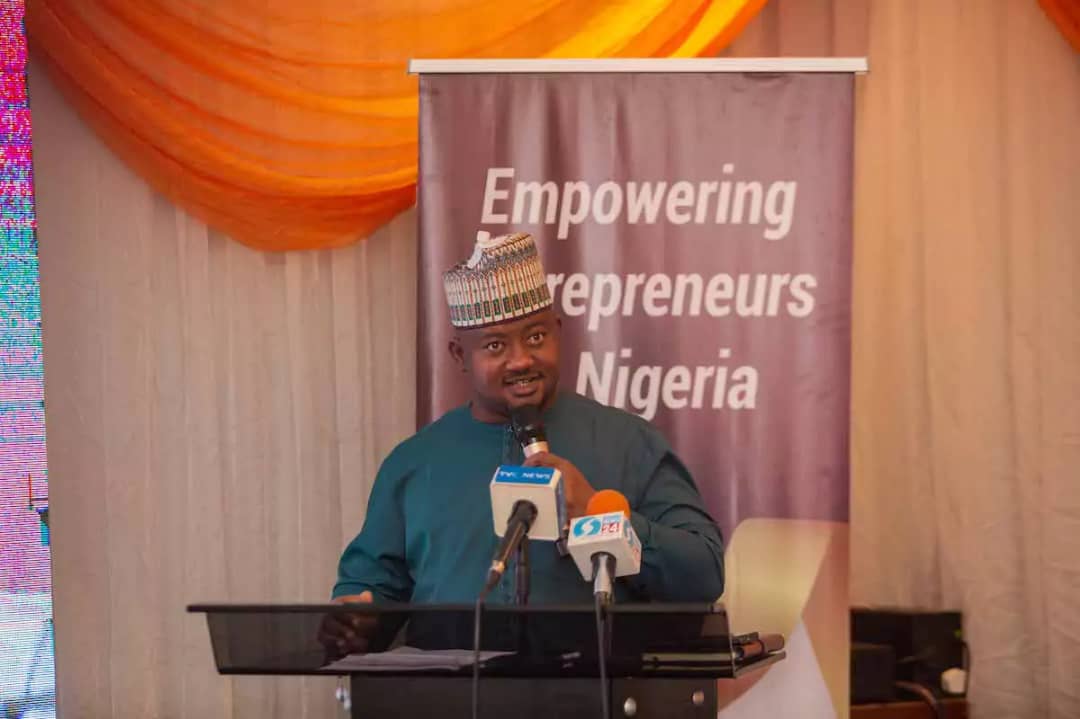
To solve the nation’s high employment rate, the Chief Executive Officer of Transblue, Mr Akeem Ajisafe, has called for partnerships between the private and public sectors that have the potential to bridge the gap between the academic world and the existing work environment.
According to him, collaborative efforts will provide solutions that address the soft skills gap, which has rendered many youths ineffective in the Job industry.
Ajisafe, who spoke on the prevailing challenge in employment, added that even though graduates complete their studies with technical knowledge, they still miss job opportunities because they cannot demonstrate the needed soft skills.
“Our education systems produce graduates with excellent grades, but a gap precludes them from career-defining jobs. Our graduates sometimes cannot demonstrate good communication, collaboration, problem-solving, and critical thinking skills, which are essential for employers,” he said.
A recent report published by the National Bureau of Statistics (NBS) noted that Nigeria’s unemployment rate has risen from 27.1per cent in the second quarter of 2020 to 33per cent, making it the second-highest rate on the global list.
The report further highlights that over 60per cent of Nigeria’s working-age population is younger than 34, pointing toward a need to empower this generation for employment and future proof against socio-economic challenges.
By 2050, Nigeria will have a population of over 300 million people, making it the third-most populous nation on earth. The above effectively means that the number of individuals seeking employment will further increase.
The youth are the driving force behind any society’s economic growth and technological innovation. They also make up the critical masses, particularly in developing nations like Nigeria, who have the power to strengthen or weaken the fabric of society. However, according to The Center for the study of the Economics of Africa (CSEA), the Nigerian labour market is characterized by a significant mismatch between the skills required by companies and the ones available on the market, contributing, unfortunately, to the high youth unemployment rate.
QNET, a leading direct-selling company, has leveraged such partnerships by collaborating with local experts and partners to address the challenges of financial know-how faced by young people.
In collaboration with Transblue, a logistics partner, QNET recently launched its’ signature financial literacy programme ‘FinGreen,’ which aims to develop healthy financial habits through education and training in the most vulnerable communities. The project hopes to empower young people to take charge of their future and lead better lives, including improving their employability skills to pursue opportunities for employment and entrepreneurship.
The FinGreen programme is implemented with a local not-for-profit organization, Financial Literacy For All (FLFA), in charge of developing training on entrepreneurship, financial literacy, and other critical soft skills.
The project is part of QNET’s overall corporate social responsibility initiative to Raise Yourself to Help Mankind (RYTHM). Hence empowering young people to be entrepreneurs will help create a better future for all.
So far, over 500 young adults, through a peer-to-peer model in communities like Ikeja, Ikorodu, Ogun, and Oyo states, have received financial literacy training through the FinGreen project with an extensive module on employability skills.
FinGreen adds to existing government and other stakeholder initiatives as a collective effort toward empowering the youth for the job market. Through activities like The Nigerian Youth Employment Action Plan (NIYEAP) launched in 2016, the government of Nigeria has shown clear prioritization of unemployment issues.
The NIYEAP serves as a multi-stakeholder partnership to advance the implementation of youth-employment-related targets of the 2030 Agenda for Sustainable Development, focusing on digital skills, quality apprenticeships, green jobs, and the rural economy.