 Follow Us on Google News


 Follow Us on Google Discover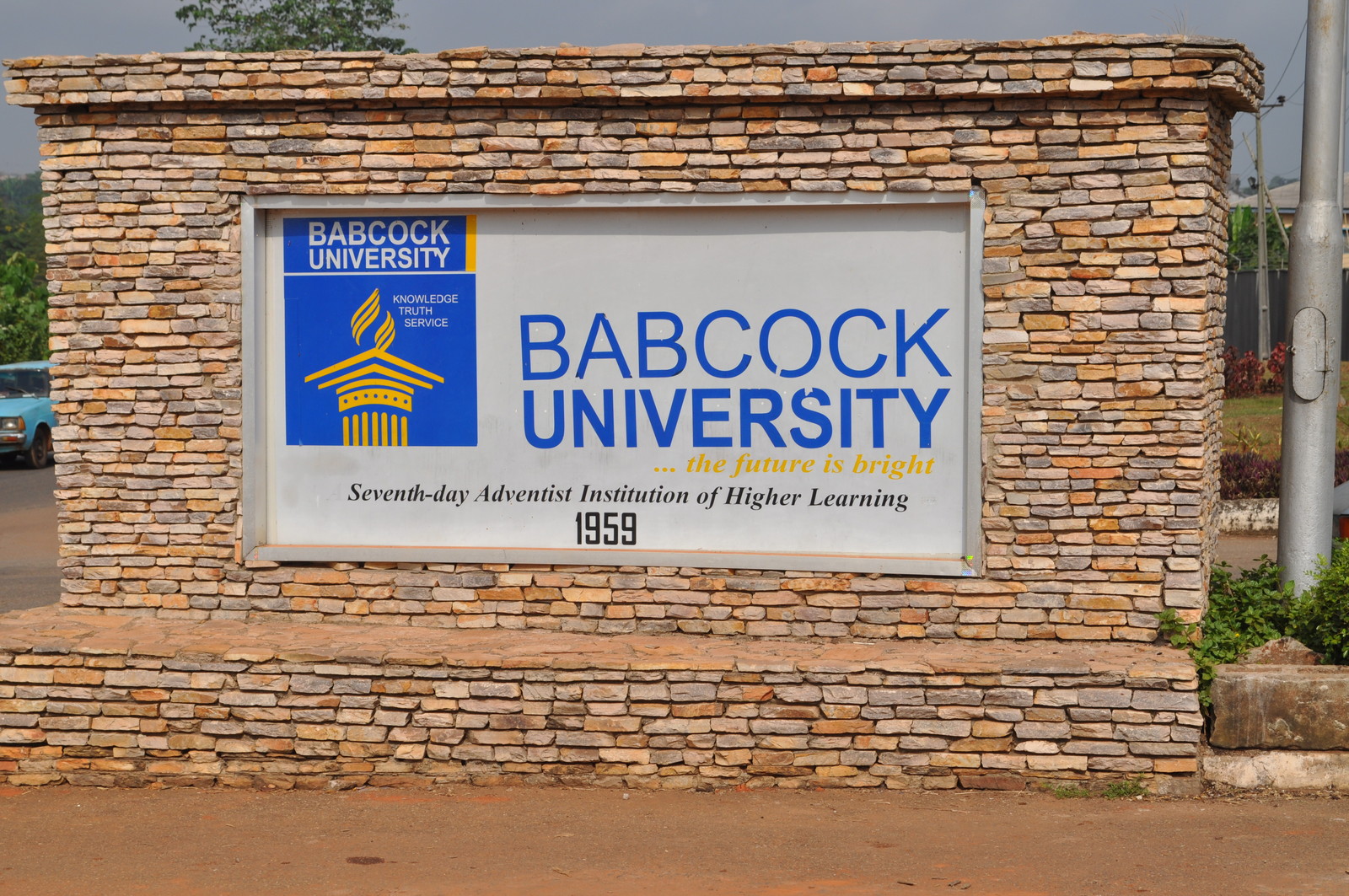
Babcock University, Ilishan-Remo, Ogun State, has marked its 67th Founders’ Day anniversary and 27 years of university status.
Vice Chancellor, Prof. Afolarin Olutunde Ojewole, attributed the institution’s development and growth to faith, sacrifice, and what he described as God’s grace.
The anniversary, held yesterday at the University Amphitheatre, Ilishan-Remo, tagged “Founded on Grace, Building for Greatness.”
Ojewole said the occasion provided an opportunity to reflect on the institution’s origins, assess its achievements and consider its responsibilities for the future.
He recalled that the institution was established on September 17, 1959, as the Adventist College of West Africa (ACWA), with seven ministerial students.
According to him, the institution later became the Adventist Seminary of West Africa before attaining university status in 1999, when the Federal Government recognised it as one of Nigeria’s first three private universities.

He explained that the university received its certificate of registration, No. 002, in 1999 and admitted its first batch of 1,006 university students on September 13 of the same year.
Ojewole noted that the enrolment had since grown to more than 13,000 full-time students, alongside an expanding community of academics, researchers, professionals and entrepreneurs.
The varsity don added that the institution’s impact should not be measured solely by its student population, infrastructure or academic programmes, but also by the lives shaped through education and character development.
The Vice Chancellor cited the contributions of the university’s graduates in medicine, law, accounting, teaching, research, entrepreneurship, pastoral work and other professions as part of its institutional legacy.
He also acknowledged the contributions of the institution’s pioneers, church leaders, academics, staff, parents and alumni to its development.
In his lecture, titled “Measuring Impact, Gauging Growth: The Ilishan-Remo Story of Babcock University,” the guest speaker, Lekan Ogunbanwo, traced the institution’s development from its establishment in 1959.
He stated that the creation of ACWA represented an important stage in the development of Adventist tertiary education in Nigeria and had implications for education across West Africa.
He noted that although the institution began with seven students, its founders had drawn up a 20-year development plan aimed at expanding the campus and increasing its academic capacity.
He said the institution gradually moved beyond ministerial education to introduce other disciplines, including business administration and medicine.
Ogunbanwo said ACWA initially operated a three-year diploma programme before seeking approval to offer undergraduate degrees. In 1966, he added, the institution graduated its first Bachelor of Arts degree holders in its own name.
He also discussed the effect of the Nigerian Civil War on the institution, noting that insecurity disrupted enrolment, particularly among students from the eastern part of the country.
According to him, the institution recovered after the war and adopted measures to strengthen its operations.
Ogunbanwo said the institution changed its name in 1975 from Adventist College of West Africa to Adventist Seminary of West Africa and subsequently became affiliated with Andrews University, allowing it to award degrees in various disciplines.

