 Follow Us on Google News
 Follow Us on Google Discover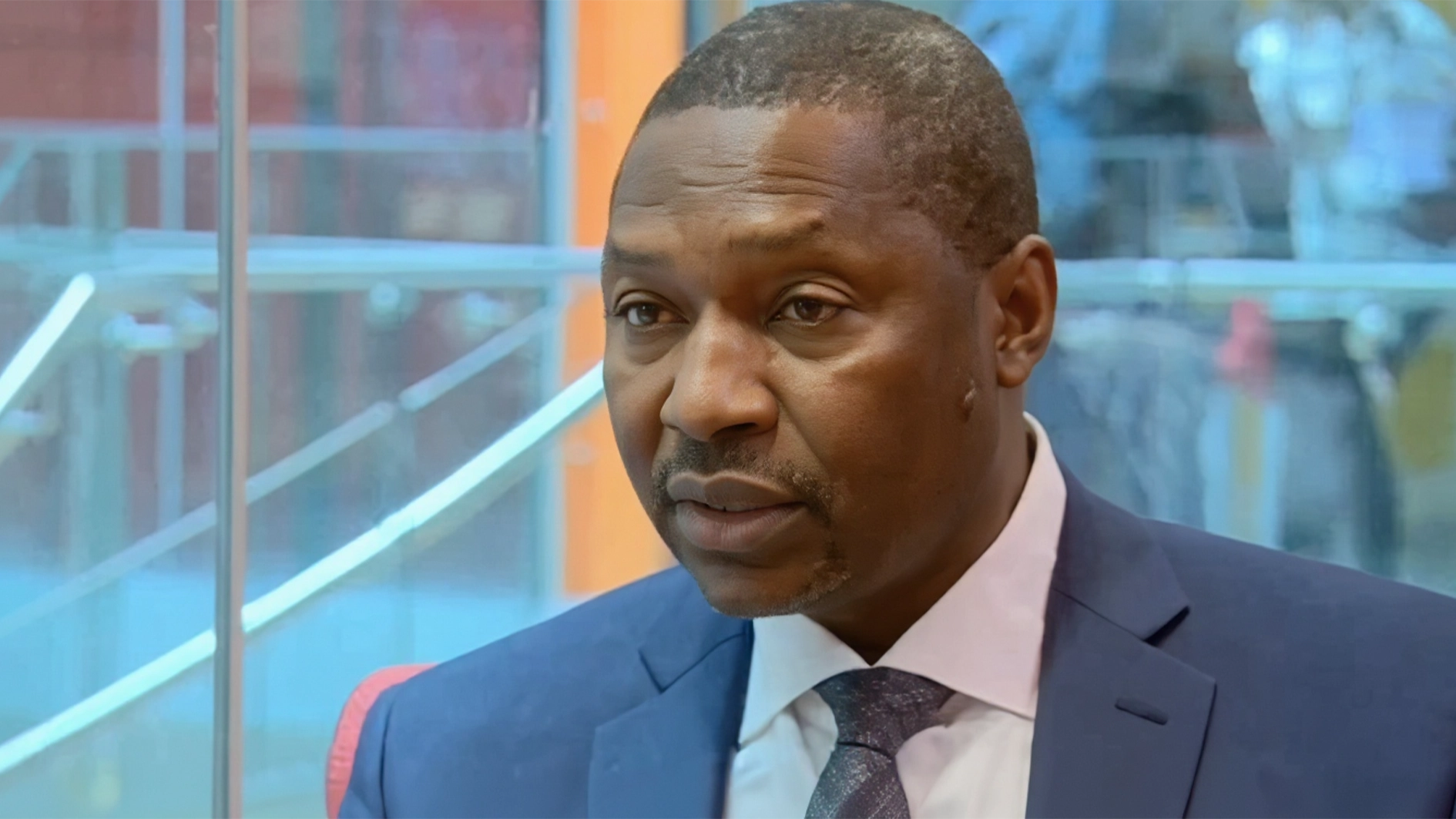
A high court sitting in the Federal Capital Territory (FCT), Abuja has rejected an application by the former Attorney-General of the Federation and Minister of Justice, Abubakar Malami, seeking bail from the custody of the Economic and Financial Crimes Commission (EFCC).
The presiding judge, Babangida Hassan, dismissed Malami’s bail application in a ruling on Thursday.
According to Justice Hassan, Malami’s detention was lawful and backed by a valid court order.
Malami, through his counsel, Dr. Suliaman Hassan (SAN), had approached the court seeking bail from the custody of the EFCC, arguing that his detention by the commission in its ongoing investigation was illegal.
However, counsel to the EFCC, Chief J.S. Okutepa (SAN), submitted that the EFCC was holding the former minister through a valid remand order obtained at an FCT High Court granted by Justice S. C Oriji.
Okutepa equally affirmed that the EFCC was a law-abiding commission that would not detain a suspect beyond the lawful period without an order of the court.
In his ruling, Justice Hassan held, quoting Section 35 of the Constitution, that since there was a provision in the Administration of Criminal Justice Act (ACJA) for detention, Malami was lawfully detained by the remand order of the court.
“Asking this court to grant this application is tantamount to inviting the court to sit as an appellate court over an application made by a court of coordinate jurisdiction which the court has no power to do,” Hassan said.
Meanwhile, a former spokesman to President Bola Tinubu in the South-East, Denge Josef Onoh, had earlier urged Malami to submit to ongoing investigations by the EFCC rather than seek the recusal of its chairman.
In a statement made available from Paris, France, Onoh reacted to Malami’s recent call for the EFCC Chairman, Ola Olukoyede, to step aside from investigations involving him, citing alleged conflicts linked to the Justice Ayo Salami Judicial Commission of Inquiry Report.
Onoh said he had reviewed Malami’s position and disagreed with the interpretation of the Salami Panel’s report, arguing that it did not bar the EFCC from carrying out investigations into former public office holders.
He maintained that calls for recusal should be guided strictly by law and established principles of fairness.
He stated that the EFCC’s statutory mandate empowers it to investigate economic and financial crimes without fear or favour, noting that the Salami Panel was set up to strengthen accountability and institutional integrity, not to confer immunity on any individual.
“During his tenure as Attorney-General, Mr Malami oversaw and defended several high-profile prosecutions that were widely criticised as politically motivated vendettas against opposition figures from the previous administration, often involving defiance of court orders and prolonged detentions without trial.
“It is the height of hypocrisy for former AGF Abubakar Malami to now accuse the EFCC of ‘personal vendetta’ when he himself masterminded one of the most garrulous and vindictive campaigns to remove the former EFCC Acting Chairman, Ibrahim Magu, in 2020.
“In a brazen display of power abuse, Malami, as Attorney-General, personally drafted and forwarded multiple memos to President Muhammadu Buhari, levelling over 22 weighty allegations against Magu, including diversion of recovered loot, insubordination, re-looting of assets and gross misconduct. These accusations stemmed from reported clashes between Malami and Magu over control of seized assets and high-profile cases.
“On July 6, 2020, Magu was dramatically arrested on the streets of Abuja and detained. The following day, July 7, President Buhari suspended him, establishing the Justice Ayo Salami Judicial Commission of Inquiry—set up under Malami’s supervision—to probe the allegations.
“Malami refused to appear before the Salami Panel despite a subpoena, denying Magu the opportunity to confront his chief accuser. Critics, including members of the Presidential Advisory Committee Against Corruption (PACAC), described the episode as a ‘power play’ and ‘grudge war’ orchestrated by Malami, who exploited his proximity to the President to settle scores.
“Magu was never prosecuted or convicted on these allegations, yet his career was effectively ended. This aggressive, media-amplified pursuit exemplifies the very vendetta and persecution by power that Malami now falsely attributes to the current EFCC leadership.
“When Malami wielded prosecutorial authority, he showed no restraint in targeting perceived rivals. He cannot now demand kid-glove treatment or recusal simply because accountability has come knocking at his door.
“In the case of Col. Sambo Dasuki (former National Security Adviser), Malami initially defended the Federal Government’s refusal to obey multiple court orders granting Dasuki bail, leading to over four years of detention despite judicial rulings. This was seen by critics as a clear case of executive disregard for the rule of law to settle political scores.”

