 Follow Us on Google News


 Follow Us on Google Discover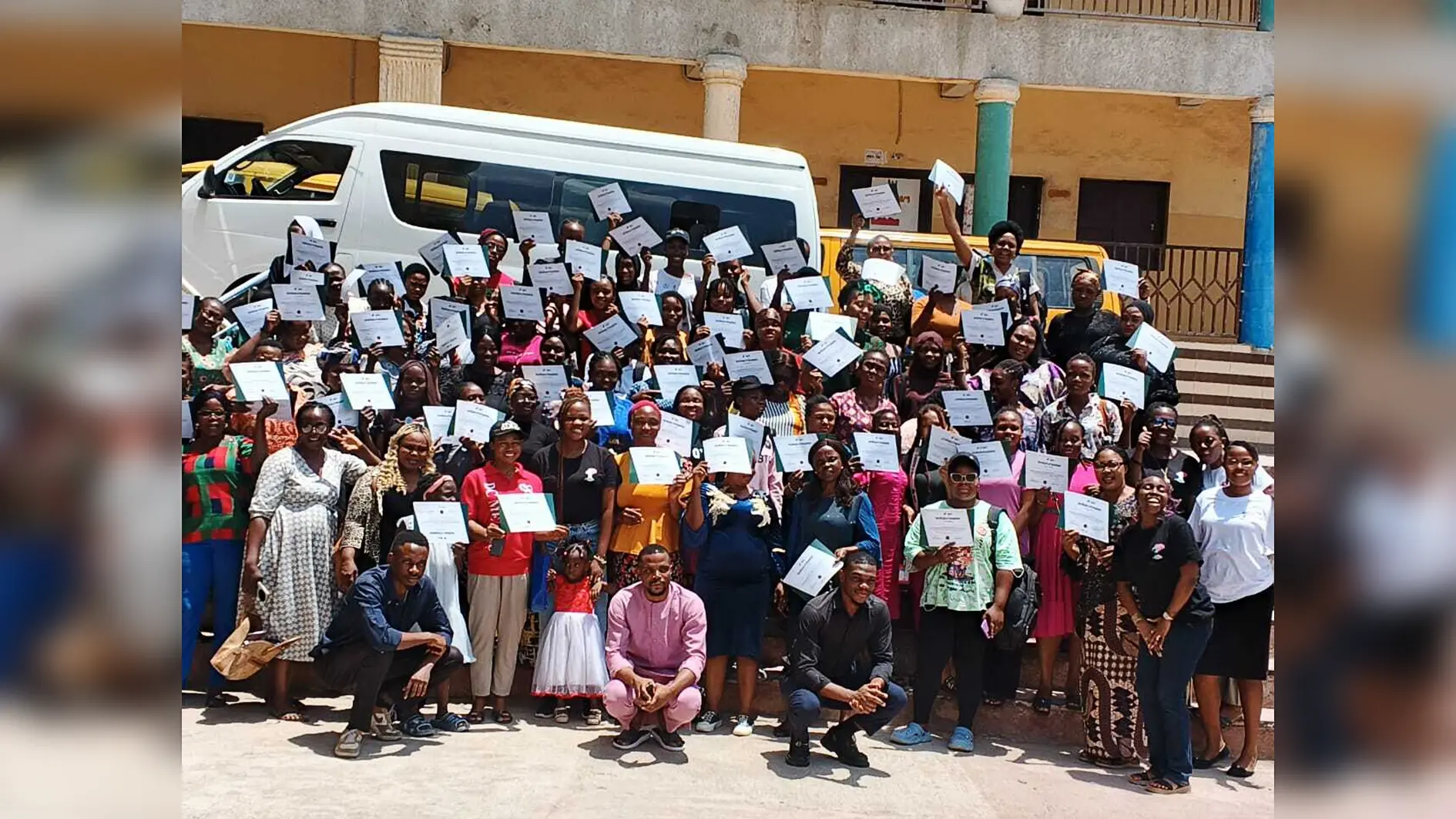
A non-governmental organisation, She Code Africa (SCA), has empowered over 200 women in the Federal Capital Territory with essential digital skills.
The initiative, aimed at equipping women and girls with foundational technology competencies required in today’s digital economy, brought together participants aged between 16 and 35 from underserved communities across the capital.
Speaking at the event, Program Manager at She Code Africa, Maryann Nwokoye, said the initiative was designed to bridge the digital divide and promote economic empowerment among women.
The training was organised by She Code Africa in partnership with HerDev and the Center for Women Studies and Intervention (CWSI), with funding, technical support and global resources provided by HP.
She explained that the programme was community-driven, with partnerships involving local organisations, religious bodies and academic institutions to mobilise participants.
Nwokoye said: “The digital economy is growing rapidly, but many women, especially from underserved communities, lack access to digital skills. This training bridges that gap. We don’t just train and leave. We follow up after three, six, and twelve months to track progress and provide support where needed.”

She noted that many participants previously used their smartphones only for basic communication but are now equipped to leverage digital tools for business growth, content creation, and online safety.
She added that the organisation has established follow-up mechanisms, including alumni networks and advanced training opportunities, to ensure sustained impact.
On future plans, she disclosed that the organisation intends to expand the programme beyond Abuja to other states across Nigeria, with the goal of increasing women’s participation in the digital economy.
Also speaking, one of the facilitators, Dr. Joshua Bassey, described the programme as a “beautiful experience,” noting the remarkable progress made by participants within a short period.
Highlighting the importance of cybersecurity awareness, he noted that many participants were previously unaware of basic online safety measures such as two-factor authentication.
He said: “At the beginning of the program, many participants had little or no knowledge of computers. Some didn’t even know how to use a mouse. But seeing how far they’ve come, I can confidently say they’ve been impacted.
“There are many people willing to learn, but there needs to be a bridge connecting them to these opportunities. If that gap is bridged, access will improve significantly.
“Teaching them how to secure their emails, phones, and social media accounts will go a long way in reducing cybercrime.”
According to him, participants gained practical knowledge in computer operations, file management, email usage and tools such as spreadsheets and cloud storage platforms.
Bassey emphasised the need for stronger collaboration between government, non-governmental organisations, and communities to expand access to such opportunities.
He called on the government to integrate digital literacy into school curricula and support NGOs through funding and infrastructure, including subsidised access to digital devices.
One of the beneficiaries, Melodi Ayomide, expressed appreciation for the opportunity, describing the experience as impactful and timely.
She commended the teaching approach of the facilitators, noting that it made learning easy and enjoyable for participants.
Ayomide said: “I’m really glad to be part of this program. I learned the basics of how to use a computer, how to type, how to open a LinkedIn account, create a Gmail account and set up two-step authentication to protect my account from hacking. My experience so far has been very awesome.
“I really liked the way our trainer taught us. It was very easy to understand, and everyone here can testify that they enjoyed the teaching style.”
Ayomide, who is currently unemployed, said the training would help improve her job prospects, particularly in preparing a standard curriculum vitae and applying for jobs.
She urges the government to support similar initiatives with longer duration to enhance learning outcomes.
She added, “I think the government should provide more training like this. It’s a great opportunity for people to learn, but the duration should be longer so participants can fully understand what they are being taught.”

