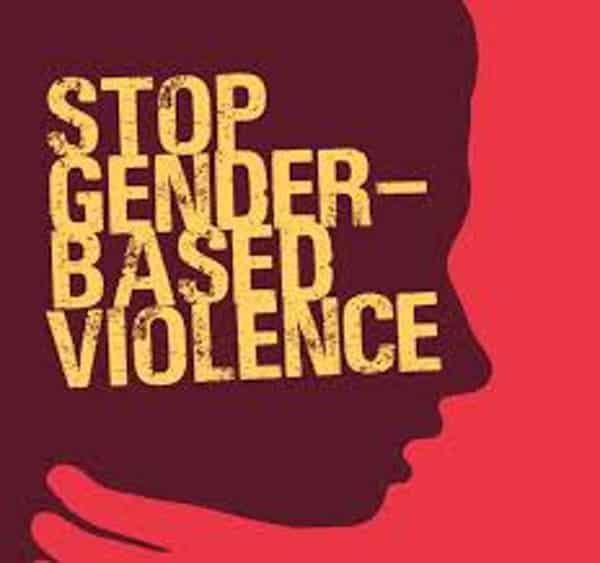
Enugu State on Monday launched its Gender-Based Violence (GBV) taskforce, marking what stakeholders described as a decisive turning point in the fight against sexual and gender-based abuses across the state.
The state had witnessed a rise in gender-based violence, particularly against women in recent months, with the most recent case involving a 51-year-old neighbourhood security operative, identified as Emeka Emmanuel Nwangwu, allegedly murdering a 19-year-old maternal cousin, Loveth Uloma Nwangwu, inside a pharmacy at Total Roundabout, Nsukka.
The launch, implemented by the Economic and Social Empowerment of Rural Communities (ESERC) in partnership with the Ministry of Children, Gender and Social Development and funded by the French Embassy Fund for Civil Society (FEF-OSC), brought together government officials, traditional rulers, religious leaders, civil society, and security agencies at the International Conference Centre, Enugu.
Declaring the taskforce open, Commissioner for Children, Gender and Social Development and Chair of the taskforce, Mrs Ngozi Eni, said the state had made a bold statement that “gender-based violence has no home in Enugu State.”
She described the taskforce as a functional mechanism with clear mandates on prevention, protection, accountability, and multi-sectoral coordination.
“This is not a symbolic body. It is a force for action. Today, we begin a new era where every survivor is heard, every perpetrator faces justice, and institutions respond with one voice,” she said.
Eni commended Governor Peter Mbah for prioritising GBV response and creating an enabling environment for inclusive governance.
She also praised the French Embassy and ESERC for supporting a survivor-centred framework that will strengthen shelters, legal aid, psychosocial support, and safer reporting channels.
Commissioner for Health, Prof George Ugwu, said the MoU signed by all partners demonstrated the state’s readiness to prevent GBV.
“The pain of experiencing GBV is unimaginable. For this reason, I want to call on us all to always act responsibly, especially in moments of anger or under drug influence,” he warned.
Religious and traditional leaders emphasised the centrality of community gatekeepers in eliminating GBV.
Bishop of Nike Anglican Diocese, Rev Dr Christian Onyeka Onyia, said involving the church and traditional institutions was “the most sensible step,” insisting GBV prevention would fail without them.
Chairman of the State Traditional Rulers Council, Igwe Samuel Asadu, pledged monarchs’ commitment and called for constitutional recognition of their roles to perform more for their subjects.
Executive Director of ESERC, Rev’d Ikechukwu Nwaogu, described the launch as a historic milestone. He said the project, supported by the French Embassy, had already transformed GBV reporting systems in Ebonyi State and would replicate similar success in Enugu.
Nwaogu highlighted the project’s three pillars: community engagement, multi-sectoral coordination, and economic empowerment for survivors.
He announced the training of Community Advocacy Groups in Enugu East and Nkanu East, the activation of the GBV Taskforce with all relevant MDAs and security agencies, and the rollout of seed grants to help survivors rebuild their lives.
He stressed that impunity would no longer be tolerated, noting that taskforce hotline numbers have been distributed across schools, markets, churches, and community centres.
“This is not merely a structure; it is a movement to end GBV in Enugu State,” he said.
Stakeholders jointly pledged sustained action to build a state where every child is protected, every woman is respected, and every community rejects violence.