 Follow Us on Google News


 Follow Us on Google Discover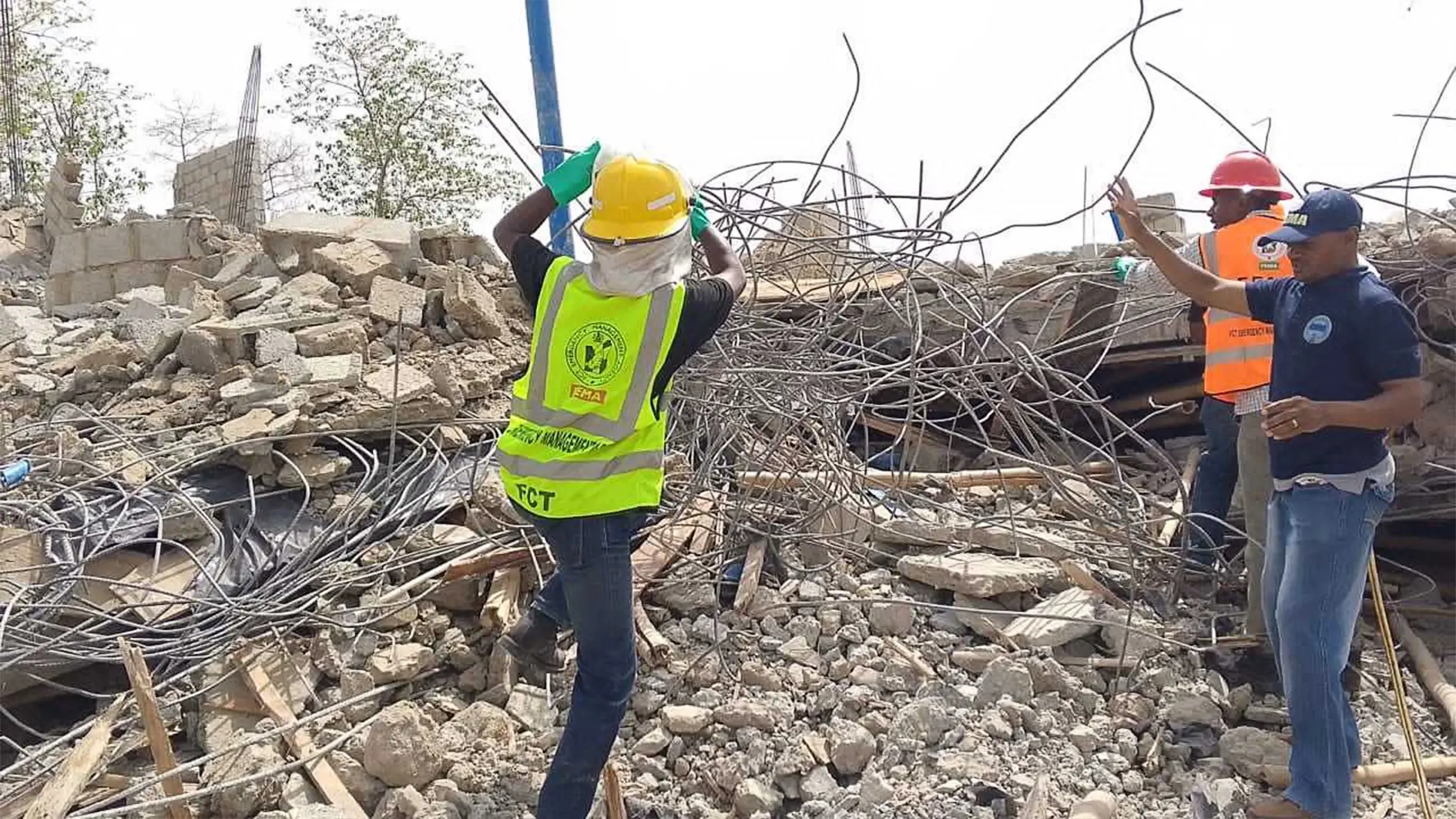
Industry experts have urged structural engineers to ensure that buildings and infrastructure are designed and constructed to be structurally sound, with all components capable of withstanding the stresses and strains imposed by environmental factors and routine use.
The experts also called for the establishment of mandatory structural design review and construction supervision requirements for all multi-storey buildings, as well as all public buildings.
The advice was given in Lagos during the investiture of Dr Taiwo Hassan Olusola Elegba as the 23rd President of the Nigerian Institution of Structural Engineers (NIStructE), and the launch of the NIStructE book: “Nigerian Seismic Design Guidelines (NSDG).”
The Guest Speaker, Prof. Afolayan Joseph Olasehinde, emphasised the need for a transition to Reliability-Based Design (RBD), a probabilistic framework that directly addresses uncertainty in loads, material strengths, environmental conditions, and human factors.
The professor of Structural Engineering at Federal University of Technology, Akure (FUTA) called on engineers, policy makers and stakeholders to embrace a forward-looking design philosophy rooted in probabilistic rigour.
He noted that the goal is to create a built environment in Nigeria that is resilient, sustainable, and demonstrably safe.

According to him, beyond analytical sophistication, it is now the institution’s responsibility to build governance systems.
Former President, Nigerian Society of Engineers (NSE), Mustafa Balarabe Shehu, while speaking on the topic: “Structural Resilience as Public Trust: Governance, Regulation, and the Institutional Imperative for a Safer Built Environment in Nigeria,” noted that structural resilience is not achieved by analytical sophistication alone but also through governance systems that translate technical standards into enforceable public safety outcomes.
He, therefore, called for the immediate submission of the NSDG-2026 to the Standards Organisation of Nigeria (SON) for formal adoption and to the Council for the Regulation of Engineering in Nigeria (COREN) for incorporation into the regulatory framework for structural engineering practice.
Shehu also solicited the strengthening of COREN’s continuing professional development requirements in structural engineering, and the establishment of a specialist competence framework for NIStructE members, including reliability methods and seismic design.
The former NSE President, a past President of World Federation of Engineering Organisations (WFEO), urged structural engineers to pursue legislative action through the Federal Ministry of Works and the National Assembly to strengthen the legal enforceability of the National Building Code.
He, however, called for the establishment of a national structural inspection regime, updating of structural engineering curricula in universities to include probabilistic design methods, reliability analysis, and seismic engineering as core components.
In his inaugural address, Elegba stressed the importance of innovative methods in structural engineering to address environmental impact, energy use and other sustainability issues during the planning and design of structures.
He urged structural engineers to ensure that their designs are greener and moving towards zero-carbon, including carefully evaluating the sustainability characteristics of construction materials, reducing material consumption, lowering production energy requirements, minimising embodied energy, conducting life-cycle analyses, and maximising opportunities for material reuse.
Elegba also highlighted the necessity of addressing global challenges, particularly climate change, by promoting low-carbon, sustainable design and resilience in construction.
On his part, the immediate past President of NISTructE, Johnson Adegboyega Adeyoye, called for collaboration with concerned governments in making informed decisions about having only standard, stable, safe, durable, and economically viable structures erected to adorn the entire landscape of the country.
He said that to stem the tide of building collapse, governments should ensure that square pegs are put in square holes.
According to him, only COREN-registered and NIStructE-certified structural engineers should design and supervise the construction of multi-storey buildings in Nigeria.
In his remark, Chairman and President of the NSE, Ali Alimasuya Rabiu, called for collaboration with relevant agencies to ensure sustainable development of the country, noting that the challenges of the country demand stronger synergy among building professionals, policy makers and industrial stakeholders.
He said NISTructE is central to the industrialisation, infrastructural development, and technological advancement for the country’s economic diversification.

