 Follow Us on Google News
 Follow Us on Google Discover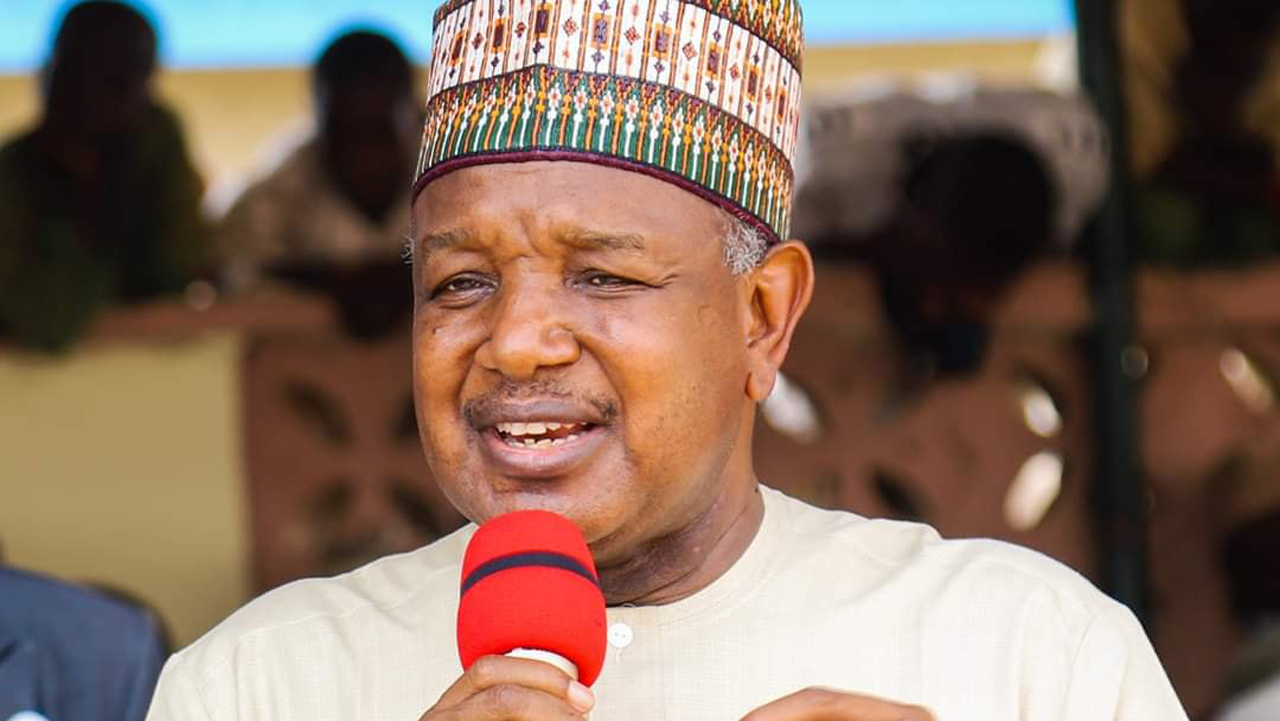

The Minister of Budget and National Economic Planning, Senator Abubakar Atiku Bagudu, has said the federal government was facing enormous challenges, noting that it was barely managing to pay salaries.
[ad]
Bagudu stated this at the 30th Annual Development Forum organised by the Live Above Poverty Organisation (LAPO) in Abuja on Thursday.
While emphasizing the need for non-state actors to complement its efforts in national and economic development, the minister represented by the Director (International Cooperation), Dr. Sampson Ebimaro, the minister observed that goverment cannot bear the burden alone.
Bagudu stated: “Essentially, NGOs existing cover the space not covered by the government by seeking propositions on issues such as health care, environment, economy, public policy, empowerment and support to vulnerable citizens. The policy objective of government is very critical for both state and non-state actors like the NGOs.
“The role of NGOs is to work with the government through its national development plan. The chairman has already mentioned and talked about our national development plan for 2021 – 2025. In doing that, the actors have to be very inclusive in the sense that it has to be non-selective and non-discriminatory and you must stick to the overall needs of various areas of the society.
[ad]
“Government faces enormous challenge especially now, the government is facing revenue deficit. There’s no money anywhere in the country, the government is just managing to pay salaries. The growth rate is very slow and the population growth is fast pacing and increasing. unemployment is surging amid high inflation. These are issues which non-governmental organisations must take on board in helping government to cover the space government could not cover”, he said.
A former acting governor of the Central Bank of Nigeria, Dr. Sarah Alade, has said participation of Non-State Actors (NSA) was key to the federal government’s target to lift millions of Nigeria out of poverty.
She urged government to collaborate with the non state actors to achieve economic development and ensure the success of its social investment programmes.

Speaking on the theme titled, “The Role of Non-State Actors in National Development: A case study of LAPO, Alade, who was also special adviser to President Muhammadu Buhari, on Finance and Economy, said the involvement of non state actors in the federal government projects was necessary.
[ad]
Alade noted that organisations like LAPO would play a pivotal roles in shaping the destiny of the country.
She said, “It is imperative to recognize why non-state actors, such as LAPO, should align with the national development agenda.
“The Nigerian National Development Plan emphasizes the crucial importance of such alignment, particularly given the substantial financial commitment required to achieve our nation’s developmental goals.
“This plan outlines ambitious objectives across various sectors, including infrastructure, healthcare, education, and poverty alleviation.
“To realize these objectives, a significant financial commitment is essential.
“The government alone cannot shoulder the immense financial burden required to meet these targets.
[ad]
“To put it in context, the estimated cost of the National Development Plan 2021 to 2025 stands at N348 trillion naira, with government contributing N49 7 trillion and the private sector providing approximately N298 trillion, which accounts for about 86 per cent of the total required amount.”
She noted for that a country like Nigeria, which relies on food and energy imports, non state actors including LAPO, would play a crucial role in developing solutions to overcome barriers in the country’s supply chain operation.
Speaking, founder and CEO, of LAPO Microfinance Bank, Dr Godwin Ehigiamusoe said that the Bank spent over N1.2 trillion on female owners of micro and small businesses.
He said the fund also covered the LAPO NGO’s rural healthcare programmes which include the LAPO Community Based Cancer Project, and awareness activities and interventions in the areas of malaria, HIV, Hepatitis, Blood Sugar, blood pressure screening and referral services while Twenty Million printed enlightenment materials/ Information, Education and Communication (IEC) were distributed in target communities.
He said with a simple act of providing N100 each to three (3) women in Ogwashi-Uku in Delta State, LAPO grew into a number mutually reinforcing institutions which support low-income people and micro and small enterprises.
The LAPO CEO further said that amongst these are Benin Medical Care a well-resourced medical and diagnostic facility in Benin; LAPO Microfinance Bank a leading microfinance institution in Africa; LAPO Microfinance Company, Sierra Leone; Goxi MicroInsurance Company, the first licensed micro-insurance Company in Nigeria.
[ad unit=2]

