 Follow Us on Google News
 Follow Us on Google Discover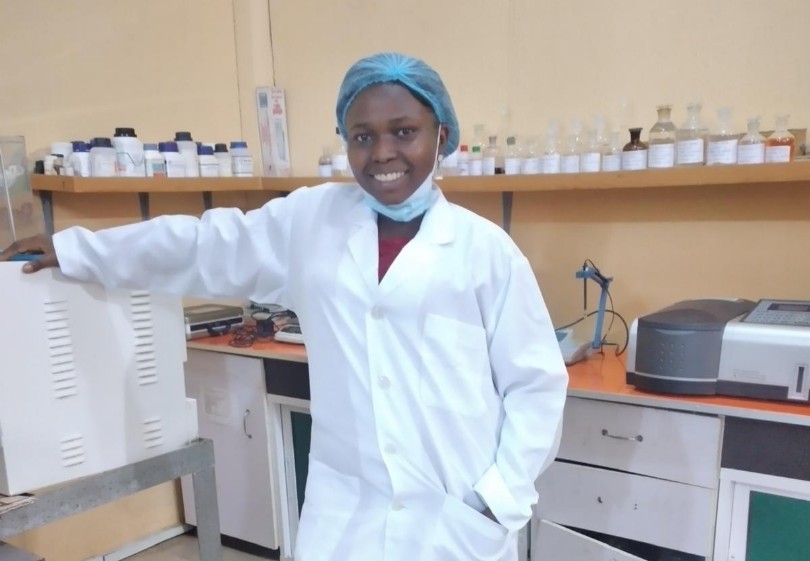
As the world grappled with the health and economic shocks of the COVID-19 pandemic, another crisis quietly unfolded in the background: a sharp and largely unregulated rise in plastic pollution driven by the use of personal protective equipment (PPE). At the forefront of understanding this new environmental challenge is Esther Atinuke Olonimoyo, a leading environmental and analytical chemistry expert and researcher whose recent co-authored study is making waves in sustainability and public health circles alike.
Published in the Journal of Hazardous Materials Advances, the study titled “How has COVID-19 medical face mask altered the dynamics of pollutants from incinerated wastes?” has drawn international attention for its detailed analysis of how pandemic-related waste, particularly disposable medical face masks, has reshaped the contours of global plastic pollution. But beyond the publication is the story of a scientist who is redefining what it means to connect laboratory science with public policy and local challenges with global consequences.
A Researcher with a Global Vision
Born and raised in southwestern Nigeria, Esther Olonimoyo brings a unique global perspective to her work. Her training in atmospheric chemistry, combined with her deep commitment to environmental justice, fuels a research approach that bridges scientific precision with community impact. For this project, Olonimoyo collaborated with fellow top experts in the field to investigate the post-pandemic environmental footprint of medical face masks in Nigeria, a country whose population size and urban density made it a bellwether for waste trends in the developing world.
“This project wasn’t just about Nigeria,” Olonimoyo notes. “It was about how nations across the Globe, and even highly industrialized countries, are failing to account for the long-term environmental costs of emergency measures. We urgently need to recalibrate our thinking: public health and environmental health are not separate conversations.”
Uncovering the Invisible Legacy of COVID-19
The study reveals a troubling truth: the surge in single-use medical face masks during the COVID-19 pandemic has created a new and poorly managed waste stream. Composed largely of polypropylene and other synthetic polymers, these masks do not biodegrade but instead fragment into microplastics, entering waterways, soil systems, and eventually the food chain. In developing countries like Nigeria, where biomedical waste infrastructure is often inadequate or inconsistently regulated, the environmental burden is disproportionately severe.
Olonimoyo’s contribution was critical in connecting the dots between waste accumulation, environmental exposure pathways, and the potential for long-term harm to ecosystems and human health. The team’s research showed that discarded masks, when not incinerated or properly landfilled, contribute significantly to the microplastic load in urban and peri-urban environments.
What makes the study of significant contribution is not only the data but the framing: it tells a compelling, systems-level story of a global blind spot. As Olonimoyo puts it, “We were focused on saving lives, and rightly so, but now we must confront the unintended ecological consequences of our survival strategies.”
From Local Data to Global Dialogue
Although grounded in Nigerian data, the implications of the study are global. Nearly every country experienced a massive increase in disposable PPE use between 2020 and 2022. In the U.S. alone, more than 3.4 billion masks were estimated to be discarded monthly during the height of the pandemic. In Southeast Asia, rivers and coastal areas saw dramatic spikes in PPE-related litter. In Africa, waste pickers reported increasing encounters with contaminated masks mixed in with recyclable materials, posing a double threat of infection and environmental degradation.
Olonimoyo emphasises that what the study reveals about Nigeria’s experience mirrors a broader global trend: “Inadequate separation of medical waste from regular household waste is a common issue in both high-income and low-income settings. This means the environmental risk is not just localised—it’s planetary.”
Policy, Innovation, and the Path Forward
The most powerful legacy of this work may lie in its ability to inspire actionable change. The paper doesn’t stop at diagnosis, but also offers solutions. These include public education campaigns on proper mask disposal, infrastructure upgrades for biomedical waste separation, and the implementation of extended producer responsibility (EPR) policies that would hold manufacturers accountable for post-consumer waste.
Importantly, the study also calls for investment in research and development of biodegradable PPE. As Olonimoyo points out, “We don’t just need better disposal. We need better design. We must innovate toward materials that protect both human and planetary health.”
Science for People and Planet
For Olonimoyo, this project is a continuation of her broader mission: to use science as a tool for environmental equity and sustainability. Whether she’s analysing aerosol transport from wildfires or investigating the chemical footprint of consumer products, her work consistently emphasises the intersection of environmental integrity, human health, and justice.
“Science shouldn’t sit on shelves,” she says. “It should change how we live, how we govern, and how we protect the Earth for the next generation.”
As global leaders debate climate goals, circular economies, and pandemic preparedness, Olonimoyo’s work offers a clear reminder: the next crisis may not come with the sound of sirens—it may unfold silently, one plastic fibre at a time. And thanks to researchers like her, the world is better equipped to see—and act on—those invisible threats.

