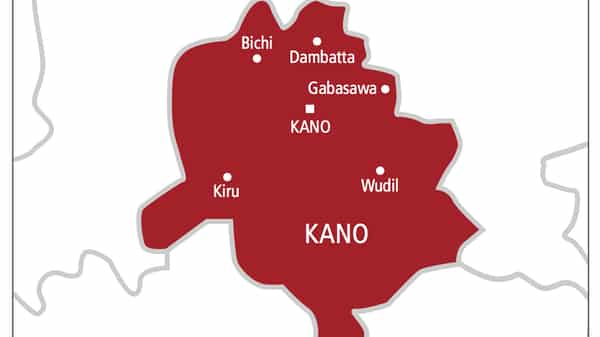
A prominent human rights organisation has raised fresh concerns over what it sees as a dangerous development unfolding in Kano State—the rise of a parallel Sharia enforcement body operating outside the framework of established law.
The Advocacy for Human Rights and Cultural Values for Development Initiative (AHRCVDI), in a strongly worded statement issued on Tuesday, warned that the emergence of a group known as Hisba Independent Fisabilillahi poses serious risks to public order and governance in the state.
Executive Director of AHRCVDI, Comrade Sambo Jibril Jada, said the organisation is deeply troubled by reports suggesting the new group has begun issuing directives and conducting activities mirroring those of the legally constituted Hisbah Board. He described the development as a direct challenge to state authority and a dangerous attempt to replicate an institution already backed by law.
Sharia policing in Kano traces its roots to the early 2000s, when several northern Nigerian states reintroduced full Sharia legal systems. To support enforcement in areas such as moral conduct, alcohol restriction, social behaviour, and public decency, Kano formally established the Hisbah Board through legislation passed by the State House of Assembly.
The board was created to operate under the supervision of the state government, ensuring its activities align with constitutional boundaries and operate within recognised oversight mechanisms. Over the years, the Hisbah corps has taken on roles that include settling minor disputes, promoting community values, arresting violators of Sharia-based regulations, and supporting security agencies in maintaining social order.
Crucially, the Hisbah Board derives its legitimacy from its legal mandate and its accountability to the government. This regulated structure was introduced to prevent vigilante-style groups or untrained actors from taking the law into their own hands—a problem that had characterised some states before the formalisation of Sharia policing.
It is against this backdrop that AHRCVDI says the emergence of any parallel body seeking to assume similar responsibilities poses serious risks to the rule of law, public order, and citizens’ rights.
According to Jada, the establishment of any rival organisation that claims enforcement powers under the banner of Sharia policing represents an attempt to build a dual structure that could trigger confusion, rivalry, and a breakdown of institutional authority.
“The idea of setting up any parallel enforcement group—whatever name it may bear—poses a clear threat to the sovereignty of the state and the legitimacy of its elected authorities. It has the potential to disrupt public order and erode the structures that sustain law, security, and civic harmony,” the statement read.
AHRCVDI noted that historically, groups with policing tendencies but lacking legal recognition often evolve into actors wielding unchecked power, with a high propensity for intimidation, arbitrary actions, and violations of fundamental rights.
The organisation reiterated that the Hisbah Commission—established by a clear legal instrument—remains the only body authorised to carry out Sharia-related enforcement in Kano. Any attempt to create a parallel outfit, it said, stands on an illegal foundation.
Jada pointed to the danger of multiple groups claiming similar enforcement functions, noting the potential for unhealthy competition, mixed messaging to the public, and erosion of trust in legitimate institutions. He stressed the need for any security-related initiative to derive authority solely from constitutional and statutory provisions.
AHRCVDI called on Kano State Governor Abba Kabir Yusuf to issue a categorical public directive declaring the new group illegal and to take immediate steps to safeguard peace and order.
It also urged the Nigeria Police Force and the Department of State Services (DSS) to investigate the motives, structure, and membership of the emerging outfit before it evolves into a broader security threat.
The organisation encouraged Kano residents to cooperate only with constitutionally recognised bodies and avoid involvement with unregulated formations.
Jada concluded that AHRCVDI would continue to monitor developments and is prepared to pursue further advocacy or legal action to protect peace, democratic governance, and civic stability in the state.