 Follow Us on Google News


 Follow Us on Google Discover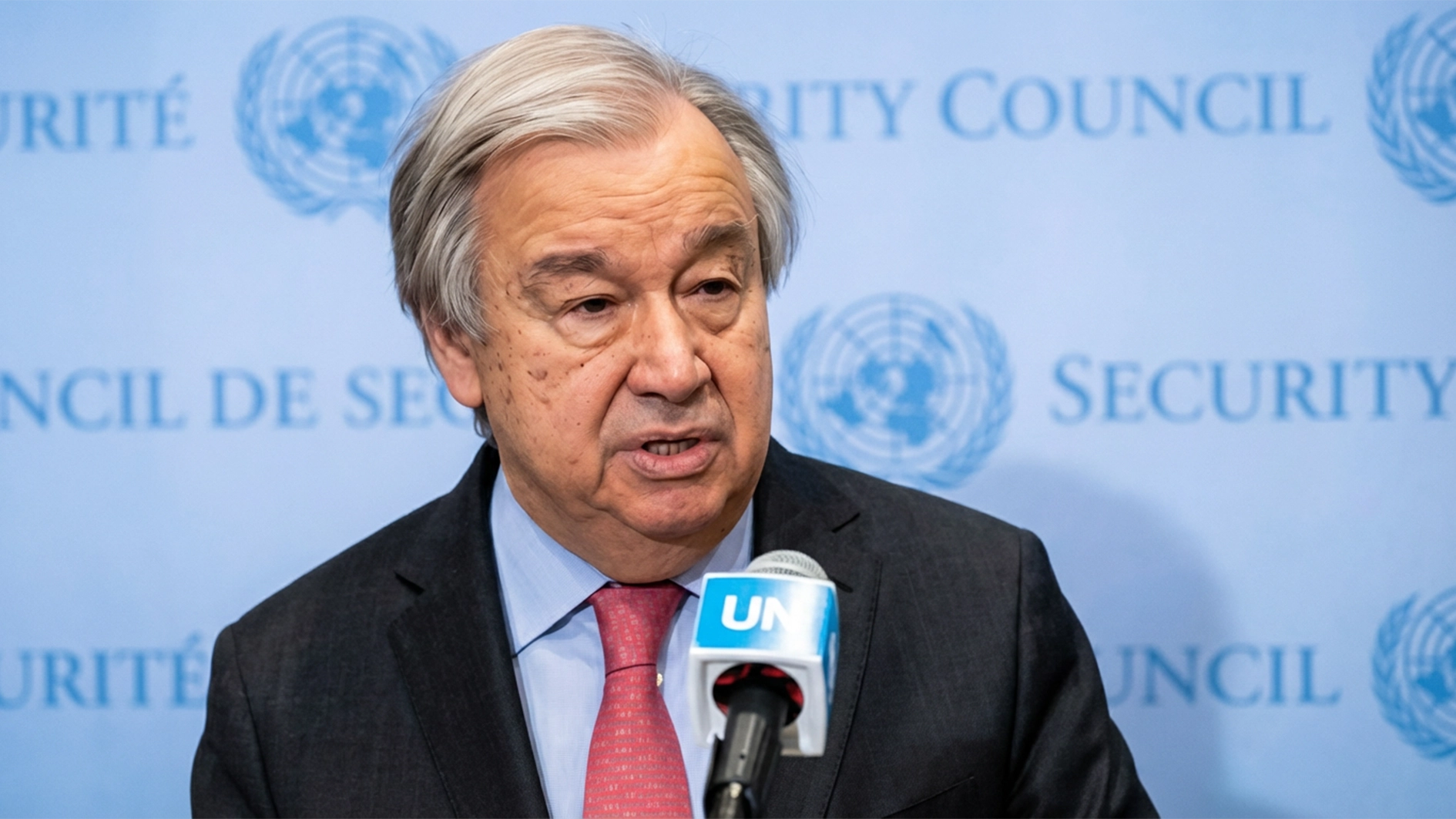
UN Secretary General, António Guterres, has said the absence of a permanent African seat on the UN Security Council is “indefensible”.
Speaking at the 39th African Union (AU) Summit in Addis Ababa, the UN chief said that UN-AU cooperation had reached “new heights” over the past decade, pointing to joint frameworks on peace and security, sustainable development, and human rights.
“This is 2026, not 1946,” he said. “Whenever decisions about Africa and the world are on the table, Africa must be at the table.” Guterres described the AU as a “flagship for multilateralism” in a world marked by division and mistrust.
He outlined three priorities for deeper cooperation: Peace, economic action, and climate justice. The UN Chief called for an immediate cessation of hostilities in Sudan, renewed dialogue in South Sudan, and respect for the territorial integrity of the Democratic Republic of Congo. Regarding the Sahel, Libya, and the Horn of Africa, he stressed the need for African-led political solutions backed by sustained international support.
Meanwhile, the summit closed with a pledge of “zero tolerance” for unconstitutional changes of government and reiterated the “determination to silence the guns” in Africa. The Assembly also underscored the “imperative of predictable, sustainable and flexible financing for AU-led peace support operations”.
Meanwhile, the UN chief’s nod at the AU summit has signalled Nigeria’s expanding global role.
Vice President Kashim Shettima returned to Nigeria on Sunday, February 15, 2026, after representing President Bola Tinubu at the 39th Ordinary Session of the Assembly of the African Union (AU) Heads of State and Government in Addis Ababa, Ethiopia.

Beyond the formal plenaries, Shettima’s schedule extended into bilateral and multilateral consultations that raised Nigeria’s diplomatic visibility. Chief among them was his interaction with United Nations Secretary-General António Guterres, widely viewed as one of the defining moments of Nigeria’s presence at the summit.
While the official agenda centred on water security, the Nigerian delegation used the margins of the meeting to press broader strategic interests. During discussions with Guterres, the UN chief reportedly encouraged Nigeria to assume a more prominent leadership role in Africa’s pursuit of a balanced and equitable global order, a gesture carrying both symbolic weight and practical expectation.
The exchange reaffirmed Nigeria’s standing as a principal diplomatic actor on the continent while sharpening expectations of its role in peacekeeping, conflict mediation and institutional reform within global governance structures. For observers, the significance lay not merely in diplomatic courtesy, but in what it suggested: international validation of Nigeria’s capacity to influence debates beyond its borders at a time of shifting geopolitical alignments.
Collectively, the interactions pointed to an effort to move Nigeria’s foreign policy posture from reactive participation to proactive agenda-setting.
Nigeria’s long history in regional peacekeeping lent added resonance to Guterres’ encouragement, effectively placing renewed spotlight on that legacy while nudging the country toward broader global engagement. The message was clear: Nigeria is expected not only to retain its influence but to expand it.
In essence, Shettima’s AU outing underscored diplomacy as both performance and promise, recognition of Nigeria’s enduring diplomatic weight, and the responsibility to translate that stature into measurable contributions to peacekeeping, conflict resolution and global governance reform.
As the Vice President returned to Abuja, attention shifted from ceremonial optics to practical outcomes. In the shifting dynamics of international relations, moments of endorsement do more than acknowledge influence; they test a nation’s readiness to exercise it.
The summit also served a domestic signalling function. High-profile participation in continental forums projects an image of forward-looking governance that resonates with investors and citizens alike.

