 Follow Us on Google News


 Follow Us on Google Discover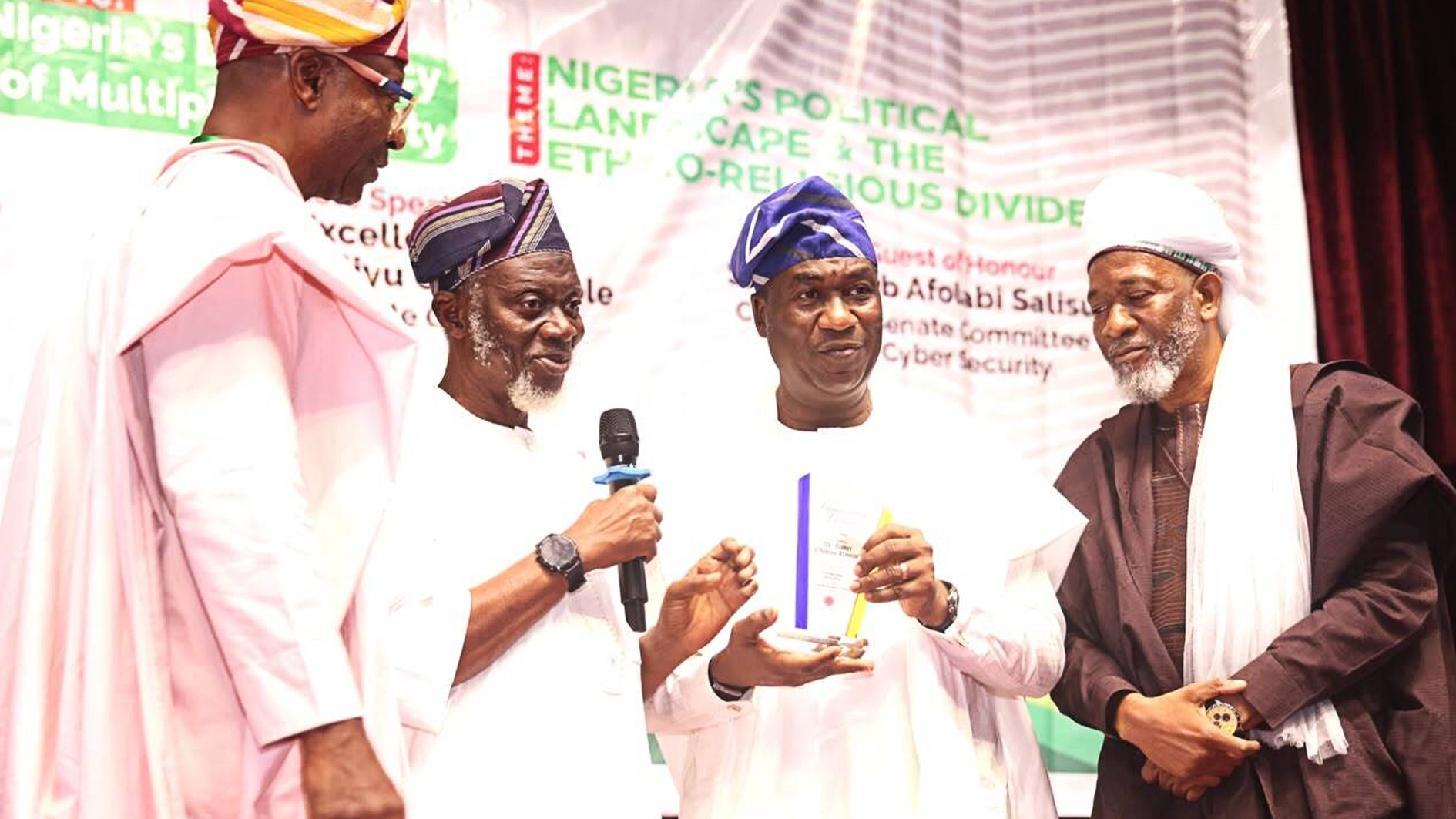
The Deputy Governor of Lagos State, Dr. Kadri Obafemi Hamzat, has called on Nigerians to make deliberate efforts to build a resilient national identity that transcends ethnic, religious and cultural divides, warning that the country must find effective ways to integrate its diversity into its democratic process.
Speaking at the 7th National Discourse organized by The Companion, themed “Interrogating Nigeria’s Democracy in the Context of Multiple Diversity” at the J.F. Ade Ajayi Auditorium, University of Lagos (UNILAG), Hamzat stressed that the nation’s political structure must accommodate its diverse identities without allowing them to undermine national unity.
According to the Deputy Governor, ethnic and religious affiliations remain deeply embedded in Nigeria’s social fabric and the central challenge lies in preventing these identities from being weaponised as instruments of division.
“The question that sociologists have not told us is how we marry our culture and democracy, without losing our identity and putting it into our democratic setting,” Hamzat stated. “As Nigerians, we must learn to accommodate our differences while we are also promoting a common national identity. The experience of other multi-ethnic societies showed the dangers of allowing identity and class differences to fuel conflict among us.”
Hamzat advocated for increased religious tolerance and urged citizens to adhere strictly to the core teachings of Islam and Christianity by respecting the beliefs of others rather than using faith as a basis for discrimination. He further enjoined Nigerians to safeguard their rich cultural heritage while fostering a unified national consciousness.
Delivering the keynote address, the Senator representing Edo North, Comrade Adams Oshiomhole, urged citizens to reject ethnic and religious division and instead champion a nation where leadership is earned through competence, ideas, and values rather than place of birth.

Oshiomhole cautioned political leaders against deploying identity as a weapon for political mobilisation or as a shield to evade public accountability. He maintained that Nigeria’s diversity ought to serve as a catalyst for growth rather than a friction point.
“Our ethnicity shouldn’t be a source of challenge. It should give us all of the things that we need to be the greatest country, not only in Africa but in the world,” Oshiomhole remarked. “Ethnicity has very little or no role to play, except to function as a tool in the hands of a segment of the political elite who substitute ethnicity in place of ideas.”
Echoing these sentiments, the Chairman of the Occasion and former Governor of Kano State, Mallam Ibrahim Shekarau, stated that there is no justification for religious conflict in a country where all citizens are creations of God. He urged Nigerians to embrace values such as love, justice and respect, cautioning political actors against advancing personal ambitions at the expense of public interest.
Earlier in his welcome address, the National Amir of The Companion, Imam Noreem Jimoh, noted that the forum was convened to examine the friction points in Nigeria’s democratic journey and formulate practical mechanisms for managing its vast ethnic, linguistic, and socio-economic landscape.
Presenting the main paper, former Director-General of the Administrative Staff College of Nigeria (ASCON), Prof. Liasu Adele Jinadu, detailed how ethno-regional patronage systems have historically eroded state institutions and masked corruption. Prof. Jinadu charged that sustainable democratic progress requires a system that prioritises equal citizenship, human security and transparent governance over narrow ethnic interests.

