 Follow Us on Google News


 Follow Us on Google Discover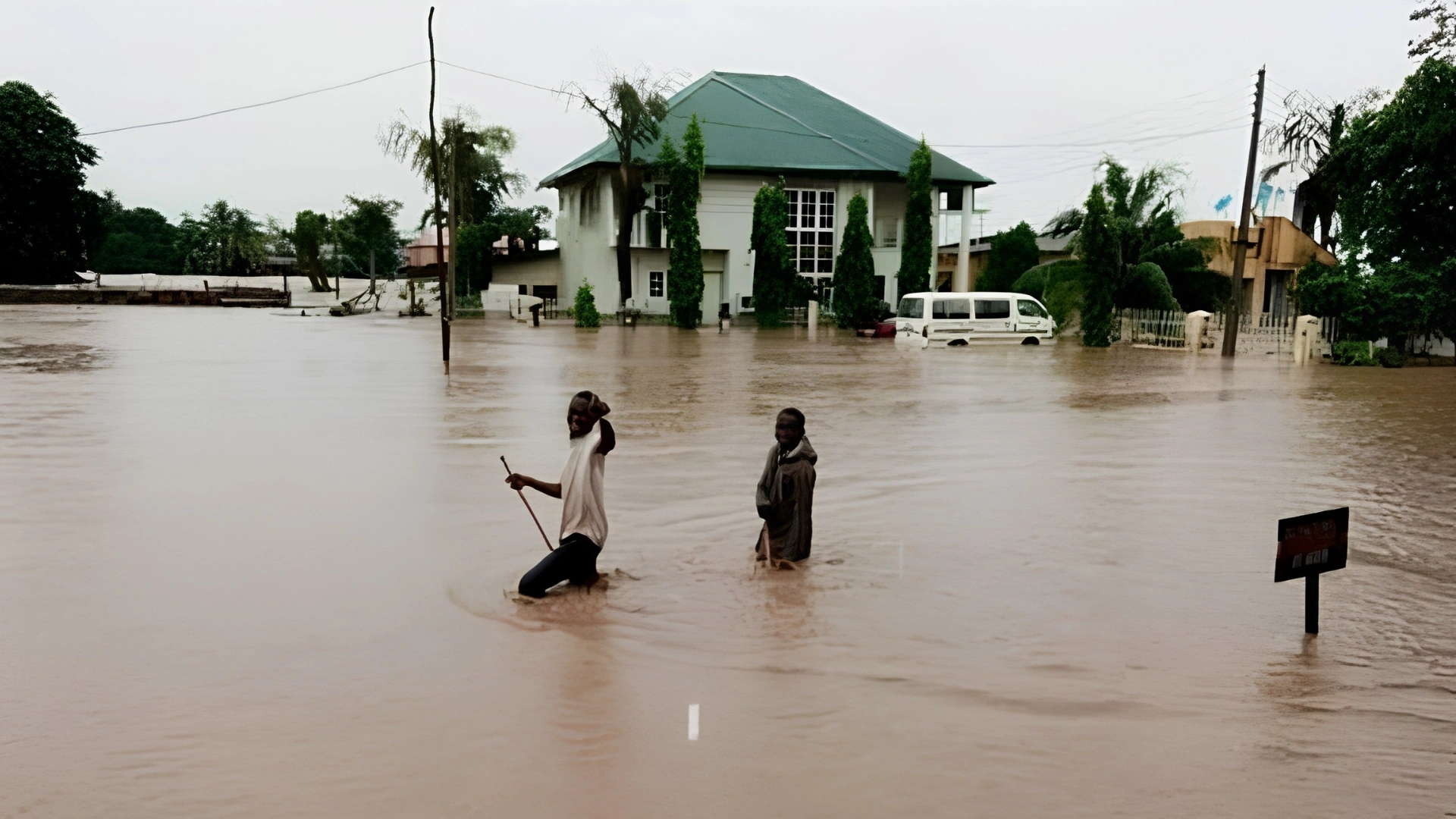
It’s no longer news that Abuja, the Federal Capital of Nigeria, is now battling with an unpredictable and unprecedented wave of perennial floods. This is not the first time. It has become a common feature here, as it was the case in the former nation’s capital, Lagos, where people and properties perished in flooding.
We can say that the same catastrophic issue is rearing its ugly head in Abuja and its environment today. It was the planned capital of Nigeria, one of the three purpose-built capitals in West Africa and the newest one for that matter. There was never a flood like this year’s waterlogged city.
However, there are some factors that influenced it. Since its inception, Abuja, the nation’s capital city, has undergone enormous demographic, environmental, and economic changes. Yes, the distortion of the original master plan of the city is not caused by one factor, but is enumerated.
Experts believe that flooding may be the result of decades of political decisions, weak development control of the city as well as the land administration problems it faced over the years. Still, there are several issues that may have caused the recent flooding in the Federal Capital Territory.
Accordingly, factors responsible for the floods include political interference, population pressure, and rural migration, while institutional failures account for what is now becoming a national disaster. Past administrations approved or supported development strides that departed from the original planning intentions.
There is hypocrisy in the development of infrastructure. The solution is not simply to enforce the old original plan blindly, but it needs professional review and controlled updating without sacrificing its core planning principles. Abuja rainfall in Abuja is not because it’s the season but also climate change.

Based on the critical factors, environmentalists say the city has bigger problems to contain in terms of developing to meet a 21st-century smart environment. The city was not properly planned in terms of standard drainage, road network, and transportation system.
The recent research on Wuse, for example, identifies land-use violations as a major form of non-compliance, alongside violations of setbacks, density and building height in Abuja, and these cause alterations in the overall development of the city.
In construction, housing projects like estates have also been identified as lacking coordination, conflicting authorities and interests, and administrative boundaries were not set, while political interference acts as an important cause of Abuja’s planning problems.
During its Annual General Meeting, the Nigerian Institute of Town Planners stated explicitly that Abuja’s present form reflects the cumulative decisions of several administrations, including changes to locations originally designated for major functions.
It was learned that in 1986, the unplanned built-up land outside the Phase 1 footprint was already more than twice the built-up area within the planned footprint. Therefore,it is on record that distorted satellite settlement development outside the planned phase boundaries became increasingly significant.
Most importantly, the issue is the gap between the original plan and its implementation. Abuja still has institutions responsible for preparing, monitoring and enforcing its planning framework.
However, the FCT Urban Planning Department, for example, is responsible for the Master Plan’s land-use. Today, they are making it business as usual with weak enforcement of development control, and supervision.
Buildings and land uses have been allowed to proceed without strict compliance with approved zoning, setbacks, densities and infrastructure requirements. They classify changes from residential to commercial use, encroachment on roads and utility corridors, and other developments as land-use violations.
Presently,residential plots are increasingly converted to commercial uses, particularly along attractive roads and corridors. There is poor coordination among government agencies. Issues of overlapping responsibilities between planning, development-control and land-administration institutions make enforcement difficult.
We also have endemic corruption and politicisation of land allocation in Abuja, and approvals can be influenced by political and financial interests rather than planning considerations.Studies have specifically linked all of these to land administration with distortion of the Abuja Master Plan.
Rapid population growth and housing demand have been neglected over the years and the city is expanding much faster than some of the original planning assumptions anticipated.It creates demand for land, housing, commercial space and infrastructure.
Still on the distorted plan, satellite analysis shows that unplanned development increased substantially, particularly around satellite towns like Karmo, Gwagwa, Nyaya, Jikwuyo, Apo, Guzape, Lugbe, Karishi, Mabushi and others.The outskirts are so badly planned that when it rains wastes will cover roadside.
Illegal structures are eyesores in some districts, while poorly integrated satellite settlements have therefore contributed to pressure on roads, drainage, water, waste management and other infrastructure.Failure to adequately implement resettlement must be looked into urgently.
The inability to effectively resettle and integrate communities affected by the creation and expansion of the capital further contributed to the growth of informal and unplanned settlements. The city has outdated plan along side with changing realities of our times.
Nyesom Wike, the FCT Minister, dismissed attempts to politicise the flooding, saying the development should instead serve as an opportunity for the authorities to identify and address the underlying causes, defending
the administration of signing more than 26,000 Certificates of Occupancy (C-of-O) in three years.
Though Wike contrasted the figure with the number of C-of-Os issued by two previous administrations over a 13-year period, the record should not be overshadowed by political arguments over the flooding. Nobody can diminish what we have done in the past three years. Nobody can diminish it.
The Minister is explaining that the FCT Administration would continue to address problems confronting the capital rather than engage political commentators, insisting that the government’s priority remained the safety, orderly development and liveability of Abuja.
Similarly, he attributed the flooding to a combination of natural and human factors, including climate change, torrential rainfall, construction on waterways, development in areas not designated for building and inadequate drainage systems.
The original plan was designed for a particular transportation system, land-use pattern and development trajectory. Insufficient professional and institutional capacity. Studies identified shortages of planning capacity, inadequate funding and insufficient monitoring as contributors to development-control failures.
“But when political decisions, land-use changes, illegal development and weak enforcement repeatedly override the plan, the result is a city that increasingly grows according to demand and private interests rather than according to its planned structure.”
However, floodwaters have submerged parts of Maitama Extension in Abuja, affecting several homes and raising fresh concerns over alleged alterations to drainage channels and green areas in the highbrow districts.
“From a flooding perspective is most important to link how these distortions have affected drainage corridors, flood plains, green areas and natural waterways, traffic congestion, housing affordability, loss of open spaces, pressure on infrastructure and the proliferation of informal settlements.”
It was learned that there are 196 districts; only ten of them were fully developed, twelve were partially developed, 70 were undeveloped, while 104 districts in the Area Councils are yet to be developed.
Unarguably, these will remain underdeveloped or without adequate infrastructure, creating pressure for informal expansion, housing shortages, and infrastructure deficits. They are still awaiting engineering design in the FCTA‘s published status.

