 Follow Us on Google News


 Follow Us on Google Discover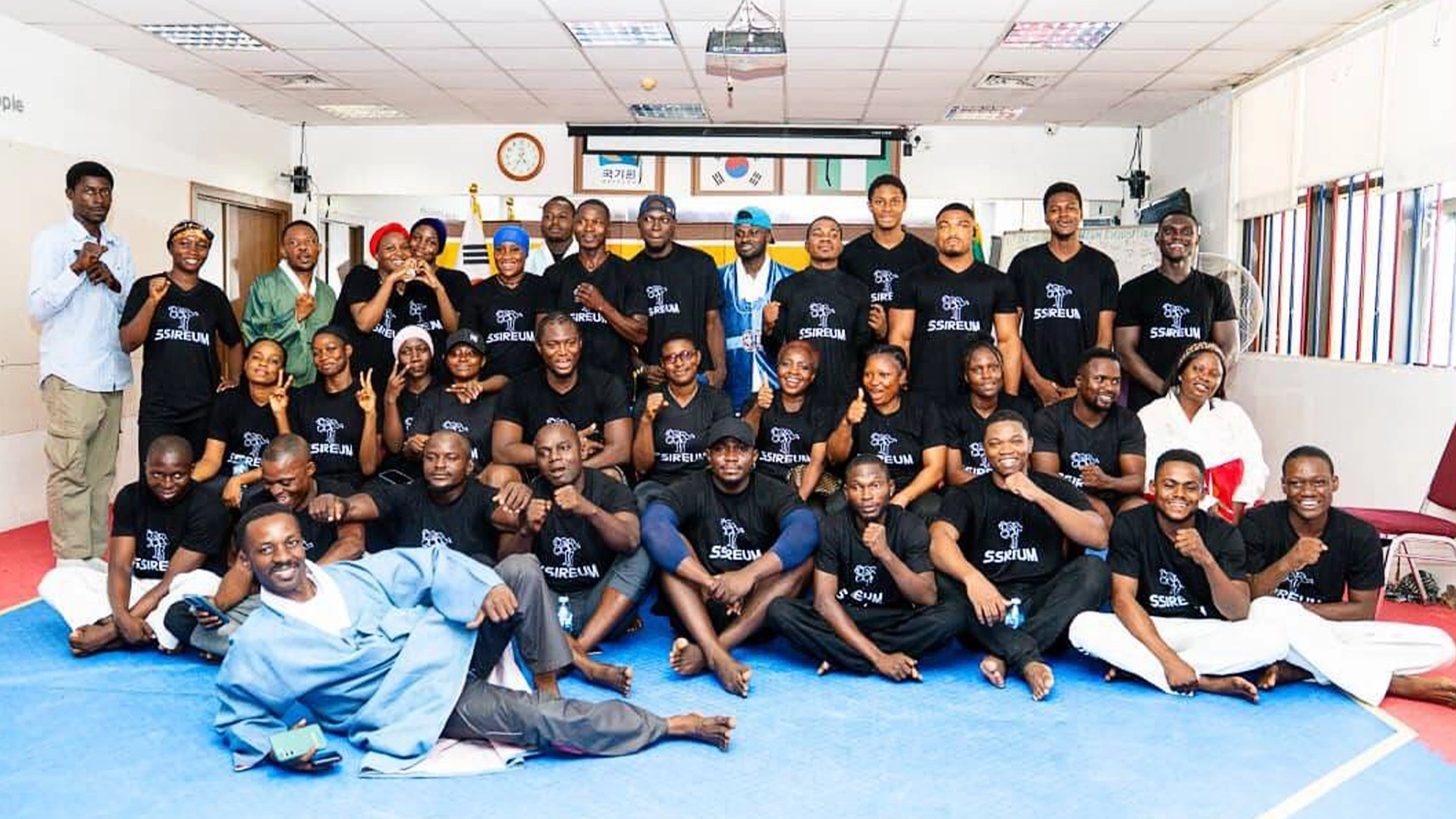
Beyond diplomatic meetings and official engagements, the growing cultural ties between Nigeria and South Korea are increasingly finding expression in shared experiences, with traditional sport emerging as a bridge between the two countries.
At the Korean Cultural Centre Nigeria, Abuja, the sixth edition of the centre’s Chuseok celebration offered Nigerians an opportunity to experience Ssireum, Korea’s traditional form of wrestling, as part of efforts to promote cultural exchange and people-to-people relations.
The event, organised to mark Chuseok, Korea’s harvest festival, brought together coaches, athletes and first-time participants who tested their strength and technique on the wrestling mat.
For Gwangmin Lee, Public Relations Officer of the Korean Cultural Centre Nigeria, the celebration was more than a festival.
“It’s one of our ways to spread our culture and share and mix with the Nigerian culture together by sport,” Lee said, describing sport as one of the easiest ways for people to experience another culture.
He said the centre’s cultural programmes were designed to enable Nigerians to encounter Korean traditions beyond what they might see through media or entertainment.

“It’s one of the easiest ways for people to feel our culture and have experience together,” he added.
For Nigerians participating in the event, however, Ssireum did not feel entirely foreign.
Gbolahan Ogunmuyiwa, Head Coach at the Korean Cultural Centre Nigeria, said the similarities between Ssireum and Nigeria’s traditional wrestling made it easier for participants to connect with the Korean sport.
“Just like in Nigeria, we have traditional wrestling as well. So Ssireum and our traditional wrestling look so much alike,” Ogunmuyiwa said.
He explained that while both sports involve grappling, Ssireum traditionally involves competitors using a belt or sash around the waist and thigh, with contests often taking place on sand.
Although the Abuja event used a mat, Ogunmuyiwa said the similarities provided an opportunity for Nigerians to engage naturally with the Korean tradition.
“Most of the people here are first-timers, so they can easily blend into it, because it’s what they are used to,” he said.
The exchange also attracted participants from Nigeria’s sporting and security communities.
James Nwobodo, a Nigerian Police Force coach and wrestler, described the introduction of Ssireum as an example of how cultural exchange could extend beyond music, food and festivals.
“Sometimes they export products, then you can export sport also. So, I believe it’s a very good one to Nigeria,” he said.
Nwobodo identified similarities in techniques, including takedowns, but noted that the Korean sport has distinctive rules, particularly the use of the rope and the scoring system.
For participant Alex Samson, the experience offered a rare opportunity to encounter Korean culture through physical activity.
“I am very excited to be participating in this sport, Ssireum. It has a very close similarity with our local sport, only that it has more rules,” Samson said.
He thanked the Korean Cultural Centre for the initiative, saying the programme provided participants with an opportunity to learn through direct experience.

