 Follow Us on Google News


 Follow Us on Google Discover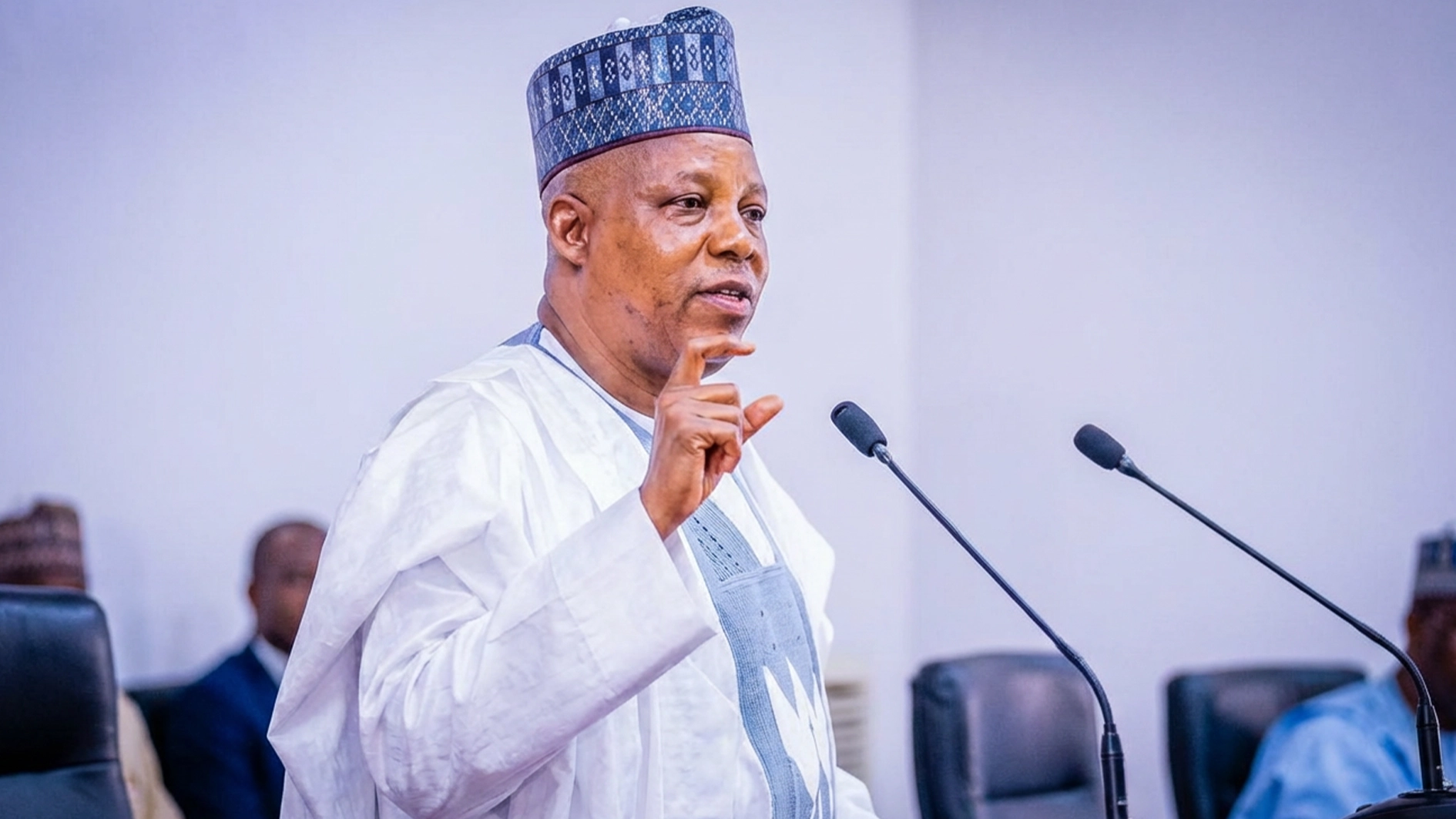
.CBN warns excess liquidity, election-cycle spending threaten economic stability
Nigeria’s quest to build a $1 trillion economy moved to the centre of national policy discourse yesterday as the second edition of the National Economic Council (NEC) Conference ended in Abuja with a unified push for delivery-driven reforms, coordinated fiscal governance and aggressive investment in human capital and infrastructure.
However, the Central Bank of Nigeria (CBN) has warned that persistent excess liquidity in the financial system and expansionary election-cycle spending could undermine Nigeria’s macroeconomic stability, despite recent policy-driven gains.
President Bola Tinubu, in a message delivered by Senate President Godswill Akpabio, stressed that economic reform must go beyond dialogue to measurable outcomes that directly impact citizens through job creation, business growth, improved healthcare, stronger institutions and expanded opportunities across all states.
Akpabio, who formally declared the conference closed on behalf of the President, said the Renewed Hope Agenda “is not a slogan but a national commitment,” underscoring that policy decisions must translate into visible improvements in daily living standards.
The two-day confab, held at the Presidential Villa, brought together more than 350 participants from the federal and state governments, development partners, the private sector and civil society, with deliberations centred on aligning sub-national strategies with the administration’s long-term economic transformation goals, most notably the pathway to a $1 trillion economy.

He commended Vice President Kashim Shettima for providing steady leadership as chairman of NEC and guiding discussions with clarity, while also acknowledging the frank contributions of governors, ministers, legislators, development institutions and private-sector actors.
Quoting the President, Akpabio said: “Reform is not an event; it is a process that requires courage, patience and consistency,” adding that strengthened coordination and accountability mechanisms would be essential to converting policy frameworks into tangible benefits for citizens.
In closing, he expressed confidence that sustained collaboration between the federal and state governments, alongside private sector participation, would strengthen the federation, build a more resilient and diversified economy and fast-track Nigeria’s march towards the $1 trillion economic milestone.
A major highlight of the conference was the consensus around accelerating policies and partnerships capable of lifting Nigeria’s gross domestic product to the $1 trillion threshold within the medium term.
Delegates emphasised that achieving this ambition would depend on disciplined fiscal management, macroeconomic stability, domestic production expansion and technology-driven productivity.
THE CBN warning was delivered by the Governor, Yemi Cardoso, at the NEC conference yesterday.
While exchange rate conditions have improved and monetary tightening has begun to yield results, the apex bank said Nigeria’s economic recovery remains fragile and vulnerable to policy slippages.
The CBN noted that a sizeable liquidity overhang continues to weigh on the financial system, raising the risk of renewed inflationary pressures and currency instability.
It also cautioned that election cycles historically inject large volumes of liquidity into the economy, often weakening monetary policy transmission and reversing reform gains.
Against this backdrop, the apex bank said safeguarding price stability would require disciplined liquidity control, fiscal coordination and sustained structural reforms.
Cardoso said Nigeria’s macroeconomic environment remains exposed to deep-seated structural and policy risks that monetary tightening alone cannot resolve.
He noted that although recent interventions helped stabilise markets, they also created long-term distortions that continue to complicate liquidity management.
Intervention programmes amounting to about N10.93 trillion, which provided temporary economic support, contributed to structural imbalances within the financial system, he disclosed.

