 Follow Us on Google News


 Follow Us on Google Discover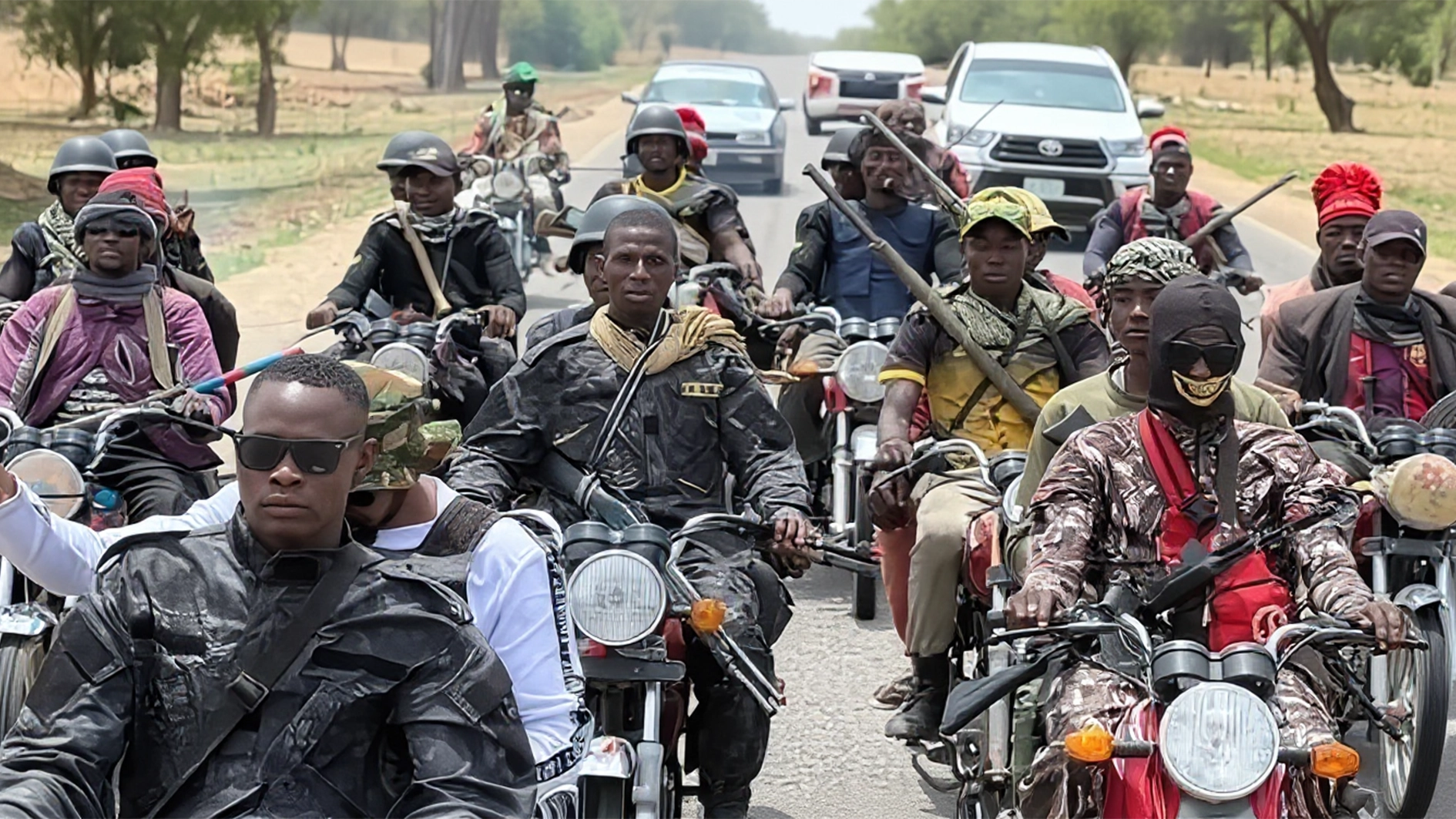
• Senate demands security reset after massacre of 56 in Niger
• UN: Over 3.7m Nigerians displaced
• IGP meets ex-police chiefs Mohammed, Attah, Ehindero, Onovo, others
Many terrified residents in their thousands yesterday fled the new theatre of persistent and sporadic attacks by terrorists in Borgu and Agwara local councils of Niger State, seeking refuge in the Benin Republic, a situation worsening the country’s deepening security and humanitarian challenges, which have seen more than 3.7 million Nigerians internally displaced.
This is as terrorists again struck in one of the communities in Borgu barely 24 hours after the Governors of Niger and Kwara states, Mohammed Umaru Bago and Abdulrahman Abdulrazaq, met in Minna on Monday to assess the security situation in the border towns of the two states.
The terrorists, numbering over 200, riding on about 70 motorcycles, in the early hours of Tuesday, stormed the Konkoso community for the second time within one week.
According to eyewitnesses, the gunmen set more houses ablaze in Konkoso before moving to Segbana, another village where they wreaked havoc. There has been no report on casualties. Segbana is said to be a border town between the Benin Republic and Nigeria in Kebbi State.
While details of the attack remained sketchy as at press time, with the State Police Command yet to react to the latest development, villagers, who have been thrown into panic, particularly with the absence of security operatives on the ground, are already deserting the area in droves.
The police outposts in the areas were last week burnt by terrorists, resulting in operatives fleeing the communities, while the terrorists have now set up base in Konkoso town.
It was gathered that residents of Konkoso communities fled in thousands to Segbana, a town in Benin Republic sharing a border with Niger and Kebbi states.
Fleeing villagers claim that the terrorists have established a base in Konkoso after an onslaught of over five days on the communities, during which more than 50 people were confirmed to have been killed.
A villager who spoke on condition of anonymity said over 200 terrorists returned to Konkoso communities on Tuesday morning with about 70 motorcycles, andburnt down the remaining houses that were not set ablaze during their first operation last week.
It would be recalled that the terrorists invaded the Niger communities on Thursday night (February 12), wreaking havoc till Saturday, during which they operated without restraint from security personnel. It was gathered that several houses, including a police station, have been burnt down by the ravaging terrorists in the past few days.
The activities of the terrorists have increased lately despite the arrival of United States soldiers who are currently in the Northern part of the country strategising on how best to collaborate with Nigerian troops to stem the tide of terrorism and all forms of insecurity.
Already, the Senate has condemned the killing of 56 Nigerians and the abduction of women and children in Konkoso village, describing the attack as brutal and unacceptable. The resolution followed a motion of urgent national importance moved by the senator representing Niger East, Sani Musa, during an emergency sitting of the Senate on Tuesday.
Moving the motion, Musa told lawmakers that more than 56 citizens were killed in Konkoso and nearby Pissa villages, while several women and children were abducted. He explained that the affected communities share boundaries with strategic forests linking neighbouring states, creating corridors exploited by terrorists for cross-border movements and coordinated criminal operations.
Musa warned that the North-Central region has witnessed rising attacks on rural communities and farmlands, threatening food security, local economies, and broader national stability. He commended President Bola Tinubu and security agencies for sustained counterterrorism efforts, acknowledging the sacrifices made by troops confronting violent extremism across the country.
However, the senator expressed concern that repeated assaults on remote communities revealed gaps in intelligence gathering, coordination, rapid response capabilities, and sustained territorial security presence. He added that the abduction of women and children had deepened the humanitarian crisis, inflicting lasting psychological trauma on families and destabilising affected communities.
The Senate thereafter renewed calls for a sweeping overhaul of Nigeria’s security architecture. Beyond immediate condemnation, the motion pressed for long-term structural reforms, including improved intelligence coordination, unified operational command, deployment of surveillance technology, and better integration of community policing structures.
The Senate adopted the motion, signalling bipartisan concern over Nigeria’s escalating security crisis and the urgent need for a coordinated national response. The chamber also observed a minute of silence in honour of the victims and extended condolences to their families and the government of Niger State.
Meanwhile, more than 3.7 million Nigerians are currently living in internal displacement, a stark indicator of the country’s deepening security and humanitarian challenges, the United Nations has said.
The United Nations Assistant Secretary-General and Resident and Humanitarian Coordinator for Nigeria, Mohamed Malick Fall, revealed the figure yesterday at the launch of the Internally Displaced Persons (IDP) Policy and State Action Plan on Durable Solutions (SAP) for Katsina and Zamfara States, held at Fraser Suites Abuja.
Fall noted that while displacement has long been associated with Nigeria’s Northeast, the Northwest is increasingly emerging as a major epicentre, driven by persistent insecurity, banditry, and communal conflicts. He stressed that displacement is not merely about movement but about the loss of homes, livelihoods, education, and stability for millions of citizens.
“Displacement is a national development challenge. It affects economic productivity, social cohesion, and long-term stability,” he said.
Chairman of the Northwest Governors’ Forum and Katsina State Governor, Dikko Umaru Radda, said the growing numbers underscore the urgency of shifting from short-term humanitarian relief to durable, policy-driven solutions.
Radda announced the creation of a Social Development Unit within the forum’s secretariat to coordinate policy alignment, strengthen implementation, and promote peer learning among Northwest states.
“Internal displacement has evolved into a structural issue that requires long-term, coordinated strategies anchored on recovery, reintegration, and resilience,” he stated.
Zamfara State Governor, Dauda Lawal, described the displacement burden in his state as severe, citing the destruction of communities, abandoned farmlands, and prolonged disruption to education and healthcare services. He emphasised that durable solutions must prioritise security, livelihoods, and social stability.
UNDP Resident Representative, Elsie Attafua, highlighted the need for state-led recovery frameworks capable of helping displaced persons rebuild their lives and enabling host communities to absorb population pressures without further strain.
Stakeholders at the event agreed that the figure of 3.7 million displaced Nigerians reflects not only a humanitarian emergency but also a governance and development imperative that requires sustained collaboration among federal and state governments, development partners, and affected communities.
Worried by the spike in terrorism, kidnapping and other forms of crimes, the Inspector General of Police (IGP), Kayode Egbetokun, has met with the committee of former IGPs under the chairmanship of Aliyu Attah with a resolve to tap from their wealth of experiences. The IGP also declared that misinformation and a campaign of calumny against him and the force will not deter him from ensuring that the crime rate in Nigeria is drastically reduced, if not eradicated.
The IGP made this known while briefing the management of the Police Force at the Force Headquarters on Tuesday after his three-hour meeting with the former police chiefs. He stressed that the Nigerian Police under his leadership has resolved to be more professional, boost the morale of officers, build the capacity of members of the force, as well as tackle all emerging threats.
He said the meeting was to tap from the experiences of the past IGPs, build institutional memory and ensure that there is public confidence in the Nigerian Police Force.

