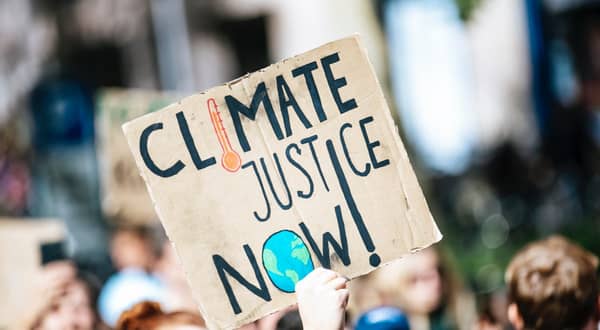
The United Nations has urged Nigeria to integrate climate justice into its legal and policy frameworks, noting that environmental degradation and climate change were fundamental human rights issues.
Addressing the Regional Africa Human Rights Academic Network Conference in Abuja, yesterday, the UN Resident and Humanitarian Coordinator in Nigeria, Mohamed Malick Fall, described climate change as a human rights emergency disproportionately affecting vulnerable communities.
“The climate crisis is more than an environmental issue; it is a human rights emergency.
“Sub-Saharan Africa produces the least greenhouse gases, yet suffers the worst effects of climate change. This is not just unfair, it is a deep betrayal of future generations,” he stated.
Fall warned that Nigeria faces increasing threats from desertification in the north, coastal erosion in the south, and erratic weather patterns affecting food security and livelihoods.
He reiterated the UN General Assembly’s 2022 resolution, which affirmed the right to a clean, healthy, and sustainable environment as a universal human right.
Executive Secretary of the National Human Rights Commission (NHRC), Tony Ojukwu (SAN), in his welcome remarks, stressed the urgent need for climate justice, emphasising that environmental degradation poses a direct threat to fundamental human rights across Africa.
He highlighted the disproportionate impact of climate change on vulnerable communities, particularly in Africa, despite the continent’s minimal contribution to global carbon emissions.
Also delivering his welcome remarks, Dean of the Faculty of Law, University of Nigeria, Nsukka, Prof. Festus Ukwueze, said the event, which was the third edition of the Africa Human Rights Conference, underscored the human-induced nature of climate change.
Regional Director of the Raoul Wallenberg Institute, Rakel Larsen, reaffirmed the organisation’s dedication to protecting vulnerable populations, advocating policy reforms, and fostering collaboration between governments and civil society.
Nigeria advised to integrate climate justice into human rights framework