 Follow Us on Google News


 Follow Us on Google Discover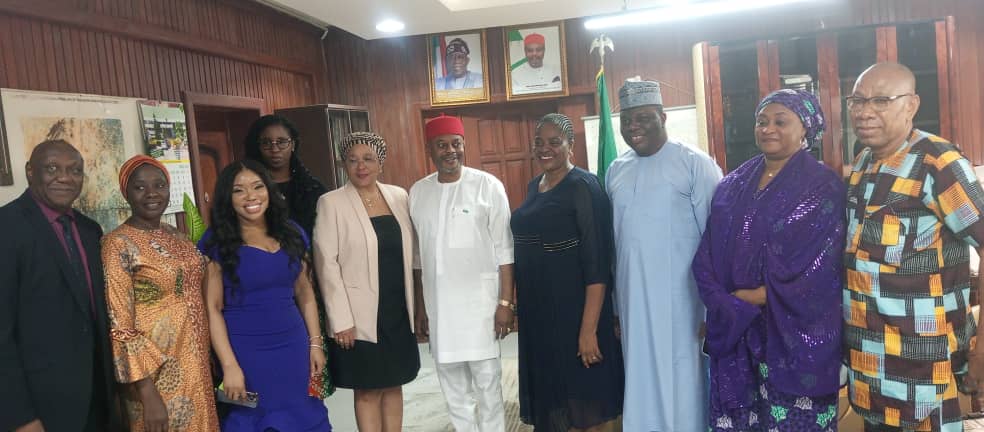
Nigeria is pursuing closer bilateral cooperation with Brazil and Cuba in innovation, technology, and bioenergy through the proposed creation of joint working groups aimed at streamlining collaboration and accelerating scientific progress.
The meetings, which took place separately in Abuja, were led by Nigeria’s Minister of Innovation, Science and Technology, Uche Nnaji. He hosted the Brazilian and Cuban ambassadors as part of efforts to reinforce the country’s South-South cooperation strategy, aligning national scientific ambitions with long-standing international partnerships.
In a statement issued by Dr. Robert Ngwu, Senior Special Adviser (Administration) to the minister, Nnaji proposed the establishment of a Nigeria–Brazil Joint Innovation and Technology Working Group during his engagement with the Brazilian delegation led by Ambassador Carlos Garcete. Also present were Brazil’s Deputy Head of Mission, Leandro Silva, and Trade Attaché, Alexandre Manhães.
According to Nnaji, the proposed working group would serve as a mechanism to align bilateral priorities, coordinate industrial research, and accelerate joint projects in sectors such as agricultural technology, green fuel, and space cooperation.
“Our relationship with Brazil is entering a new phase—one focused not just on diplomacy but delivery. We want to deepen collaboration across bioenergy, biotechnology, and agricultural systems through structured joint mechanisms,” Nnaji said.
He drew attention to Nigeria’s development of a €7.9 billion Green Methanol Industrial Complex, currently the largest of its kind on the continent, and suggested that Brazil’s technical expertise in ethanol and clean fuel could support feedstock optimisation and certification standards.

The Nigerian minister also referenced Brazil’s achievements in agricultural science, particularly through the work of EMBRAPA, and proposed knowledge exchange programs with local research institutions. In space technology, the Director General of the Nigerian Space Research and Development Agency (NASRDA), Dr. Mathew Adepoju, used the occasion to explore collaboration with Brazil’s National Institute for Space Research (INPE) on climate monitoring and satellite data sharing.
Nnaji also recommended holding a Nigeria–Brazil Science and Innovation Dialogue within the next year, and suggested that both countries review and renew existing agreements.
Ambassador Garcete welcomed the minister’s proposals and confirmed that the Brazilian Foreign Minister had extended an invitation to President Bola Tinubu for a state visit to Brazil. He also indicated Brazil’s willingness to support Nigeria’s capacity-building goals in technology and science.
In a separate meeting with Cuban Ambassador Miriam Morales Palmero, Nnaji extended the same framework for bilateral collaboration, proposing the establishment of a Nigeria–Cuba Innovation and Biotechnology Working Group. This group, he explained, would oversee scientific initiatives between both countries, including shared research goals in vaccine production, diagnostics, and bio-fertiliser development.
The minister noted that Cuba’s experience in biotechnology and public health, despite long-standing sanctions, makes it a natural partner in Nigeria’s push for local vaccine manufacturing and healthcare innovation.
“Cuba has achieved so much through its dedication to science and its people. We believe there is room to collaborate in areas like diagnostics equipment, climate-resilient agriculture, and renewable energy,” Nnaji said.
Palmero confirmed Cuba’s readiness to operationalise an existing Memorandum of Understanding signed during Vice President Kashim Shettima’s visit to Havana. She also welcomed Nigeria’s interest in structured collaboration across innovation sectors.
The Director General of the National Biotechnology Development Agency (NABDA), Prof. Mustapha Abdullahi, gave an update on Nigeria’s vaccine development pipeline and sought Cuba’s support in expanding local production. In response, Nnaji directed NABDA to produce a comprehensive work plan to guide future cooperation.
Throughout both meetings, Nnaji underlined Nigeria’s broader ambition to become a continental hub for industrial transformation through innovation-driven partnerships.
“Nigeria is not just open for business—we are open for breakthrough partnerships. With Brazil and Cuba, we have friends who share our values and our ambitions,” he said.
Representatives of key government agencies—including NASRDA, NABDA, the National Office for Technology Acquisition and Promotion (NOTAP), and the Raw Materials Research and Development Council (RMRDC)—were in attendance, reinforcing the government’s commitment to transition from dialogue to implementation.

