 Follow Us on Google News
 Follow Us on Google Discover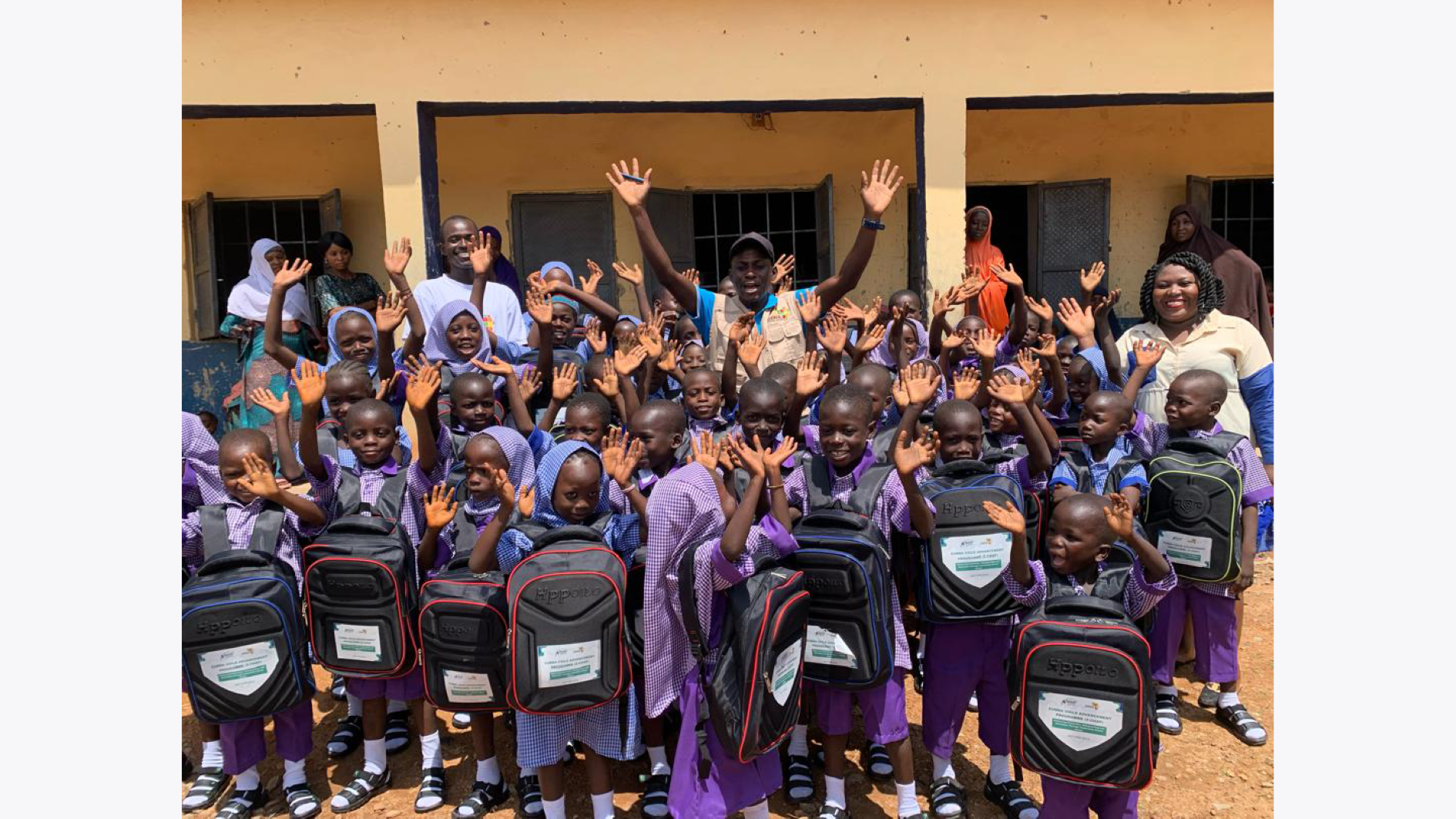
Launches skills training for girls in Niger
For many children displaced by insecurity, going to school remains a distant dream.
But for 100 internally displaced children in the Zumba community, Shiroro Local Council of Niger State, that dream has begun to take shape.
The children have been enrolled in formal education under the Zumba Children Advancement Programme (Z-CHAP), an initiative of the Development Initiative of West Africa (DIWA), in partnership with the North South Power Foundation.
The programme, which seeks to improve access to quality education and other opportunities for vulnerable children, also includes a skills acquisition component for older displaced girls.
Speaking at a stakeholders’ engagement and the launch of Phase Three of Z-CHAP at DIWA headquarters in Minna, the organisation’s Chief Executive Officer, Daoda Kanneh, said each of the 100 children had received a complete school kit comprising uniforms, sandals, school bags and learning materials.

Kanneh said the intervention was particularly significant because some of the children were attending formal school for the first time.
He said the development had brought renewed hope and enthusiasm to the children and their families, adding that the programme was designed to provide vulnerable children with the opportunity to build a better future despite the circumstances that forced them from their homes.
According to him, the stakeholders’ engagement was organised to present the progress recorded during Phases One and Two of Z-CHAP, introduce Phase Three and clarify the roles of stakeholders in its implementation.
He explained that the programme was built on the understanding that lasting change for vulnerable children could not be achieved by one organisation alone.
Kanneh said families, schools, community leaders, government institutions, development partners and civil society organisations all had important roles to play in ensuring that the children received sustained support.
“The progress recorded so far is not the work of DIWA alone. It is the result of the combined contributions of many individuals and institutions that have offered their time, expertise and resources towards a common goal,” he said.
He urged stakeholders to remain actively involved beyond attending meetings, stressing the need for them to support implementation, promote accountability, monitor progress, identify emerging challenges and provide practical solutions to improve the programme.
Kanneh also reaffirmed DIWA’s commitment to implementing Z-CHAP with transparency, accountability and respect for the communities it serves.
He commended the North South Power Foundation for partnering with DIWA, describing the collaboration as an example of how strong partnerships could produce meaningful and lasting benefits for vulnerable children and communities.
Speaking with journalists, the Consultant/Public Relations Officer of the North South Power Foundation, Dr Samson Esumeh, said the foundation was prompted to act after observing the difficult circumstances in which some displaced children in Zumba were living.
He said some of the children were frequently seen around roads and the foundation’s premises while searching for firewood, a situation that raised concerns about their safety and security.
Esumeh said the foundation subsequently approached the community to identify and profile the displaced children before commencing the intervention.
“When we discovered some years ago that some children were always found on our roads and even in our premises fetching firewood, we realised that they were exposed to danger and that something needed to be done,” he said.
He explained that the initial profiling identified about 281 children between the ages of four and eight, many of whom had been displaced from states including Borno and Sokoto.
Esumeh said 100 of the children had now been enrolled in formal education, while the foundation had also provided other forms of assistance to some displaced families.
He noted that some of the children had lost one or both parents and were surviving with limited support.
According to him, the foundation had provided food and medical assistance to some displaced families, while women in the IDP community had also benefited from free maternity services at its clinics.
He said some beneficiaries had equally received free eye treatment.
He appealed to individuals, corporate organisations and other well-meaning Nigerians to support the displaced children, stressing that continued assistance was needed to give them a better chance in life.
Earlier, DIWA’s Project Officer, Habila Mohammad Kudu, said Phase Three of Z-CHAP would focus on displaced female children who were above primary-school age.
He said the beneficiaries would be enrolled in skills acquisition programmes to equip them with practical knowledge that could improve their future economic prospects.
Kudu added that DIWA would continue to strengthen the academic performance of the 100 children already enrolled in formal education.
He said the organisation would introduce technology-based systems to track the children’s academic progress and monitor their engagement with teachers both during classroom lessons and extra-mural activities.
The system, he explained, would enable the organisation to use evidence-based data to assess the pupils’ progress and identify areas requiring additional support.
For the children of Zumba, the intervention represents more than school uniforms, bags and books. It offers a chance to replace displacement and uncertainty with education, skills and the hope of a more secure future.

