 Follow Us on Google News


 Follow Us on Google Discover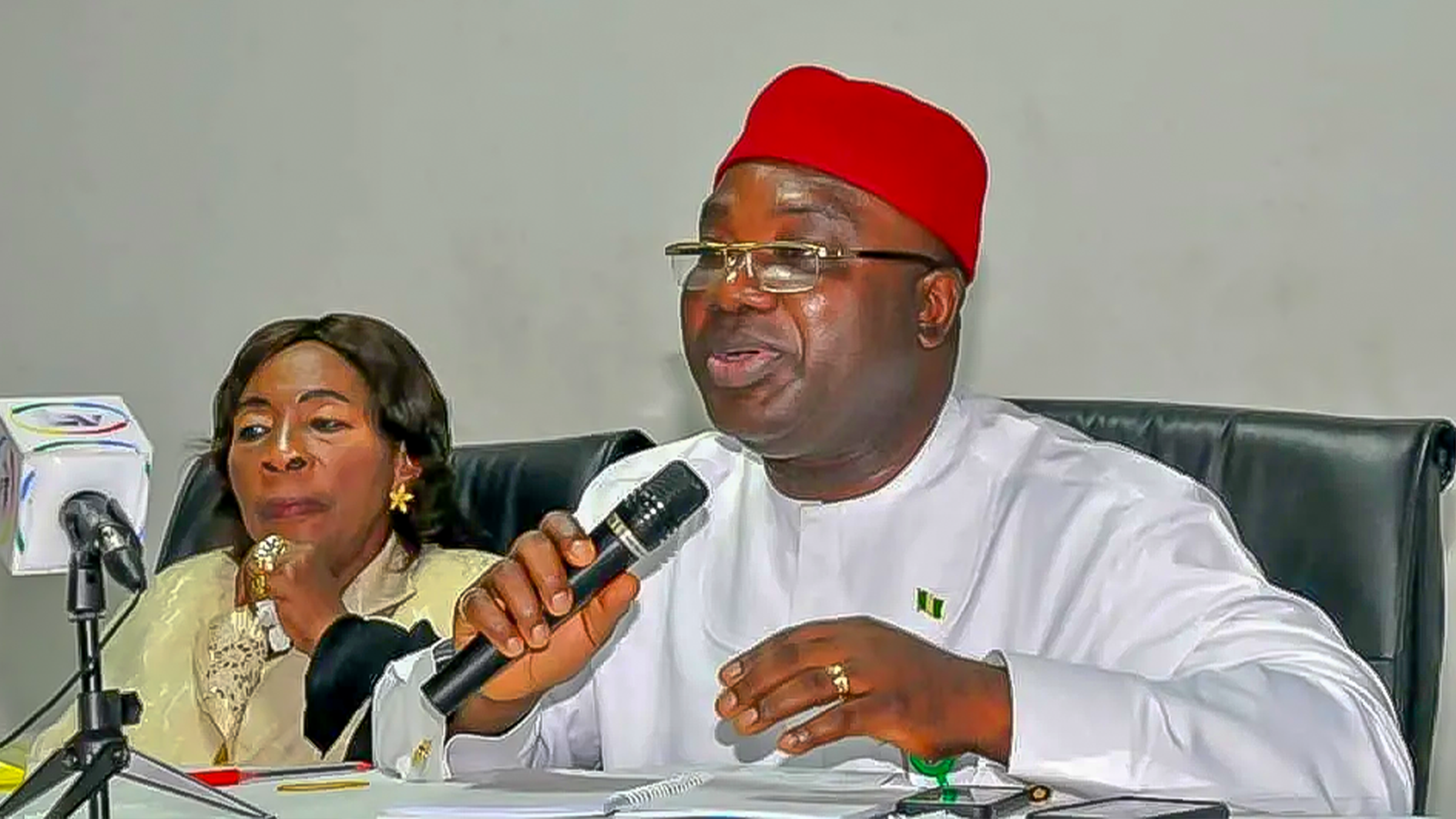
Stakeholders have called for greater legal protection for survivors of rape and incest, arguing that women who become pregnant as a result of sexual violence should have access to safe abortion where continuing the pregnancy would cause severe psychological or other harm.
They emphasized the need for the law to recognise the realities of rape, incest, severe foetal abnormalities, and the mental health of the woman.
They spoke during a conversation on maternal health, healthcare access and legislative action and “Unfinished Lives” portrait activation to mark International Safe Abortion Day.
The discussion was held in collaboration with the National Human Rights Commission and the Women Advocates Research and Documentation Centre.
UNFINISHED is a Nigerian advocacy campaign calling on the National Assembly to complete the country’s existing legal framework on abortion care, so that trained healthcare workers can address a preventable cause of maternal death that current law places beyond their reach.
The campaign seeks an expansion of the existing legal grounds for abortion care, not decriminalisation.
Stakeholder said the society should not compel survivors to continue pregnancies resulting from crimes committed against them adding that forcing rape survivors to continue with pregnancies resulting from the assault as a form of “double victimisation”.

While opening the conversation, the Executive Secretary of the National Human Rights Commission ( NHRC), Dr Tony Ojukwu, noted that unsafe abortion remains a leading preventable cause of maternal mortality in the country
Ojukwu emphasized the need to confront the reality that our current legal framework leaves too many women without recourse to safe, lawful care.
He said, ” Your concept of the unfinished portrait” has given us a powerful, humanising language to discuss a topic that is too often shrouded in stigma and silence. The UNFINISHED campaign is aptly named. It recognises that while Nigeria has made commendable progress in maternal health, our work is not done. We cannot claim to have finished the race when unsafe abortion remains a leading preventable cause of maternal mortality”.
Ojukwu stated that the objective of the campaign is not to confront the progress that have been made, but to complete it.
He advocated for a tightly bounded, medically justified expansion of the grounds for termination of pregnancy, stressing the need for the law to recognise the realities of rape, incest, severe foetal abnormalities, and the mental health of the woman.
“This is not about abortion on demand; it is about saving lives. It is about ensuring that when a woman faces a medically justifiable crisis, the law does not force her into the shadows”.
“The Portrait Activation we held earlier this month was a masterstroke. By presenting unfinished portraits to our policymakers, we made the invisible visible. We made the human cost of inaction tangible. The “unfinished” mature of those artworks is a mirror to our legar framework We have the canvas, we have the paint, and we have the artists but the law remains incomplete.
“Today, we must move from symbolism to strategy. We must discuss how we convert the empathy generated by those portraits into legislative movement. We must identify the champions in our Parliament who will carry this bill forward. We must ensure that the voices of our healthcare Providers who risk their careers and their consciences to save lives are heard and protected”, he added.
Also speaking, the Chairman of the Senate Committee on Health, Senator Ipalibo Harry Banigo, stressed the need to dismantle barriers preventing Nigerians from accessing healthcare.
Banigo stated that the legislature remains committed to strengthening the legislative framework, expanding social health insurance and improving accountability across secondary and tertiary healthcare.
“True success will be achieved when no Nigerian woman risks her life to give life,” Banigo said.
In her contribution, the Senator representing Kogi Central Senatorial District, Senator Natasha Akpoti-Uduaghan called for a broader national conversation on abortion and maternal healthcare, warning that legal reform alone will not save Nigerian women unless the country fixes the health system that is meant to protect them.
Senator says legal reform must go hand in hand with functioning hospitals, qualified doctors, affordable care and support for women who choose either to terminate a pregnancy or carry it to term.
Akpoti-Uduaghan said she supports creating a system in which women and girls can make informed decisions about pregnancy, while also receiving meaningful support if they choose to carry their pregnancies to term.
She questioned whether Nigeria’s hospitals, doctors, medicines and emergency-care infrastructure are currently equipped to provide safe services.
The lawmaker observed that the debate should extend beyond whether abortion laws should be amended to include the practical realities of healthcare delivery from the availability of qualified doctors and essential medicines to electricity, incubators and emergency obstetric care in rural communities.
Akpoti-Uduaghan pointed out the same health-system weaknesses that put women at risk during pregnancy and childbirth could create further dangers if abortion services were expanded without adequate safeguards.
She cited her experience establishing a maternity centre through crowdfunding as an illustration of the challenges facing rural healthcare. Although the facility was built, she said, finding doctors willing to work in remote communities proved difficult.
She argued that Nigeria’s problem is therefore not simply a shortage of healthcare facilities, but a shortage of healthcare professionals willing and able to work in underserved communities.
Akpoti-Uduaghan cited cases in which women experiencing complicated labour may arrive at rural facilities only to encounter midwives without the specialist support required for emergency interventions.
“Every step a woman takes, her life is safe,” she said, stressing that the system should protect women whether they decide to terminate a pregnancy or continue it.
She also raised concerns about the reliability and quality of medicines available to patients, the capacity of hospitals to handle emergencies and whether healthcare workers are adequately compensated.
The lawmaker emphasized that Nigeria should not simply replicate reproductive-health policies from countries with substantially different healthcare infrastructure.
“I don’t think we can tidy the problems of mortality by just amending the laws,” she said.
The senator further argued that maternal mortality data may not fully capture the reality in rural communities, where deaths associated with pregnancy and childbirth can go undocumented.
She described stories of women in rural communities who have experienced multiple pregnancies and lost children or survived dangerous deliveries, sometimes treating such experiences as an ordinary part of life.
Her comments come amid continuing debate over reproductive healthcare, maternal mortality and the legal framework governing abortion in Nigeria.
On her part, the Regional Director of the Women Advocates Research and Documentation Centre (WARDC) , Emanuella Azu called for the reform of the Nigeria’s abortion laws, arguing that the country’s restrictive legal framework leaves women and girls vulnerable to the consequences of unsafe abortion.
Azu noted that Nigeria’s laws had not done enough to protect women’s reproductive health and rights .
She acknowledged that Nigeria’s existing abortion laws are highly restrictive, with access governed by criminal-law provisions that permit abortion only in limited circumstances.
Azu stated that the organisation’s position was that the legal framework should be reviewed to provide wider access to safe abortion services and better protect the health and rights of women and girls.
She argued that maternal mortality remained a major concern in Nigeria and argued that unsafe abortion was an important contributor to preventable deaths.
The “Unfinished Lives” campaign, she said, was intended to connect the human stories represented in the portraits with what the organisation describes as the unfinished work of legal reform.We are advocating for abortion laws to become less restrictive so they can protect the lives of women and girls,” Azu said.
She noted that the Unfinished campaign was designed to draw attention to women and girls whose lives, she argued, had been cut short by unsafe abortion and restrictive access to reproductive healthcare.
“Today is about the unfinished business with our laws because we believe they have not fully protected the rights of women,” Azu said.
According to Azu, the organisation is calling on policymakers to introduce laws and policies that would protect women’s lives and expand access to safe abortion services.
“We are calling on policymakers to make responsive laws that protect the reproductive rights of women and girls,” she said.
Azu particularly called for greater legal protection for survivors of rape and incest, arguing that women who become pregnant as a result of sexual violence should have access to safe abortion where continuing the pregnancy would cause severe psychological or other harm.
She described forcing rape survivors to continue with pregnancies resulting from the assault as a form of “double victimisation”.
“When a rape survivor cannot terminate such a pregnancy, it amounts to double victimisation,” she said. “Survivors could live with that trauma throughout their lives.”

