
 Get Guardian on Google
He prepared to be at the editorial meeting of The Guardian – Son
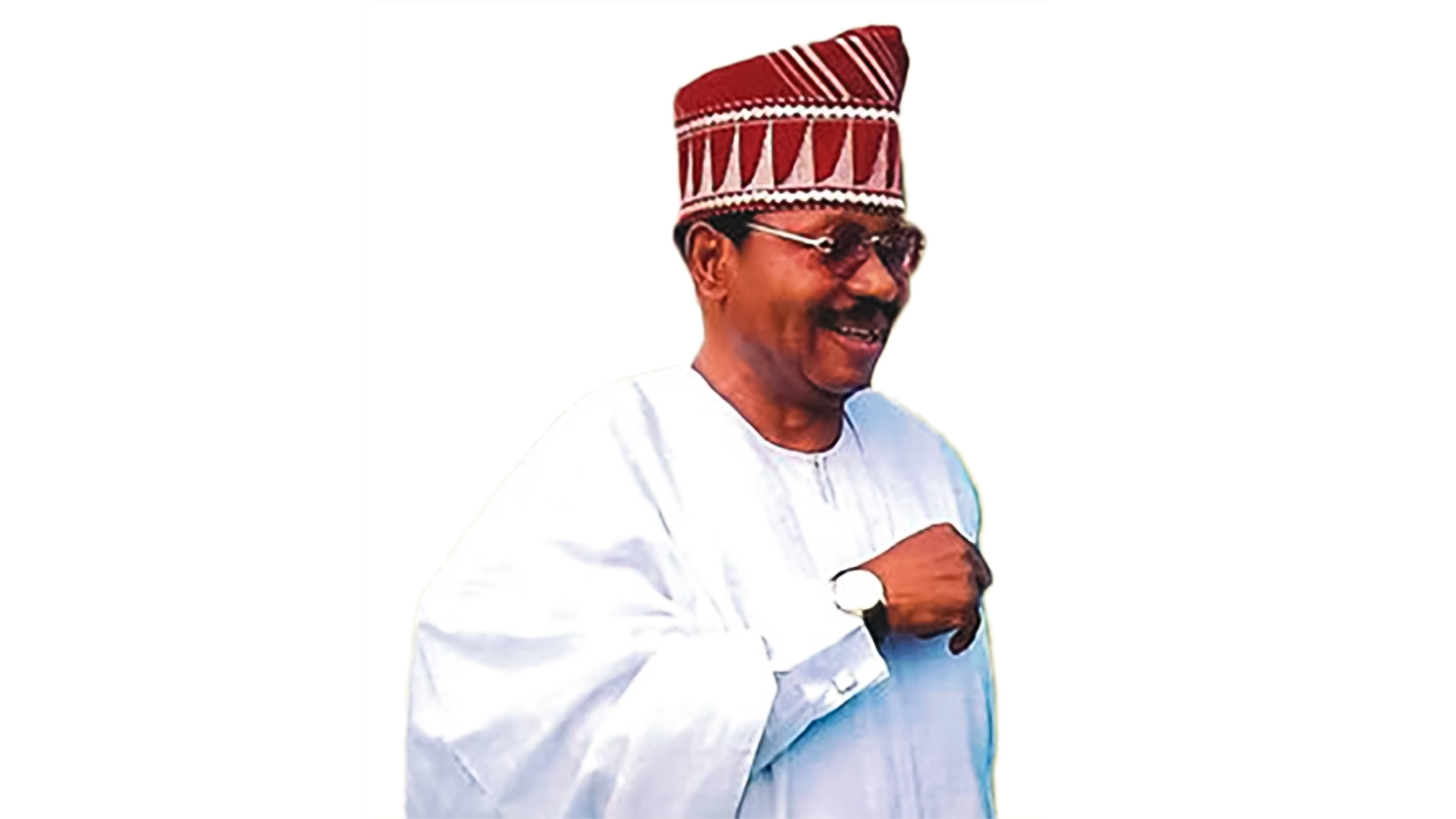
Former Vice-Chancellor of Obafemi Awolowo University (OAU), Ile-Ife, and Chairman of the Editorial Board of The Guardian Newspapers, Prof Adebowale Omole, has died at 84.
Omole was a distinguished academic and university administrator whose career spanned several decades. He died in the early hours of yesterday, according to family sources.
For Great Ife, his name evokes pride, controversy, brilliance and resilience in equal measure. His was a life deeply woven into the fabric of the institution he led from November 30, 1991 to November 30, 1999.
Born to Pa Emmanuel Adedeji Omole and Mama Beatrice Aarinola Omole, young Adebowale Omole attended Ilesa Grammar School from 1956 to 1962. After secondary school, he worked as a civil servant at the Ministry of Agriculture and Natural Resources, Ibadan, doing menial jobs to survive, including working as a disc jockey and playing guitar with a live band in Mokola, and modelling for corporate organisations to pay his tuition, buy books and feed himself.
That hustle took him to OAU, the same institution that would later define his life. He studied Agriculture, left for Canada for his PhD in Nutritional Biochemistry at the University of Alberta, Edmonton, between 1971 and 1973, returned, and rose rapidly.

He became Professor in 1980 at age 38, and in 1983, made history as the first alumnus Dean of the Faculty of Agriculture. His inaugural lecture in January 1983, titled ‘Waste recycling in the food chain – Turning thrash to cash’, was prophetic. Decades before waste-to-wealth became government policy, he argued that Nigeria’s agricultural waste could drive industrialisation.
When he was appointed Vice-Chancellor in 1991, it was not an easy time to lead. Nigeria was under military rule. Universities were underfunded, under surveillance and restless. Ife, known as the bastion of radical student unionism and pro-democracy activism, was at the centre of the storm.
Omole applied himself to keeping the university running. Classes held when other universities were shut, infrastructure was maintained with little money, and when the federal government set up a Visitation Panel to probe the finances of his eight-year administration, the panel ordered audits three times using different audit firms; he was cleared.
By June 1999, at a Council meeting, he announced his plan to retire voluntarily at the end of his tenure. He forwarded a letter to that effect in September 1999 to Council Chairman, Justice Anthony Aniagolu, who accepted it.
But his tenure will forever be remembered for the events of 1999. For most of his eight years, Omole battled the students’ union. He banned the union several times. In 1995, he expelled its President, Anthony Fasayo, and many other activists.
The union, which was very active in the national struggle to end military rule, saw him as an extension of the military administration. He saw the union as an impediment to orderly administration. That mutual distrust created a dangerous vacuum. Cult groups thrived.
On March 7, 1999, students apprehended members of a cult group with an AK-47 rifle and 58 rounds of ammunition and handed them over to the university security, and then to the police. The suspects were charged before a Magistrate Court in Ile-Ife, which discharged and acquitted them. Students were outraged.
Four months later, tragedy struck. In the early hours of July 10, 1999, armed cultists invaded Awolowo Hall of residence and murdered five people. Among them were the Secretary-General of the students’ union, George Iwilade, fondly called Afrika, Eviano Ekelemu, Yemi Ajiteru, Babatunde Oke and others. It was the first time student leaders would be murdered in their hall in such numbers in Nigeria.
Omole was out of the country when it happened. The then Deputy Vice-Chancellor (Academics), Prof A.E. Akingbohungbe, was in charge. When Omole returned, he was summoned to Abuja to give an account and was subsequently suspended on July 14, while Prof Roger Makanjuola was appointed Acting Vice-Chancellor.
In interviews years later, his son, Dr Damola Omole, said his father never regretted serving as vice-chancellor, despite the turmoil, and remained calm despite allegations that he sponsored the attack, allegations he denied, and which were never proved.
After Ife, Omole became Chairman of the Editorial Board of The Guardian for many years, where late President Muhammadu Buhari would later acknowledge his worthy perspective on national discourse.
He served as Chairman of the Council of two universities, served on the Board of Trustees of Chrisland University, and was appointed Pro-Chancellor and Chairman of Council of Ladoke Akintola University of Technology (LAUTECH) in 2013.
He devoted his later years to culture and education. He was part of the team that started the Yoruba Academy, a multidisciplinary institution that brings together scholars to preserve Yoruba heritage.
He inaugurated the Wale Omole Foundation for Virtues and Ethics in Yoruba culture to revive the Omoluabi ethos, awarded scholarships, supported teacher training and improved educational infrastructure for disadvantaged youth and women.
He was also unapologetic about his belief in mother-tongue education. In his last public education interventions, he told audiences that the continued delivery of a British theoretical curriculum in English was why Nigeria produces job seekers instead of innovators, and insisted that children must be taught in Yoruba at the early stage, as he did with his own children who were forbidden from speaking English at home.
Commenting on his death, his first son, Damola, said his dad had planned to attend the weekly meeting of The Guardian’s editorial board yesterday (Wednesday), so he went to bed as normal on Tuesday; he was in high spirits and did not give any indication that anything was making him uncomfortable. When the doctor got here, he said it probably happened overnight.”
Omole was a man not only committed to excellence, but also to impeccable integrity, which reflected in his service as vice-chancellor and Chairman, Editorial Board.
In a book on federalism and development compiled in The Guardian editorial series on restructuring, the preface to the book written by Omole gave insight into the mind of the man.
He said: “It is fundamental that the newspaper owes allegiance to no political party, ethnic, community, religious or other interest groups. Its primary commitment is to the integrity and sovereignty of the federation of Nigeria.”
The late former President Muhammadu Buhari, in a tribute on his 80th birthday in August 2022, described him as a scholar who returned to Nigeria after extensive studies abroad out of love for the country, and who left a legacy at OAU where he started as an Assistant Lecturer and rose to become a Professor.
Omole left behind a complicated legacy: that of an erudite Animal Science scholar, a strict administrator who believed order must come before freedom, a man who was cleared of financial impropriety but could not escape the moral burden of July 10, and a cultural purist who believed education must have local roots.
The first alumnus VC will be remembered as a man who dared to lead his alma mater in its darkest hour and lived to tell the story with his head high.
At the Editorial Board, he will be remembered for his punctuality to meetings, contributions to debates and fearlessness in pursuance of truth and justice.