 Follow Us on Google News
 Follow Us on Google Discover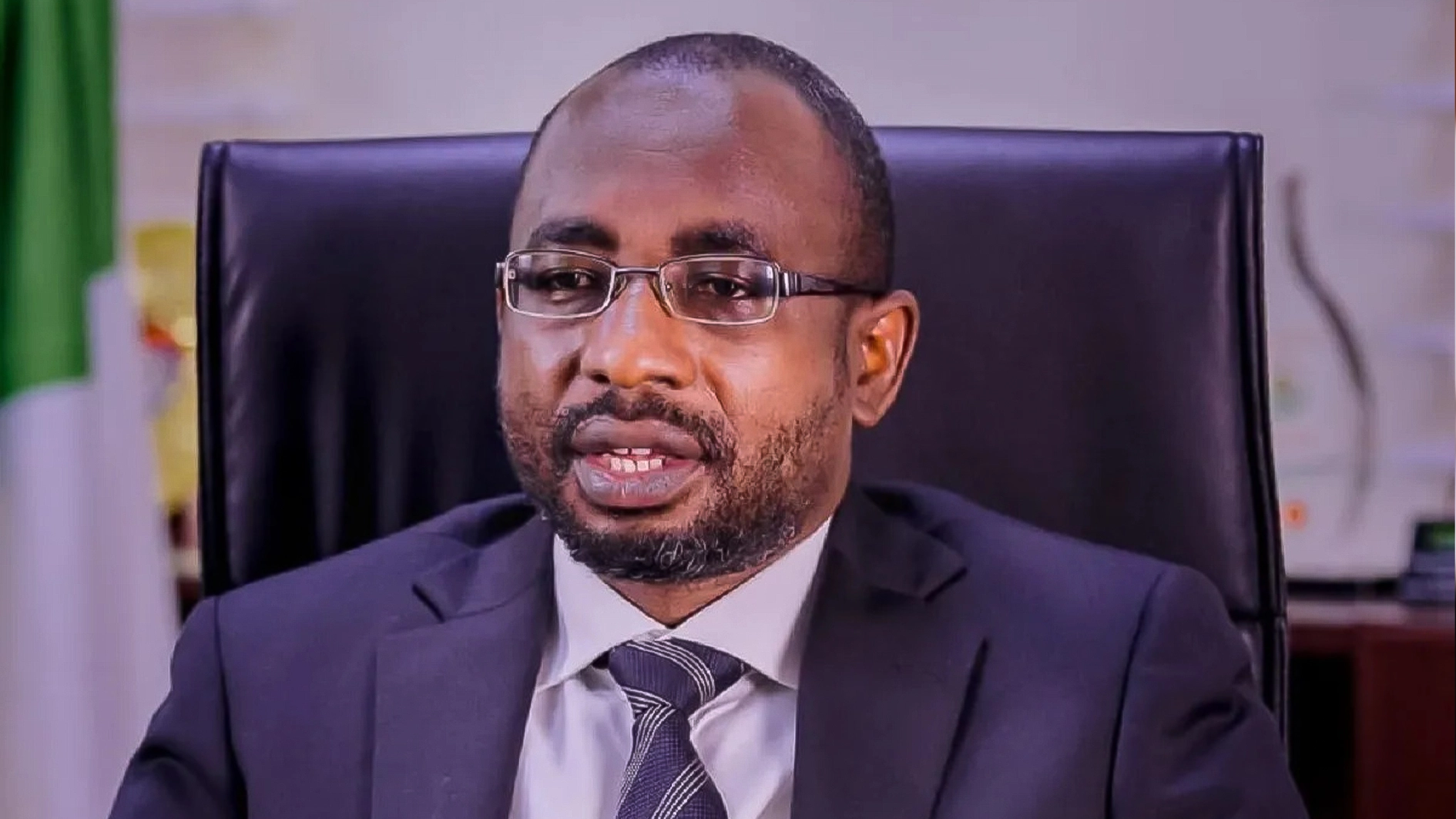
The era of walking into a bank branch for financial services is gradually fading, as the future of finance in Nigeria shifts towards “invisible banking” embedded in the apps people already use to shop, commute and pay bills.
This was the central message of the Director-General of the National Information Technology Development Agency (NITDA), Malam Kashifu Inuwa Abdullahi, at the Central Bank of Nigeria’s Committee of Departmental Directors Retreat in Lagos.
From regulating banks to regulating experiences
Drawing from his experience at the CBN, Inuwa argued that the regulator’s focus must evolve because customers no longer necessarily “go banking”.
“The customer wants to buy something… and the financial service increasingly appears inside that experience at the moment it is needed,” he explained.
He said Nigeria’s payment ecosystem now connects banks, fintechs, telecommunications companies, cloud service providers and national switches. In such an environment, he noted, a failure at a non-bank entity, such as a cloud provider or telecommunications company, could disrupt banking services.
“Consequently, operational failures in non-bank entities outside the CBN’s direct perimeter can transmit risk directly into supervised institutions,” Inuwa warned.
He said this required the CBN to update the “architecture of financial supervision” to cover the entire financial ecosystem, rather than focusing solely on licensed banks.
From digitisation to digital transformation
Using frameworks developed by the MIT Center for Information Systems Research (MIT CISR), the NITDA director-general distinguished between being “digitised” — simply putting paper-based processes online — and achieving true “digital transformation”, which involves building the capacity to innovate continuously.
He urged the CBN to move from relying primarily on retrospective reports to adopting “intelligent supervision” powered by artificial intelligence-assisted analysis, anomaly detection, graph and network analytics, early-warning systems and AI-assisted horizon scanning.
Inuwa also called for a broader approach to cybersecurity. While banks typically focus on preventing cyberattacks, he said regulators should pay greater attention to “digital operational resilience” — the ability of institutions to recover quickly when attacks succeed.
“Your customer does not experience your cybersecurity policy. Your customer experiences whether the payment works,” he stated.
He linked digital resilience to national interest, describing it as part of “digital sovereignty” — Nigeria’s ability to control its data, infrastructure and skills.
He also commended the CBN for aligning with the national sovereign-cloud directive, which mandates local data residency for financial transactions.
Inuwa, at the end of his presentation, outlined three key propositions for the directors: ecosystem visibility, digital transformation, and resilience and sovereignty.
“The opportunity before us now is to build a supervisory capability worthy of our financial system — one that can see it, understand it, anticipate its risks, and protect its resilience,” he said.

