 Follow Us on Google News



 Follow Us on Google Discover
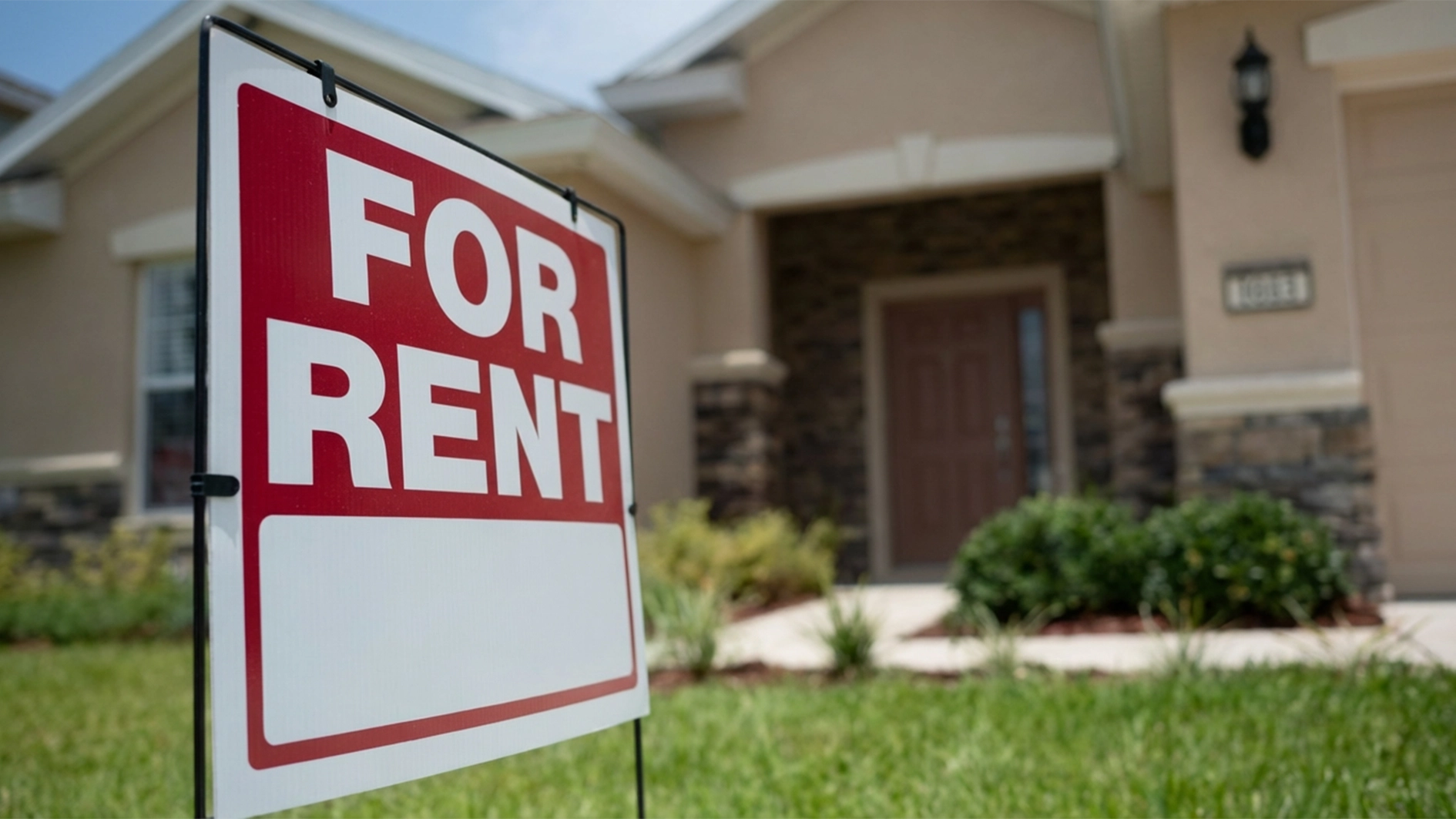
For many families in Lagos, paying rent has become a struggle that extends far beyond securing a roof over their heads, as rising housing costs leave households with less money for food, healthcare, education and other basic needs.
With rents increasing faster than wages, some residents face difficult choices between renewing their tenancy agreements and meeting their families’ daily needs.
In parts of Ejigbo, houses previously rented for between N500,000 and N700,000 annually are now being re-let for between N2.5 million and N5 million, excluding agency fees, agreement charges and caution deposits, according to findings published by The Guardian.
In Mushin, rents for properties previously costing between N300,000 and N2.5 million have risen to between N1 million and N3.7 million, while a self-contained apartment now costs about N1 million annually.
The increases have intensified pressure on households whose earnings have struggled to keep pace with the cost of living.
Data from GTI Investment Group’s report, Beyond Rent: Mapping Lagos’ Housing-Led Capital Expansion, showed that rents in parts of Lagos had risen by 80 to 120 per cent over two years, compared with wage growth of between seven and nine per cent.

The report, based on more than 3,200 rental listings across 15 zones, put Lagos’ property price-to-income ratio at 19.2 times.
According to the analysis, a two-bedroom apartment could consume about 29 per cent of the monthly income of someone earning N1 million, 58 per cent of the income of a worker earning N500,000 and as much as 97 per cent of the earnings of someone receiving N300,000 monthly.
The conventional affordability benchmark is that households should spend no more than about 30 per cent of their income on housing.
For lower-income households, the gap between earnings and rental costs leaves little room to absorb increases in food prices, transportation, electricity and healthcare expenses.
The pressure also extends to residents who relocate to cheaper neighbourhoods to escape rising rents.
Communities such as Ikorodu, Ibeju-Lekki, Badagry, Ayobo and Ipaja have attracted residents seeking more affordable accommodation. However, longer journeys to workplaces can reduce the savings from moving.
According to the report, daily return transport fares on longer routes can reach N2,000 or more. A worker commuting for 22 days monthly could therefore spend between N44,000 and N55,000 on transportation, excluding additional fares for connecting journeys.
A worker who saves N700,000 annually by moving to cheaper accommodation could spend an additional N420,000 to N600,000 yearly on transport, reducing the effective savings to between N100,000 and N280,000.
The report also cited Lagos State Government estimates that residents lose an average of four hours daily to traffic congestion, with estimated annual economic losses of N4 trillion.
Beyond transportation, households must contend with continued pressure on food budgets.
Nigeria’s headline inflation eased to 14.63 per cent in September 2026 from 15.39 per cent in August, according to the National Bureau of Statistics. However, food inflation rose to 19.59 per cent year-on-year.
The moderation in headline inflation means prices are rising more slowly, not that the accumulated increases have been reversed.
For families already spending a substantial portion of their earnings on rent, rising food prices further restrict the money available for other essentials.
Co-founder of Rethinking Cities, Deji Akinpelu, said housing had increasingly become an asset market detached from local incomes.
“The deeper cause, though, is that housing has become an asset market detached from local incomes,” he said, adding that infrastructure and location premiums had contributed to Lagos’ high property price-to-income ratio.
Akinpelu also said moving to cheaper locations often shifted the financial burden rather than eliminating it, because higher transportation costs eroded rental savings.
Former First Vice President of the Nigerian Institution of Estate Surveyors and Valuers, Osita Okoli, attributed the widening gap between rents and household incomes to inflation, stagnant wages and housing shortages.
He also cited the effects of fuel subsidy removal and inconsistent government policies on the cost of living and housing provision.
Chairman of the Ogun State branch of NIESV, Adeolu Adejimi, said rents in some neighbourhoods had nearly doubled while average wages had increased by only about seven to nine per cent.
He attributed the crisis to rapid urbanisation, inadequate housing supply and rising construction costs, adding that landlords sometimes increased rents based on perceptions of inflation rather than the actual value of their properties.
Adejimi said Nigeria needed about 15 million additional homes but was building only about 70,000 units annually.
The Federal Government’s National Housing Data Technical Committee put Nigeria’s housing deficit at 15 million units in 2025.
Although the government has introduced housing interventions, including the Renewed Hope Housing Programme and mortgage-finance initiatives, experts say more affordable rental options are needed to address the immediate pressure on tenants.
Akinpelu called for serviced public land, waived fees for affordable housing projects, faster development approvals and the creation of a social rental sector.
He also advocated measures to protect lower-income residents from being displaced as infrastructure improvements increase property values.