 Follow Us on Google News
 Follow Us on Google Discover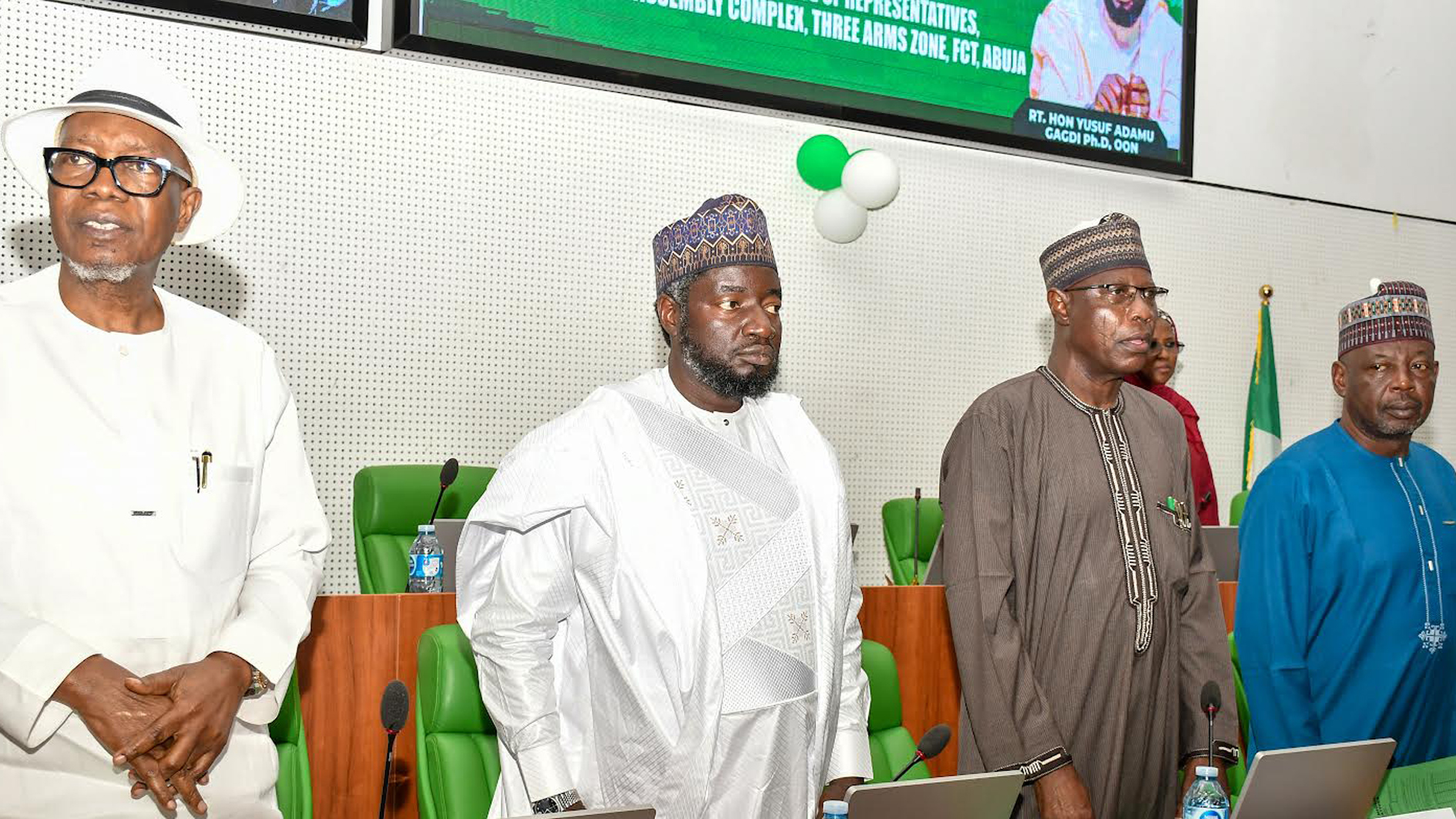
• Reps summons OSGF, Finance Ministry, Budget Office, Accountant-General, others
• HoS admits office failed to verify documents before approving staff establishment
• CBN says PFIPC’s dollar, pound accounts opened, never funded
• ICPC seeks more time to conclude investigation, report back to House
• Adeniyi claims he personally sought Budget Office’s approval for agency’s inclusion
The Presidency came under scrutiny yesterday as the Independent Corrupt Practices and Other Related Offences Commission (ICPC) questioned Chief of Staff Femi Gbajabiamila over allegations linked to the purported Presidential Foreign Investment Promotion Council (PFIPC).
The development came as the Head of the Civil Service of the Federation (HCSF), Didi Esther Walson-Jack, admitted before a House of Representatives committee that her office failed to properly verify documents submitted by officials of the controversial body before issuing an authorised staff establishment for it.
The committee also sought answers to how the council, which government officials insist was never lawfully established, obtained official documents, appeared in the 2026 Appropriation Act, secured office space within the Federal Secretariat and had domiciliary accounts opened by the Central Bank of Nigeria (CBN).
As the probe widened, the committee summoned the Office of the Secretary to the Government of the Federation, Minister of Finance, the Accountant-General of the Federation, the Budget Office of the Federation, the Federal Character Commission and the National Salaries, Incomes and Wages Commission to appear before it over issues relating to the operations and funding of the controversial council.
Gbajabiamila appeared before investigators at the ICPC headquarters in Abuja in response to an invitation issued by the anti-corruption agency as part of its probe into the activities surrounding the PFIPC and allegations made against senior government officials.

The investigation stems from claims by the self-acclaimed Director-General of the PFIPC, Adeniyi Adeyemi, who alleged that Gbajabiamila demanded financial benefits in exchange for facilitating his appointment.
Adeyemi claimed he paid N400 million to the Chief of Staff to secure his appointment as Director-General of the agency. He also alleged that Gbajabiamila demanded 48 per cent of the agency’s proposed N27.3 billion take-off grant.
He further claimed that his dealings with the Chief of Staff were facilitated by the late Babatunde Tanimola, whom he described as an intermediary, and urged investigators to examine the circumstances surrounding Tanimola’s death as part of the probe.
Gbajabiamila has denied the allegations, describing them as false and defamatory. He subsequently filed a N15 billion defamation suit against Adeyemi.
Amid the allegations and counter-allegations, President Tinubu directed the ICPC to conduct a full investigation and submit its findings within 30 days.
Confirming his client’s appearance before investigators, Gbajabiamila’s lawyer, Jiti Ogunye, said the Chief of Staff fully cooperated with the commission.
“As directed by the President of Nigeria, I hereby confirm that my client, Femi Gbajabiamila, Chief of Staff to the President of Nigeria, responded to the invitation and appeared at about 3:00 p.m. on Monday, July 20, 2026, as part of the ongoing investigation into the activities of the PFIPC fake agency, among others,” Ogunye said in a statement.
According to Ogunye, Gbajabiamila gave a detailed account of his knowledge of the issues, answered all questions put to him by investigators and returned to his official duties after the session.
The PFIPC controversy has drawn public attention following claims that the organisation operated without formal government recognition while allegedly carrying out activities under the guise of a presidential initiative.
The ICPC has yet to issue an official statement on the outcome of yesterday’s questioning or indicate whether additional persons connected with the allegations will be invited.
The investigation is expected to determine the authenticity of Adeyemi’s claims and whether any criminal conduct occurred in relation to the disputed agency and its alleged financial dealings.
HoS admits verification lapse in PFIPC documents as Reps summons OSGF, others
MEANWHILE, Head of the Civil Service of the Federation, Didi Esther Walson-Jack, yesterday admitted that her office failed to adequately verify documents submitted by officials of the controversial PFIPC, leading to the issuance of an authorised establishment for the body.
She also insisted that the Office of the Head of the Civil Service of the Federation (OHCSF) neither established the council nor deployed civil servants to it.
Walson-Jack disclosed that the office space allegedly occupied by the council in the Federal Secretariat was not allocated by the OHCSF but forms part of the offices officially allocated to the Office of the Secretary to the Government of the Federation (OSGF).
The HoS made the disclosures while appearing before the House of Representatives Ad-hoc Committee investigating the controversial inclusion of the unestablished Presidential Foreign Investment Promotion Council in the 2026 Appropriation Act.
The committee is chaired by the member representing Kanke/Kanam/Pankshin Federal Constituency of Plateau State, Yusuf Gagdi.
Presenting the position of her office, Walson-Jack explained that the OHCSF is responsible for strategic leadership, manpower planning, career management, organisational development and office allocation within the Federal Secretariat, but has no constitutional responsibility for establishing federal agencies.
According to her, records available to the office showed that the council applied on August 6, 2025, for approval of its organisational structure, but the request was rejected because it failed to submit the required establishment documents.
“The approval and establishment of agencies is not within the purview of the Office of the Head of the Civil Service of the Federation,” she said.
She explained that during the 2025 manpower budget defence exercise, representatives of the council, led by a woman who identified herself as the Deputy Director of Administration, appeared before officials of the Organisation Design and Development Department and submitted documents, including a purported enabling legal instrument and the Director-General’s appointment letter.
Based on the documents presented, the request was processed alongside those of 87 other Ministries, Departments and Agencies (MDAs) and approved as part of the fourth batch of manpower requests on July 18, 2025.
She told lawmakers that the office later discovered that the document presented as the council’s enabling legal instrument was not authentic.
Responding to questions from lawmakers, Walson-Jack admitted that the office “didn’t do the best in verifying the authenticity of the document submitted to us. That we admit.”
She stressed, however, that the OHCSF did not include the council in the 2026 budget.
On allegations that civil servants were deployed to the council, Walson-Jack maintained: “There was no deployment of staff by the Office of the Head of the Civil Service of the Federation to the council. The request was received and noted for consideration, but no deployment was made.”
She also dismissed claims that her office allocated office accommodation to the council.
According to her, the office in Phase Three of the Federal Secretariat listed by the council as its operational address is part of office space officially allocated to the Office of the Secretary to the Government of the Federation through a letter dated November 16, 2003, for the use of the SGF and presidential aides.
Following the presentation, committee chairman Yusuf Gagdi expressed concern over the circulation of “too much” fake establishment documents by the controversial council.
Gagdi subsequently directed the OSGF to appear before the committee to explain how office space under its control came to be used by the council.
“There was an approval given to them in 2003. How come the office space given to you is allocated to a fake agency? We are telling them to come here to explain,” he said.
The committee also summoned the Minister of Finance, the Accountant-General of the Federation, the Budget Office of the Federation, the Federal Character Commission, and the National Salaries, Incomes and Wages Commission to appear before it regarding the operations and funding of the controversial council.
On its part, the Central Bank of Nigeria (CBN) said that it opened two foreign currency accounts for the council on the directive of the Office of the Accountant-General of the Federation (OAGF).
Director of the Banking Services Department, Hamisu Ibrahim, who represented the CBN Governor, insisted that no enabling Act was required before processing the request.
The apex bank, however, disclosed that the accounts, one in United States dollars and the other in British pounds sterling, were never funded or operated.
Ibrahim said the apex bank received a formal mandate dated July 29, 2025, from the Office of the Accountant-General of the Federation to open the accounts for the Presidential Economic Advisory Council/Presidential Foreign Investment Promotion Council.
According to him, the bank carried out its standard account-opening procedures before creating the two domiciliary accounts.
Responding to questions from lawmakers on whether the CBN demanded an enabling law establishing the council before opening the accounts, Ibrahim said: “We don’t ask for an enabling Act. We received a mandate from the Office of the Accountant-General of the Federation to open the accounts for the council.”
The CBN official disclosed: “The accounts have never been operated. There has never been any inflow or outflow of funds. No foreign exchange allocation was made to the council and no transaction was carried out on the accounts,” he said.
He added: “The accounts can take a zero balance from inception, but they have never recorded any inflow. The statements of account submitted to the committee clearly show that there were no transactions.”
He told the lawmakers that the CBN had no direct correspondence with the controversial council, apart from acting on mandates forwarded by the Office of the Accountant-General of the Federation.
Earlier, Chairman of the Independent Corrupt Practices and Other Related Offences Commission (ICPC), Dr Musa Adamu Aliyu, informed the committee that the anti-graft agency had already commenced an investigation into the matter following a directive from President Bola Tinubu.
“Give us a few days to complete what we are doing, and we will ensure we come back to present our findings,” Aliyu said.
Following the request, Gagdi granted the ICPC additional time and directed the commission to return to the committee on July 22 or 23 to present the outcome of its investigation.
Adeniyi explains how PFIPC appeared in budget despite arrest
ALSO, the self-styled Director-General of the alleged Presidential Foreign Investment Promotion Council, Adeyemi Matthew Adeniyi, has explained how the organisation was captured in the Federal Government’s budget despite his arrest before the appropriation process was concluded.
Adeniyi made the claims during an interview with social media influencer Martins Vincent Otse, popularly known as VeryDarkMan, in a recording released shortly after his arrest.
He said the Chief of Staff to the President, Femi Gbajabiamila, played no role in the agency’s reported N1.3 billion budgetary allocation, maintaining that he personally approached officials of the Budget Office to seek its inclusion.
According to Adeniyi, he visited the Budget Office in December 2024 to request that the agency be included in the 2025 Appropriation Bill, but was told the budget process had closed and that the proposal would instead be considered for the 2026 budget.
He alleged that a female official helped him gain access to the office of the Director-General of the Budget Office before he was referred to another director, who informed him that the proposal could no longer be accommodated in the 2025 budget but assured him efforts would continue towards its inclusion in the 2026 appropriation.
Adeniyi denied paying any Budget Office official, saying he merely promised to consider employment requests if the agency eventually began recruiting staff.
“Honestly, I did not pay any money. I didn’t pay anybody. The only thing I promised was that if I started employing people, I could help them with employment opportunities.”
He said his arrest brought the process to an end and that he was surprised to later discover that the proposed agency had appeared in the budget.
“I didn’t even know until they said it was inside the budget. I had already left the office. Where would I still pursue the budget when I was already facing court?”
Asked whether officials could have inserted the agency into the budget after his arrest, Adeniyi said he could not explain how it happened.
On allegations that he paid N400 million to facilitate his appointment, Adeniyi claimed the money was delivered in United States dollars through his late associate, Dolapo Tanimola, but said he could not confirm whether it ultimately reached Gbajabiamila.
He also maintained that he never met the Chief of Staff before or after his appointment, claiming that Tanimola acted as the intermediary throughout the process and handled the alleged payment.
“I never met Gbajabiamila physically before and after he was appointed. Dolapo Tanimola handled everything for me.”

