 Follow Us on Google News
 Follow Us on Google Discover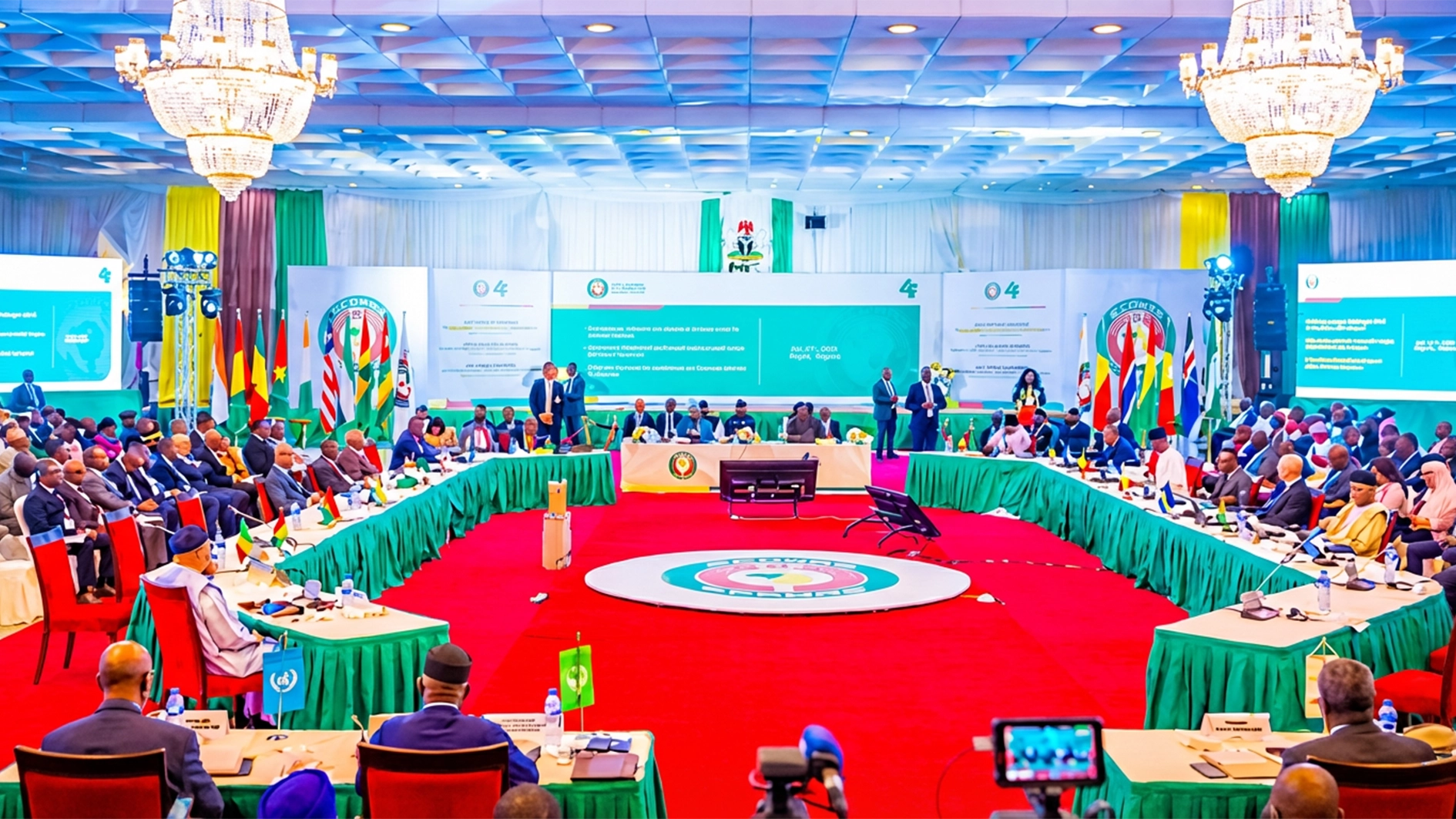
DIRECTOR, Free Movement of Persons and Migration, Commission of the Economic Community of West African State (ECOWAS Commission), Mr Albert Siaw-Boateng, has decried poor implementation of free movement of persons and labour protocol.
He also expressed worries that He also decried that since its took off in 2018, only seven ECOWAS member states – Senegal, Guinea-Bissau, Ghana, Benin, The Gambia, Sierra Leone and Nigeria, have implemented the ECOWAS National Biometrics Identity Card.
Speaking Tuesday at the ongoing ECOWAS Parliament session in Abuja, Siaw-Boateng described free movement of persons and balour as catalyst for regional integration and the success of African Continental Free Trade Agreement (AfCFTA).
He expressed worries that the 1979 treaty on the right of entry, right of residence and right of establishment, which are in tandem with the content of AFCFT had no significant effect in terms of enforcement.
In his presentation titled, Free Movement of Persons and Labour Mobility as Catalysts for Regional Integration and AfCFTA Success by ECOWAS, he said that the regional migration policy, which stemmed out of ECOWAS Common Approach of 2008, looked at opportunities raised by migration and how it harnesses the socio-economic benefits for development, gender dimension in migration management as well as human mobility in the context of climate change.
“As we know, generation and environmental issues force people to move across borders but how do you manage them?
He therefore canvassed full implementation of data migration policy, which was validated in May 2025 to look at the link between migration and development and to promote safe, regular and right-based labour mobility within region.
“Because we realise that we still find some of us moving around. We need to ensure that workers’ rights are also preserved as they tend to address the deficits in terms of labour shortage in the region.

He also announced that the region has fully implemented the right of residence, which enables citizens to work in countries order those of their origin by approaching the relevant embassy for immigration cover.
He however informed that the privilege was not extended to working in the army, police or immigration, adding that the 90-day stay in member states has been abolished since 2014.
Siaw-Boateng also harped on poor implementation of ECOWAS National Biometric Identity Card – a travel document replacing the handwritten travel certificate, by member states.
“It tells us that we member states are the killers ourselves. These are clearly signed by the authority of members of states for member states to implement. Nobody is implementing. We don’t have ECOWAS police or immigration but then, these are dependent on member states to implement”, he said.
He also emphasized the need to strengthen border capacities and facilitate civil mobility, noting that data exchanges among member states have remained difficult as every country is protective of its own data.
“So, we got the EU to support us with the West African Police Information System. Thankfully, that has been handed over to ECOWAS since April of 2025. Now, the key thing for us is, rather than say that member states will be keeping their data and making data exchanges very difficult amongst member states in terms of communication, then why don’t we look and take WAPIS, which was actually set up as a police information system?
“In the Anglophone area, we call that immigration as well. Then, why don’t member states key in all these data into WAPIS, which we ourselves would have confidence and belief in so that data exchange would be easy.”
“Since its take off date of 2018, only seven ECOWAS member states have implemented the ECOWAS National Biometrics Identity Card.
“But for those who have deployed, are they accepting the biometric ID cards of other member states? It is a problem. Acceptability or acceptance is one key thing. Let me advocate for that since I am in front of honourable MPs so that at least, for those who have deployed, our member states accept them when they are travelling into member states with it.
“But then, it is tied to other social services in terms of getting driver’s licences, setting up a bank account and all that. I believe these are quite critical security measures that we all should take. But then, the key thing is, is it accepted in member states as a travel document? Yes, heads of state and authority have fully indicated that it is a travel document.
“Why should it be accepted? It makes easier travels for our migrants or our community citizens and it is far cheaper than even getting a passport. How many of us, I’m talking about community citizens, would even want to travel abroad, that is out of the ECOWAS space? 85 to 90% travel within our region.
The director also assured of efforts at harmonising driver’s licences using the data from ECOWAS National Biometric Identity Card.
“Not to reinvent the wheel but to ensure that you can drive seamlessly with one driver’s licence – the same features, which we have on the ticket from one country to the other, whether that is going for an international driver’s licence to have insurance to be able to cross to another country. We are also looking in terms of reducing issues at the borders, especially for interstate passenger vehicles, where there’s a lot of exploitation and harassment.”
Siaw-Boateng later identified data fragmentation, lots of informality, non-harmonisation of the free movement protocol, weak enforcement, skills mismatches and rights protection gaps as some of the setback factors in the implementation of the free movement protocol.
“Together with the Directorate of Humanitarian and Social Affairs, we are working to ensure that there is a lot of compliance monitoring, just to get the right things done. In terms of labour mobility contributions, we are looking to support industrial development, addressing skills gaps and also, strengthening informal cross-border trade.
“To conclude, free movement still remained a foundation of motivation. Labour mobility always will drive our productivity. Policy coherence is essential to all our activities within the region.
“But then, we also need parliamentary leadership in this drive to support our activities of global mobility. Mobility is very critical to the success of the AfCFTA and that is why we strongly advocate that.”

