 Follow Us on Google News


 Follow Us on Google Discover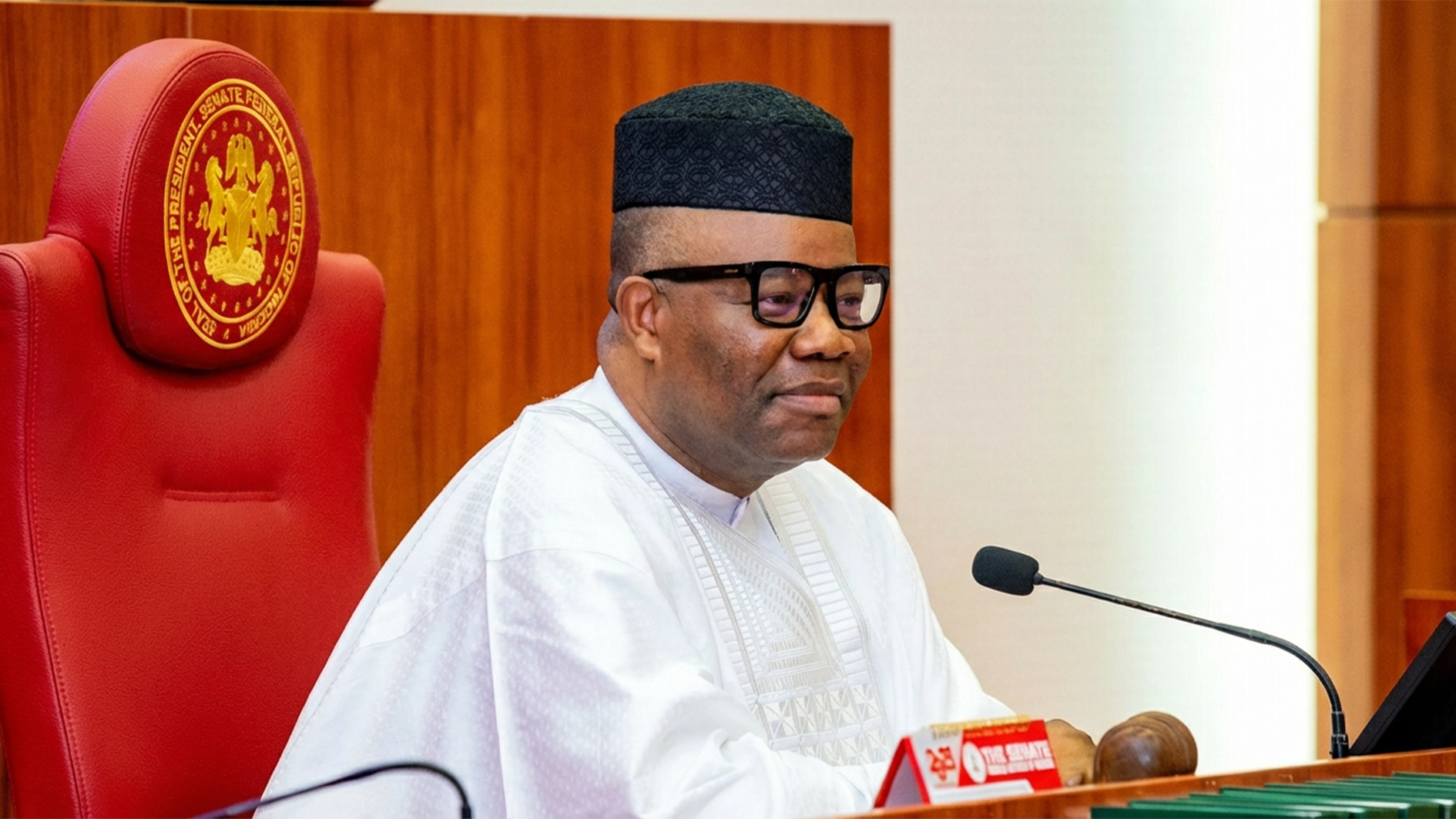
What began as a routine legislative procedure in the Senate, yesterday, spiralled into a high-voltage confrontation, as Senate President Godswill Akpabio and Senator Adams Oshiomhole engaged in a dramatic face-off that exposed simmering political tensions tied to the 2027 power game.
However, the Citizens Network for Peace and Development (CNPD) in Nigeria commended the Senate for amending its Standing Rules to restrict eligibility for principal and presiding offices in the 11th National Assembly to ranking members with at least two consecutive terms.
It described the Senate’s recent amendment of its Standing Rules on eligibility for principal and presiding officers as a significant boost to democracy, institutional stability and legislative efficiency.
The immediate trigger of the Akpabio-Oshiomhole feud was procedural: Oshiomhole attempted to raise a point of order just as Akpabio moved to confirm the Votes and Proceedings of the previous sitting. But the refusal of the Senate President to recognise him—despite repeated shouts of “point of order!”—quickly transformed the moment into a charged standoff.
Witnesses say Oshiomhole appeared determined to be heard, repeatedly interrupting proceedings in a manner that unsettled the chamber.
Attempts by the Chief Whip, Mohammed Monguno, to restore calm failed, as the Edo North senator pressed on.

In a stern and calculated response, Akpabio asserted his authority, invoking the Senate Standing Orders and reading out provisions that underline his sweeping powers to control debate, interpret rules and discipline errant lawmakers.
At the heart of the tension is a controversial amendment to Senate rules, which critics say effectively narrowed the 2027 Senate Presidency race to a select circle of insiders—years before the first vote is cast.
For figures like Oshiomhole, the development is said to be deeply unsettling.
According to multiple accounts, the move is allegedly backed by powerful interests within the ruling establishment seeking to ensure that the Senate leadership remains firmly aligned with the executive arm.
Critics argue that the strategy is designed to shut out independent or unpredictable contenders, preempt internal rebellion, and ultimately shield the executive from robust legislative scrutiny.
IN a statement, the National Coordinator of CNPD, Rapheal Okorie, described the move as bold and forward-looking, noting that it aligns the Senate with global parliamentary best practices.
The senate amended its standing rules to restrict eligibility for presiding and principal offices to senators who have served at least two consecutive terms. The amendment was adopted yesterday following a voice vote presided over by Akpabio.
According to the group, established democracies consistently entrust legislative leadership to experienced lawmakers to ensure stability and continuity.
Citing the United States Congress, the statement highlighted figures such as former Speaker, Nancy Pelosi, and Senate Republican Leader, Mitch McConnell, who held leadership roles over extended periods, reinforcing the value of legislative experience.
The group said the amendment reflected the will of Nigerians and will help strengthen the country’s democratic institutions. It added that the revised rules transcend individual ambitions and are designed to endure, promoting accountability and institutional integrity.
The group, therefore, urged Nigerians, civil society organisations and political stakeholders to support the reform and ensure its proper implementation, noting that a stronger and more stable legislature ultimately serves the broader national interest and democratic development.

